The fastest way to identify animal poop in your yard is to read three things: its shape, its size, and what is in it. Firm, round pellets left in a pile mean a plant-eater like a rabbit or deer; smooth, tube-shaped droppings tapered at the ends mean a meat- or omnivore like a cat, fox, coyote, or raccoon; and the contents — seeds and plant fiber, or fur, feathers, bone, and insect shells — tell you whether the animal grazes or hunts. Add where and how the droppings were left, and you can usually name the culprit without ever seeing it. Here is how to identify the most common backyard scat, animal by animal, and an important safety note about why you should never handle it.
How to Identify Animal Scat
Scat — the naturalist’s word for animal droppings — is one of the most reliable signs an animal leaves behind, because different animals produce distinctly different poop. You rarely catch the visitor in the act, but the droppings stay put. Work through the shape, the size, the contents, and where it was deposited, and most backyard scat points clearly to its owner.
Shape and size
Shape is the first and best clue. Herbivores — rabbits, deer, and the like — pass firm, roughly spherical pellets, because a dry, fibrous plant diet produces dry, fibrous waste. Carnivores and omnivores leave tubular, log-shaped droppings, often tapered or twisted at the ends, that reflect a diet of meat, fur, and mixed food. Size then narrows it down within those groups: pea-sized pellets suggest a rabbit, larger acorn-sized pellets a deer, and a finger-thick rope points to a fox, cat, raccoon, or coyote depending on how big it is. Tiny rice-grain specks indicate mice or other small rodents.
Contents: what is inside the droppings
What a dropping is made of says a lot about diet, and you can often read it at a glance without disturbing it. Herbivore pellets are uniform and full of compressed plant fiber. Omnivore scat like a raccoon’s is often packed with seeds and berry skins from whatever it raided. True carnivore scat from a fox or coyote is ropey and frequently full of hair and small bone fragments, tapering to a twisted point, and can smell strongly musky. Insect-eaters like skunks leave droppings glittering with the shiny shell fragments of beetles. Seeds and fiber mean a grazer or forager; fur and bone mean a hunter.
Location and how it is left
Where the scat sits matters too. Many predators — foxes, coyotes, and domestic cats — deposit droppings in prominent spots like trail junctions, rocks, or the middle of a path to mark territory. Raccoons use repeated communal latrines, leaving piles that build up at the base of a tree, on a log, or on a deck or roof. Rabbits scatter pellets widely where they feed, and deer leave clustered piles where they bedded or browsed. A tidy deposit buried in loose soil or mulch usually means a domestic cat.
- 1Note the overall shape: round pellets (herbivore) or a tapered tube or log (carnivore or omnivore)?
- 2Estimate the size against a coin or your finger — without touching it.
- 3Look at the contents from a safe distance: plant fiber and seeds, or hair, bone, and insect shells?
- 4Check the location and pattern: scattered, clustered, a repeated latrine, or placed on a prominent marker?
- 5Match those four clues to the species below — and photograph the sign rather than handling it.
Try Spotter Free on iOS & Android
Plants, animals, fungi, and rocks — all from a photo. 5 free identifications every day, no credit card required.
Common Backyard Droppings, Animal by Animal
Once you have the shape, size, and contents, most backyard droppings match one of these common culprits:
- Rabbit — small, firm, round pellets about the size of a pea, light brown to black, scattered in loose piles where the animal fed; almost pure plant fiber.
- Deer — oval or acorn-shaped pellets a bit larger than a rabbit’s, usually in a clustered pile, sometimes clumped together in soft, mast-rich seasons.
- Squirrel and other rodents — small, dark, oblong pellets; mouse droppings are rice-grain-sized with pointed ends, rat droppings larger and blunter.
- Raccoon — dark, tubular, blunt-ended droppings of fairly even thickness, frequently full of berry seeds, left in repeated latrine piles on logs, decks, or roofs.
- Skunk — tubes similar in size to a cat’s but typically packed with insect parts, seeds, and berries, often near the small digging holes they leave in the lawn.
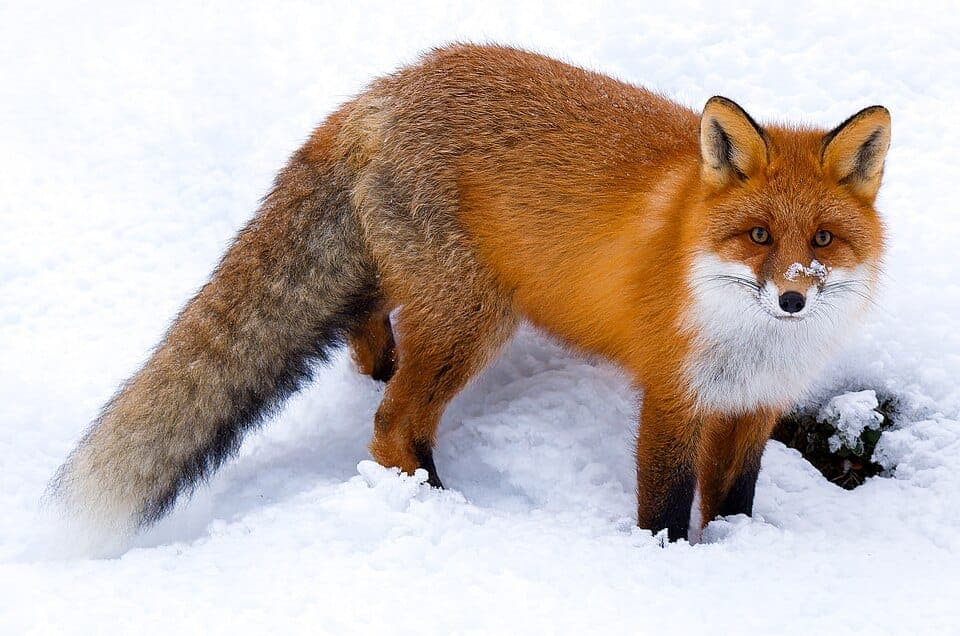
- Fox — a slender, tapered, twisted rope, often with hair, bone, or seeds, pointed at one end and placed on a conspicuous rock, stump, or path to mark territory; can smell strongly musky.
- Coyote — like an oversized fox dropping: a thick, ropey, tapering cord loaded with hair and bone fragments, deposited at trail junctions and road edges.
- Opossum — tubular droppings similar to a cat’s, sometimes curled, and variable because opossums eat almost anything.
- Domestic cat and dog — cat scat is tubular and often buried in soft soil or mulch; dog scat is tubular, usually softer and less twisted than a wild canine’s, reflecting a kibble diet.
The shortcut: round pellets scattered on the lawn are almost always rabbit or deer; a tapered, hair-filled rope on a rock or path is a fox or coyote; a seed-filled latrine pile on your deck is a raccoon.
A Safety Note: Never Handle Scat
Reading scat is great detective work, but treat every dropping as a potential health hazard and never touch it with bare hands. Raccoon latrines can carry raccoon roundworm, whose eggs are dangerous if accidentally ingested or inhaled; rodent droppings can carry hantavirus and should never be swept or vacuumed dry; and many animal feces harbor other parasites and bacteria. Keep children and pets away, examine scat only from a distance or with a stick, and if you must clean up a latrine, wear gloves and a mask, dampen it first, and follow your local health department’s guidance. This is identification advice, not medical advice — if you think you or a pet has been exposed, call a doctor or veterinarian.
Frequently Asked Questions
How do I tell herbivore droppings from carnivore droppings?
Shape and contents. Herbivores leave firm, round pellets full of plant fiber, while carnivores and omnivores leave tapered, tube-shaped droppings that often contain hair, bone, seeds, or insect shells. Round pellets mean a grazer; a hairy, twisted rope means a hunter.
What animal leaves droppings in the same spot every time?
Raccoons are the classic latrine users, returning to the same log, tree base, deck, or roof spot repeatedly until a pile builds up. Foxes and coyotes also reuse territorial marking points like rocks and trail junctions, though they spread their droppings out more.
What do raccoon droppings look like?
Raccoon scat is dark, tubular, and blunt-ended, of fairly even thickness, and very often packed with the seeds of berries and fruit. The biggest tell is the latrine habit — multiple droppings piled in one favored spot such as a log, deck, or roof.
Is it safe to clean up animal poop in my yard?
Only with care. Never handle scat bare-handed; some droppings, especially raccoon latrines and rodent droppings, carry serious pathogens. Wear gloves and a mask, dampen the material so nothing becomes airborne, double-bag it, and follow local health guidance — or hire a professional for a large raccoon latrine.
Found a mystery dropping and want to narrow down who left it? Snap a photo from a safe distance and let Spotter help you identify the animal behind the sign.
Try Spotter Free on iOS & Android
Plants, animals, fungi, and rocks — all from a photo. 5 free identifications every day, no credit card required.