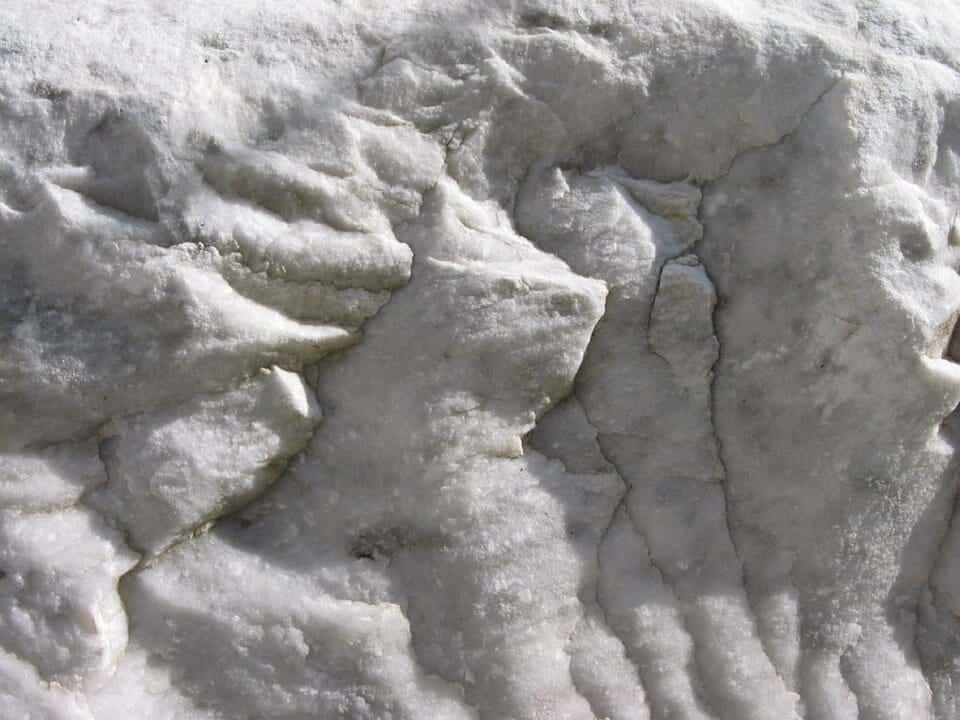
Marble is a metamorphic rock made of interlocking calcite crystals, and you identify it by three things together: it is soft enough that a steel knife scratches it but it cannot scratch glass, a drop of vinegar makes it fizz, and a fresh break looks sugary and crystalline with no fossils or layering. That last point is what separates marble from the limestone it started as. Marble forms when limestone or dolostone is squeezed and heated until its calcite recrystallizes into a tight, interlocking mosaic, a change that erases the fossils and bedding the original rock carried. It is usually white or pale gray, with swirling veins of gray, pink, green, or brown where impurities rode along. The rocks people most often confuse it with are limestone, quartzite, and pale granite, and two quick tests, a scratch and a drop of acid, sort all three.
How to Identify Marble
Marble turns up in Spotter’s rock identifications fairly often. In mid-November 2026 the app read three separate submissions as marble, at an average confidence near 85 percent, and each time it keyed on the same pair of features: a white crystalline, sugary-textured surface and reddish-orange bands of iron staining running through the stone. One piece was flagged as coming from a gravel pile, a useful reminder that much of the marble people pick up is landscape chip or crushed aggregate rather than natural outcrop. Those field marks are the heart of the identification. Work through a few simple tests and a pale, crystalline stone usually sorts itself out.
Soft: a knife scratches it, glass does not
Marble is soft because calcite is soft. Calcite sits at 3 on the Mohs hardness scale, so a steel knife blade scratches marble easily and the rock cannot scratch a glass bottle or plate back. The Mohs hardness scale puts glass at about 5.5, well above calcite, so any stone that marks glass is not marble. This single test rules out the hard pale look-alikes at once: quartzite and pale granite both sit near 7 and scratch glass cleanly, while marble will not touch it.
It fizzes in acid
A drop of white vinegar is the classic marble test. Marble is calcium carbonate, so the acid eats into the calcite and releases carbon dioxide as a visible fizz, though vinegar reacts more slowly and gently than the stronger dilute hydrochloric acid geologists carry. Geology.com notes that marble, being composed of calcium carbonate, will react in contact with many acids, which is exactly why acid rain etches marble monuments and headstones over decades. If your pale stone fizzes, it is a carbonate: marble, limestone, or a calcite-cemented rock, and never quartzite or granite.
A sugary, interlocking crystal texture
Look at a fresh broken surface in good light. Marble has a granular, sugary sparkle, because metamorphism grew its calcite into interlocking crystals that catch light on their flat cleavage faces. Geologists call this texture saccharoidal, meaning sugar-like. In a coarse marble the crystals are large enough to see without a lens, locked together like pieces of a jigsaw puzzle, as the University of Waterloo Earth Sciences Museum describes it. That interlocking sparkle sets marble apart from the dull, fine-grained, almost chalky look of most limestone.
No fossils and no layering
This is the test that tells marble from limestone, and by eye it is the most reliable one you have. Limestone is sedimentary, so it often shows fossil shells, coral fragments, or flat bedding layers. When limestone becomes marble, the recrystallizing calcite grows over and erases those features. Geology.com puts it plainly: recrystallization obscures the original fossils and sedimentary structures of the limestone. So a pale carbonate rock with visible shell fragments or neat layers is limestone, while a uniform, crystalline one with swirling veins but no fossils is marble. For the sedimentary parent, see how to identify limestone.
Color and veining
Pure marble is white, the famous example being the Carrara marble of Italy that Michelangelo carved. Impurities color the rest: clay and iron oxides add gray and reddish-brown, serpentine adds green, graphite streaks it dark. Those impurities usually ride in swirling bands and veins rather than even color, which is the look most people picture when they hear the word marble. Color alone proves nothing, because limestone and quartzite span the same pale range, so always back it up with the scratch and acid tests.
Where you find it
Marble forms only where limestone has been deeply buried and heated, so it is not native bedrock across the glaciated Upper Midwest. In Wisconsin and the wider Great Lakes region you meet it two ways: as a glacial traveler, carried south in the gravel by Ice Age ice sheets and rounded in rivers and on beaches, and as imported stone, the crushed white aggregate, landscape chip, and broken countertop and headstone pieces that turn up in yards and gravel lots. The classic American marble quarries sit elsewhere, in Vermont, Georgia, Colorado, and Tennessee. For the broader family of stones marble travels with in Midwest gravel, see our guide to common rocks and minerals.
Marble vs. Limestone vs. Quartzite
These three pale rocks cause most marble mix-ups. One scratch on glass and one drop of vinegar separate them cleanly, and the texture confirms the call. The table lays out the marks you can judge without lab gear. For the hard look-alike that fools buyers and rockhounds alike, see how to identify quartzite.
| Rock | Hardness (Mohs) | Fizz in acid? | Texture and fossils | Quick tell |
|---|---|---|---|---|
| Marble | 3, a knife scratches it | Yes, fizzes | Sugary interlocking crystals, no fossils | Soft, fizzes, crystalline with swirling veins |
| Limestone | 3, a knife scratches it | Yes, fizzes | Fine-grained, often fossils and layers | Soft and fizzes, but dull with visible fossils |
| Quartzite | 7, scratches glass | No | Fused sand grains, sugary but hard | Scratches glass and stays silent in acid |
| Pale granite | 6 to 7, scratches glass | No | Coarse speckled crystals with black flecks | Hard, speckled salt-and-pepper, no fizz |
Marble and limestone are the close pair: both are calcite, both are soft, and both fizz, so you separate them on texture. Marble is crystalline and sparkly with swirling veins and no fossils, while limestone is dull and fine-grained and often shows shells or bedding. Quartzite is the easy exclusion: it is hard and silent in acid, so if a sugary pale stone scratches glass and does nothing with vinegar, it is quartzite, not marble. Pale granite gives itself away with its coarse, speckled mix of pink or white feldspar and black mica.
Frequently Asked Questions
How can I tell marble from limestone?
Look for fossils, layers, and sparkle. Both rocks are calcite, so both are soft and both fizz in vinegar, and no acid test will split them. The difference is texture. Limestone is sedimentary and usually fine-grained, often with visible fossil shells or flat bedding layers. Marble is metamorphic, so its calcite has recrystallized into interlocking, sugary crystals that sparkle in light, and the heat erased any fossils and layering. A dull carbonate with shells is limestone; a crystalline one with swirling veins and no fossils is marble.
Is marble the same as quartzite?
No, and the two tests that tell them apart never fail. Marble is calcite, soft at Mohs 3, so a knife scratches it and vinegar makes it fizz. Quartzite is quartz, hard at Mohs 7, so it scratches glass and does nothing in acid. Both can look pale and sugary, which is why the confusion comes up, but a scratch on glass and a drop of vinegar settle it in seconds. This is also how countertop buyers check that a slab sold as the tougher quartzite is not actually softer marble.
Is my marble worth anything?
As a rock to find and learn from, a clean piece of veined marble is a satisfying identification rather than a windfall. Marble’s real value is as building and sculpture stone, where large, flawless, evenly colored blocks command a premium and crushed marble feeds everything from terrazzo floors to agricultural lime. A loose cobble or a landscape chip in your yard is common material, so treat the fun as the find itself, not a payday.
Why doesn’t my white marble fizz much?
It may be a dolomitic marble. Some marble forms from dolostone rather than limestone, so its carbonate is dolomite instead of calcite. Dolomite reacts only weakly to cold vinegar, and often fizzes clearly only after you scratch a spot to fresh powder or warm the acid. A pale, crystalline, sugary stone that is soft and barely fizzes until scratched is very likely a dolomitic marble rather than a non-carbonate rock.
Holding a pale, crystalline stone and not sure if it is marble, limestone, or quartzite? Try to scratch glass with it, drop on a little vinegar, and look for fossils: marble is soft, fizzes, and shows interlocking sugary crystals with no fossils. For a first read from a photo, start on the rock identifier page, where Spotter can point you toward the likely answer before you run the tests.
Try Spotter free on iPhone or Android
Plants, animals, fungi and rocks from one photo. 5 free identifications every day, no card required.