
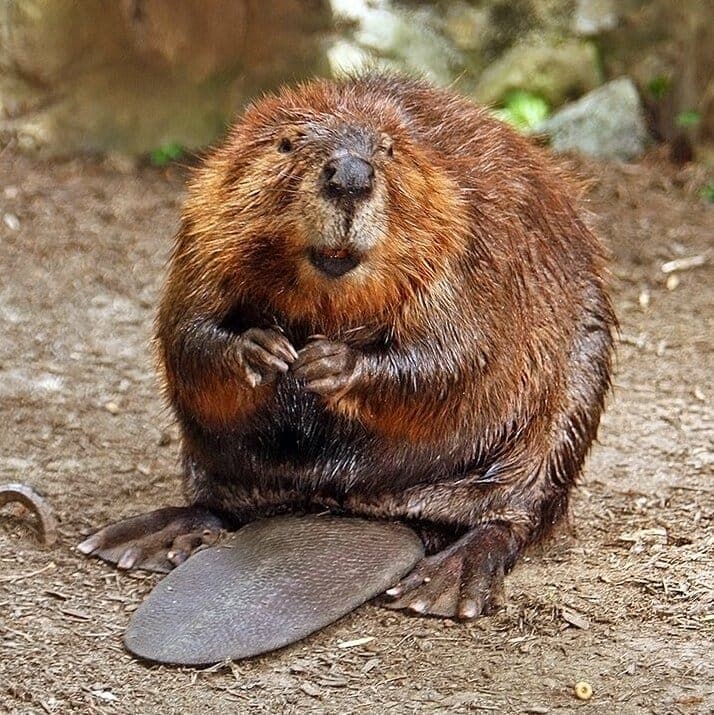
The fastest way to tell a muskrat from a beaver is size and tail: a beaver is a big, 40-to-60-pound animal with a wide, flat, paddle-shaped tail, while a muskrat is only 2 to 4 pounds with a thin, ratlike tail it holds up or trails behind it. Both are brown, semi-aquatic rodents that swim in the same ponds and marshes, so people mix them up constantly — but once you know what to look at, they are hard to confuse. Here is how to tell these two water mammals apart by size, tail, how they swim, and the homes they build.
How to Tell a Muskrat From a Beaver
Beavers and muskrats are both stocky, brown, semi-aquatic rodents that live in and around the same ponds, marshes, and slow rivers, which is exactly why a quick glimpse from shore fools so many people. Work through size, tail, swimming posture, and the structures they build, and the two separate cleanly.
Size and overall build
This is the biggest single clue. A beaver is the largest rodent in North America, typically 35 to 60 pounds and 3 to 4 feet long including the tail — roughly the size of a medium dog. A muskrat is far smaller, usually 1.5 to 4 pounds and about 16 to 25 inches long including the tail — closer to a large rat or a small house cat. Both wear dense, glossy, dark-brown waterproof fur, small ears, and a blunt head, but a beaver looks heavy and barrel-shaped in the water while a muskrat looks compact and low-slung.
Tail shape — the dead giveaway
If you can see the tail, you have your answer. A beaver’s tail is broad, flat, and paddle-shaped, scaly and nearly hairless, and it is unmistakable. A muskrat’s tail is long, thin, and ratlike — flattened side to side rather than top to bottom — and it is often held slightly above the water or dragged behind as the animal moves on land. A wide paddle means beaver; a skinny rope means muskrat.
How it swims
Watch how much of the animal shows above the surface. A swimming muskrat rides high, with its head, back, and often its thin tail all visible, leaving only a small wake. A beaver swims with most of its body submerged, so you usually see just the top of its broad head and a low hump of its back, pushing a larger V-shaped wake. If the animal slaps its tail on the water with a loud crack before diving, that alarm signal is pure beaver — muskrats do not do it.
Feet and tracks
Up close or in mud, the feet help too. Beavers have large, fully webbed hind feet built for pushing water, and their broad tail often smears or erases part of the track. Muskrats have only partial webbing and long, splayed toes, and their tail leaves a distinctive thin, wavy drag line between the footprints. Beaver tracks are simply much bigger — a beaver’s webbed hind print can be 5 to 7 inches long.
Try Spotter Free on iOS & Android
Plants, animals, fungi, and rocks — all from a photo. 5 free identifications every day, no credit card required.
Muskrat, Beaver, or Something Else?
A few other animals share the same water and get mistaken for both. Here is how to rule them out:
- Nutria — an invasive, cat-sized rodent of the Southeast and Gulf Coast with a round, ratlike tail (thicker than a muskrat’s) and bright orange front teeth; heavier than a muskrat but with no beaver paddle tail.
- River otter — longer, sleeker, and more weasel-like, with a thick tapering tail; otters porpoise and play in groups, and they are members of the weasel family, not rodents.
- Mink — small, dark, and slender with a bushy tail; a mink bounds along the bank rather than paddling steadily across open water.
- Groundhog — sometimes swims but is really a land animal of fields and burrows, with a short furry tail and no interest in living in ponds.
Why It Matters: Living Near Beavers and Muskrats
Both animals are native, generally harmless to people, and important to healthy wetlands — but they affect a property differently. Beavers fell trees and build dams that flood low ground, which can be a welcome wildlife boost or an unwelcome surprise for a culvert or a favorite grove of trees. Muskrats rarely fell anything; they burrow into banks and pond dams, which can occasionally weaken an earthen dam or shoreline. Neither is aggressive, and both will avoid you. If beaver flooding or bank burrowing becomes a real problem, contact a licensed wildlife or wetland professional rather than disturbing the animals yourself, since beaver dams and wetlands are legally protected in many areas.
Frequently Asked Questions
Do muskrats and beavers live together?
Yes. Muskrats often move into or alongside a beaver pond, and it is common to see both in the same wetland — muskrats will even build their lodges against a beaver dam. Seeing a small brown swimmer and a large one in the same pond usually means one of each, not a family of the same animal.
Is it a beaver lodge or a muskrat house?
A beaver lodge is a large dome of gnawed sticks, branches, and mud, often several feet high. A muskrat “push-up” or lodge is smaller and built from soft marsh plants like cattails and reeds rather than woody sticks. Chewed, pointed tree stumps nearby always point to beavers.
Are muskrats just baby beavers?
No — they are entirely different species, and a muskrat never grows into a beaver. A small brown rodent in the water is a fully grown muskrat (or a nutria in the South), not a young beaver; baby beavers, called kits, stay close to the lodge and their parents.
Are beavers or muskrats dangerous?
Both are shy plant-eaters that flee from people and pose no real threat if left alone. Like any wild animal they can bite if cornered, trapped, or sick, so never handle one — but you have nothing to fear from watching them swim.
Spotted a brown swimmer cutting across a pond and not sure which one it is? Snap a photo and let Spotter help you identify it — from the shape of its tail to the lodge it left behind.
Try Spotter Free on iOS & Android
Plants, animals, fungi, and rocks — all from a photo. 5 free identifications every day, no credit card required.