The fastest way to tell quartz from calcite is a scratch and a drop of vinegar. Quartz is hard — it will scratch glass and a steel knife blade, and nothing in a normal toolkit scratches it — while calcite is soft enough that a knife or even a copper coin scratches it easily, and a drop of vinegar makes calcite fizz while quartz does nothing. Both can form clear, glassy crystals that beginners mix up constantly, but these two quick tests settle it almost every time. Here is how to tell these two very common minerals apart in the field and on the shelf.
How to Tell Quartz From Calcite
Quartz and calcite are two of the most common crystals on Earth, and clear or white samples of each can look nearly identical at a glance. But they differ in hardness, how they react to acid, crystal shape, and a strange optical trick — and any one of those can identify them on its own.
The scratch (hardness) test
This is the single most reliable test. On the Mohs hardness scale, quartz is a 7 and calcite is only a 3, so quartz is far harder. Quartz will scratch glass and a steel knife blade and cannot be scratched by either; calcite is the opposite — a steel knife, and even a copper coin, will scratch calcite, and it will not scratch glass. Try to scratch a spot on the sample with a knife point: if it bites in, you have calcite; if the blade just skates off, you have quartz.
The vinegar (acid) test
Calcite is calcium carbonate, so it reacts with acid. Put a drop of white vinegar (or dilute hydrochloric acid) on the crystal and watch closely: calcite fizzes and bubbles as it releases carbon dioxide, sometimes only faintly, while quartz shows no reaction at all. Even a weak fizz means calcite. Test a small, hidden spot, because the acid will lightly etch the surface.
Crystal shape
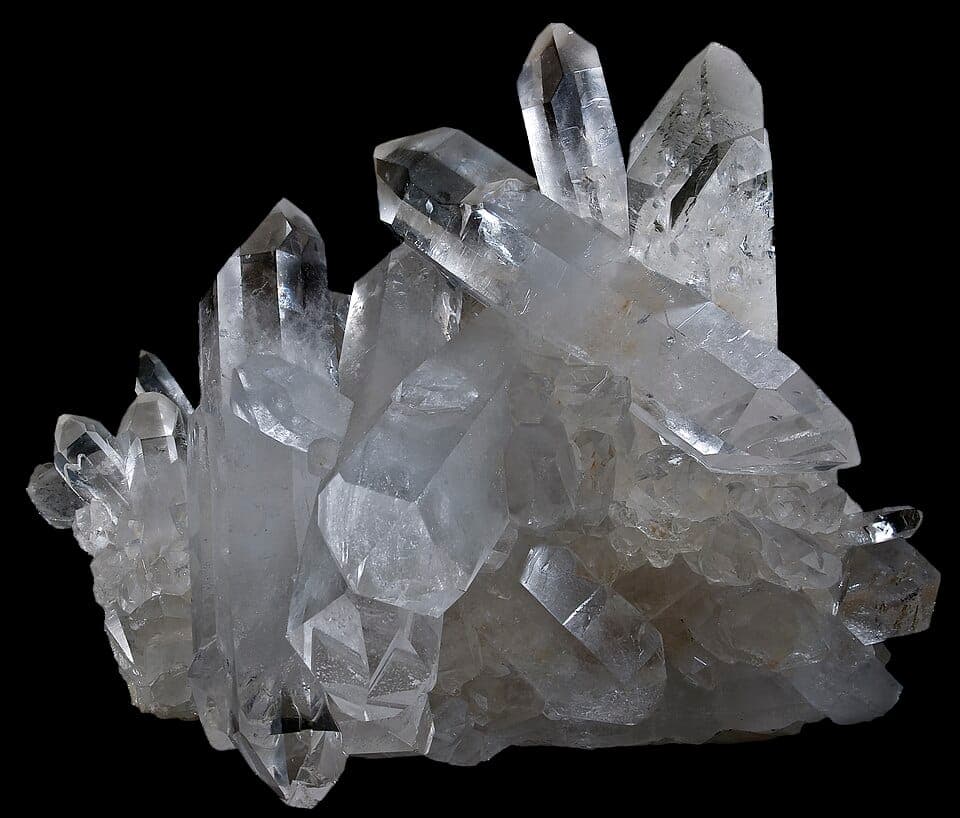
When the crystals are well formed, their shapes are distinct. Quartz grows as six-sided (hexagonal) prisms that end in a pointed, pyramid-like tip, usually with fine horizontal striations across the faces. Calcite is famous for its variety: it forms blocky rhombohedrons (like a leaning cube), sharp “dogtooth” points, and flat “nailhead” or tabular shapes. Neat six-sided points suggest quartz; leaning-cube rhombs suggest calcite.
The double-refraction test
This one is almost magical. Set a clear, colorless crystal on a line of text and look down through it. Clear calcite (the variety called Iceland spar) splits the image so the words appear doubled, because it bends light in two directions at once. Quartz does not do this — the text stays single. Doubled text is a near-certain sign of calcite.
Luster, cleavage, and heft
How a crystal breaks is another clue. Quartz has no flat cleavage; it fractures in curved, shell-like (conchoidal) surfaces and has a glassy to slightly greasy luster. Calcite cleaves cleanly along flat planes, so broken pieces tend to be neat rhomb shapes with a bright, sometimes pearly shine on the cleavage faces. If your sample keeps splitting into little leaning cubes, that is calcite.
Try Spotter Free on iOS & Android
Plants, animals, fungi, and rocks — all from a photo. 5 free identifications every day, no credit card required.
Look-Alikes: Other Clear or White Minerals
Quartz and calcite are not the only glassy minerals a beginner runs into. A few others are worth ruling out:
- Selenite (a form of gypsum) — even softer than calcite; a fingernail scratches it, and it does not fizz in vinegar.
- Halite (rock salt) — forms cubes, tastes salty, and dissolves in water.
- Fluorite — forms cubes and octahedrons and is softer than quartz (a knife scratches it), but it does not fizz in acid.
- Barite — noticeably heavy for its size, much denser-feeling than quartz or calcite.
- Glass and man-made “crystal” — no natural crystal faces, often with tiny bubbles or a mold seam.
Why It Matters: Getting the ID Right
Telling these two apart is the foundation of rock and mineral identification, because so many other minerals are compared against quartz and calcite. It also hints at where you are standing: abundant calcite usually means limestone or marble country, while lots of loose quartz points to granite, sandstone, or quartz veins. If you use acid to test, stick to household vinegar or properly diluted acid, keep it off your skin and eyes, and test on a small, hidden spot so you do not permanently etch a display specimen.
Frequently Asked Questions
Is clear quartz the same as glass?
No. Glass is manufactured and quartz is a natural crystal. Quartz is harder than glass (it will scratch a glass surface), forms natural six-sided faces, and contains no bubbles or mold seams the way manufactured glass often does.
Why does calcite fizz but quartz doesn’t?
Calcite is calcium carbonate, which reacts with even weak acid to release carbon dioxide — that is the fizz. Quartz is silicon dioxide, which is chemically inert to household vinegar and dilute acid, so nothing happens.
Can quartz and calcite occur together?
Yes, very often — they show up together in the same rock, vein, or geode. That is why you should test each crystal separately: a single specimen can easily contain both minerals side by side.
Which one is more valuable?
Neither is inherently valuable, because both are extremely common. What matters is clarity, color, crystal quality, and variety — amethyst and citrine are quartz, and clear Iceland spar is calcite — not the mineral name by itself.
Not sure whether that glassy crystal on your shelf or trail is quartz, calcite, or something else? Snap a photo and let Spotter help you identify it — and point you toward the simple tests that confirm it.
Try Spotter Free on iOS & Android
Plants, animals, fungi, and rocks — all from a photo. 5 free identifications every day, no credit card required.