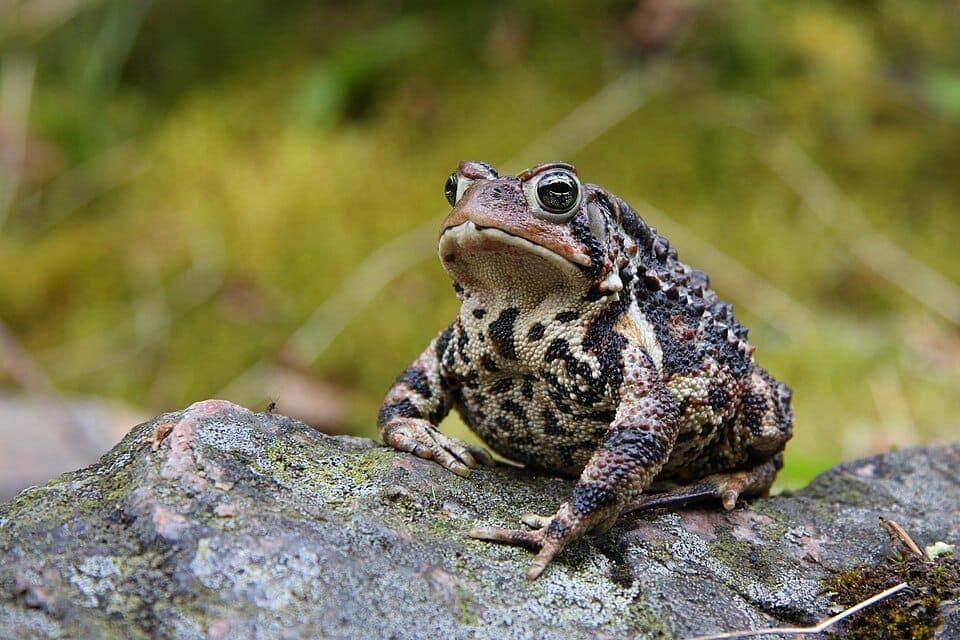
The fastest way to tell a toad from a frog is to look at the skin and the legs. A typical frog has smooth, moist, often shiny skin, long powerful hind legs built for big leaps, and lives in or right beside water; a typical toad has dry, bumpy, warty-looking skin, short stubby legs that manage short hops or a crawl, and can live far from water in gardens and woods. There is a twist — scientifically, all toads are a kind of frog — but for everyday identification these body clues sort them out almost every time. Here is how to tell them apart at a glance.
How to Tell a Toad From a Frog
No one feature is absolute, because “frog” and “toad” each cover many species, but the following marks together point you to the right answer quickly.
Skin texture
This is the clearest tell. Frogs generally have smooth, moist, sometimes slimy skin that helps them stay hydrated and often looks glossy. Toads have thicker, drier skin covered in bumps and “warts,” which is more waterproof and lets them survive away from water. If the animal looks wet and sleek, think frog; if it looks dry and pebbly, think toad.
Body shape and legs
Frogs tend to be slim and athletic with long, muscular hind legs that fold up like springs. Toads are squat and rounder, with short hind legs and a low, dumpy posture. Those proportions are why the two move so differently, and they are usually obvious the moment you see the animal sitting still.
How it moves
Watch what it does when you approach. A frog usually makes long, high leaps — often straight into water — using those powerful legs. A toad is more likely to sit tight and rely on camouflage, or to make short, low hops or a crawl if it moves at all. A single big, splashing leap says frog; a stubborn little hop across the lawn says toad.
Eyes and glands
Frogs typically have large, bulging eyes that stick up above the head. Toads have less protruding eyes and, crucially, a pair of large kidney-shaped bumps behind the eyes called parotoid glands — these produce the toad’s defensive toxins and are a dead giveaway that you are looking at a true toad. Many toads also show bony ridges (cranial crests) on top of the head.
Where you find them
Habitat is a strong hint. Frogs are rarely far from ponds, streams, marshes, or damp ground, because their skin dries out easily. Toads range much farther onto dry land — you will find them in vegetable gardens, lawns, forests, and backyards, often turning up under a board or a flowerpot by day and hunting insects at night. A hopper in the middle of a dry garden is far more likely a toad.
Eggs and calls
In spring, the eggs settle it. Most frogs lay eggs in floating clusters or clumps, while toads lay theirs in long, stringy strands wrapped around underwater plants. The voices differ too: frog calls range from the spring peeper’s high whistle to the bullfrog’s deep jug-o-rum, while many toads give a long, sustained musical trill on spring evenings.
Try Spotter Free on iOS & Android
Plants, animals, fungi, and rocks — all from a photo. 5 free identifications every day, no credit card required.
The Catch: All Toads Are Frogs
Here is where the tidy split breaks down. “Frog” and “toad” are common-language labels, not exact scientific groups. All of these animals are amphibians in the order Anura (“tailless” amphibians), and the “true toads” are just one family within it, the Bufonidae. So every toad is technically a frog, but not every frog is a toad. A few examples of why the everyday labels get slippery:
- True toads (family Bufonidae) — the dry, warty, parotoid-glanded animals most people picture, like the American toad.
- Treefrogs — small, often smooth frogs with sticky toe pads; some, like the gray treefrog, have slightly bumpy skin yet are not true toads.
- Spadefoots — called “spadefoot toads,” but they belong to a different family and have relatively smooth skin and a sharp digging “spade” on each hind foot.
- Bullfrogs and leopard frogs — classic smooth, long-legged, water-loving frogs that show the frog end of the spectrum clearly.
Are Toads Poisonous? Do They Give You Warts?
Toads are not dangerous to pick up, and they absolutely do not cause warts — that is an old myth; human warts come from a virus, not from toads. What is true is that toads defend themselves with toxins. The parotoid glands behind a toad’s eyes secrete bufotoxins that taste foul and irritate the mouth and eyes, which deters most predators. For people, the sensible rule is simply to wash your hands after handling any toad or frog and avoid touching your eyes or mouth first. The real risk is to pets: a dog that bites or mouths a toad can get sick from the toxins, and a few species — notably the cane toad in the Gulf South and the Sonoran Desert (Colorado River) toad in the Southwest — are potent enough to seriously harm or kill a dog. If your dog mouths one of those, rinse its mouth forward with water and call a veterinarian right away. As with any wild animal, look more than you handle, and leave toads and frogs where you find them.
Frequently Asked Questions
What is the easiest way to tell a toad from a frog?
Check the skin and legs. Dry, bumpy, warty skin with short legs means toad; smooth, moist skin with long, leaping legs means frog. The parotoid glands behind a toad’s eyes confirm a true toad.
Do toads give you warts?
No. Warts on people are caused by a virus, not by touching toads or their bumpy skin. You cannot catch warts from a toad — it is pure folklore.
Are toads poisonous to touch or to dogs?
Toads are safe to pick up gently; just wash your hands afterward and keep them away from your eyes and mouth. Dogs are the ones at risk — the toxins from a toad’s glands can make a dog sick, and cane toads and Sonoran Desert toads can be deadly to pets, so contact a vet if your dog mouths one.
Is a toad just a type of frog?
Yes. Scientifically, toads are one family (Bufonidae) within the frogs (order Anura), so every toad is a frog, but not every frog is a toad. The everyday words simply separate the dry, warty land-dwellers from the smooth, water-loving ones.
Spotted a hopper in the garden or by the pond and not sure which one it is? Snap a photo and let Spotter help you identify the amphibian — and learn whether your backyard visitor is a frog, a toad, or something in between.
Try Spotter Free on iOS & Android
Plants, animals, fungi, and rocks — all from a photo. 5 free identifications every day, no credit card required.