It happens every year around now: you walk under a big, round-crowned shade tree in late summer or early fall and the ground is littered with them — thick, leathery husks that have split open, and inside each one a large, glossy, mahogany-brown nut so smooth and richly colored it looks like it was polished by hand. Kids love to pocket them, and everyone wants to know what they are. These are buckeyes or horse chestnuts, two closely related trees whose nuts drop right about this time of year. Here is how to identify the tree they came from, tell the two apart, and understand why these beautiful nuts are strictly for looking at, not eating.
How to Identify a Buckeye or Horse Chestnut Tree
Buckeyes and horse chestnuts belong to the same group (genus Aesculus) and share a very recognizable set of traits that separate them from other big nut-dropping trees like walnuts, oaks, and hickories:
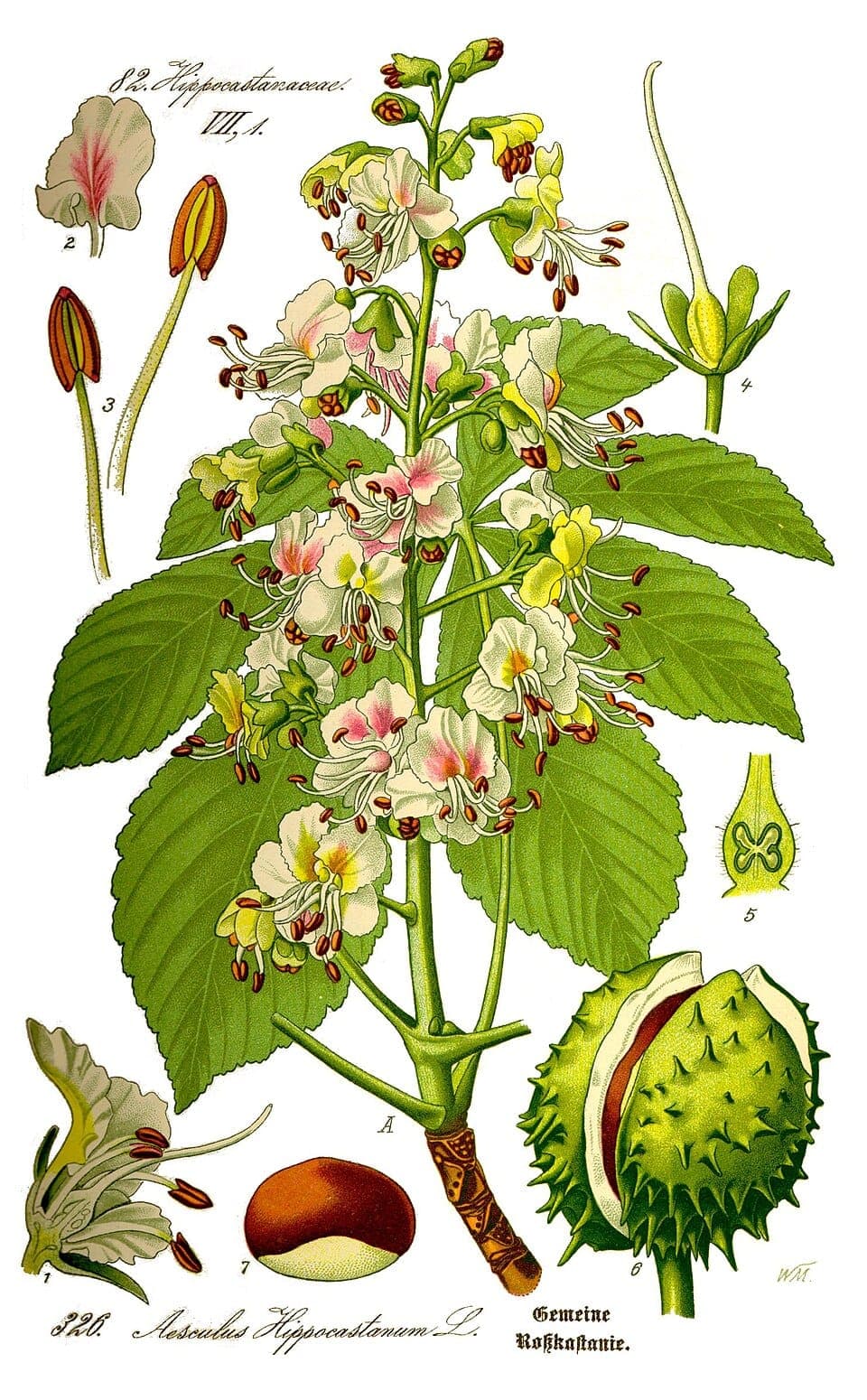
- The leaves: large and palmately compound — five to seven leaflets radiating from a single point like the fingers of a hand — rather than the feather-like rows of leaflets on a walnut or hickory
- The husk: a thick, leathery capsule that splits open along seams to release the nut, either bumpy and warty (buckeye) or covered in short, stout spines (horse chestnut)
- The nut inside: large, rounded, smooth, and glossy chestnut-brown, usually with a distinctive pale, tan "eye" patch — the mark that gives the buckeye its name
- Spring flowers: showy upright clusters (panicles) of blooms in late spring, creamy-white to yellow on many buckeyes and white with pink or red flecks on the common horse chestnut
- A rounded, spreading crown, and often an early leaf drop — buckeyes in particular tend to look tired and drop their leaves earlier than most shade trees
That hand-shaped compound leaf plus a smooth, shiny brown nut with a pale eye, emerging from a split husk, is the combination that says Aesculus. It is also the quickest way to rule out the true, edible sweet chestnut (Castanea), whose nuts come several to a densely, sharply spiny bur and whose leaves are single, long, and toothed — nothing like the palmate leaf here.
Try Spotter Free on iOS & Android
Plants, animals, fungi, and rocks — all from a photo. 5 free identifications every day, no credit card required.
Buckeye vs. Horse Chestnut: How to Tell Them Apart
The two are easy to confuse because the polished nuts look so similar, but a few details separate them reliably:
- The husk: a buckeye husk is warty and bumpy with a leathery surface, while a horse chestnut husk is covered in short, sharp spines — the surface texture is the fastest tell
- Nuts per husk: buckeyes usually carry a single nut in each husk, while a horse chestnut often holds one or two (occasionally more)
- The nut itself: horse chestnut seeds tend to be a bit larger, while the classic buckeye shows a especially clean, pale eye against dark brown
- Leaflets: Ohio buckeye leaves typically have five leaflets, while the common horse chestnut usually has seven, and its leaflets are broadest toward the tip
- Origin and setting: buckeyes are North American natives common in the eastern and central states, while the common horse chestnut is a European import widely planted as a street and park tree
In Europe, horse chestnut seeds are the famous "conkers" that children thread on strings for a schoolyard game — a good reminder that these nuts have a long history as toys, not food. Either way, if the husk is bumpy-warty it points to buckeye, and if it is spiny it points to horse chestnut.
Are Buckeyes and Horse Chestnuts Poisonous?
Yes — and this is the part that matters most. Despite the tempting name and their resemblance to edible sweet chestnuts, buckeye and horse chestnut nuts (along with the leaves, bark, and sprouts) contain toxic compounds, chiefly aesculin and related saponins, and are considered poisonous to people, livestock, and pets if eaten. This is an identification guide, not a foraging one: never eat a wild nut based on an app, a photo, or an article, and do not treat buckeyes or horse chestnuts as food, no matter how much they look like chestnuts. The real danger is exactly the look-alike confusion with true sweet chestnuts, which is why correct identification is worth taking seriously.
For pets the caution is worth repeating: dogs in particular sometimes chew fallen nuts, and swallowing them can cause vomiting, and other symptoms, so it is sensible to rake up and discard the nuts where dogs play and to call a veterinarian if your pet eats one. Simply handling the nuts is harmless — the toxicity is about eating them, not touching them — so there is no reason not to enjoy a pocketful as the good-luck charms they are traditionally kept as.
Not sure whether the tree dropping shiny brown nuts on your walk is a buckeye, a horse chestnut, or a true chestnut you have been told is edible? Snap a photo of the leaves, husk, or nut and let Spotter identify the tree as a starting point — and let this be your reminder to admire these particular nuts rather than taste them.
Try Spotter Free on iOS & Android
Plants, animals, fungi, and rocks — all from a photo. 5 free identifications every day, no credit card required.