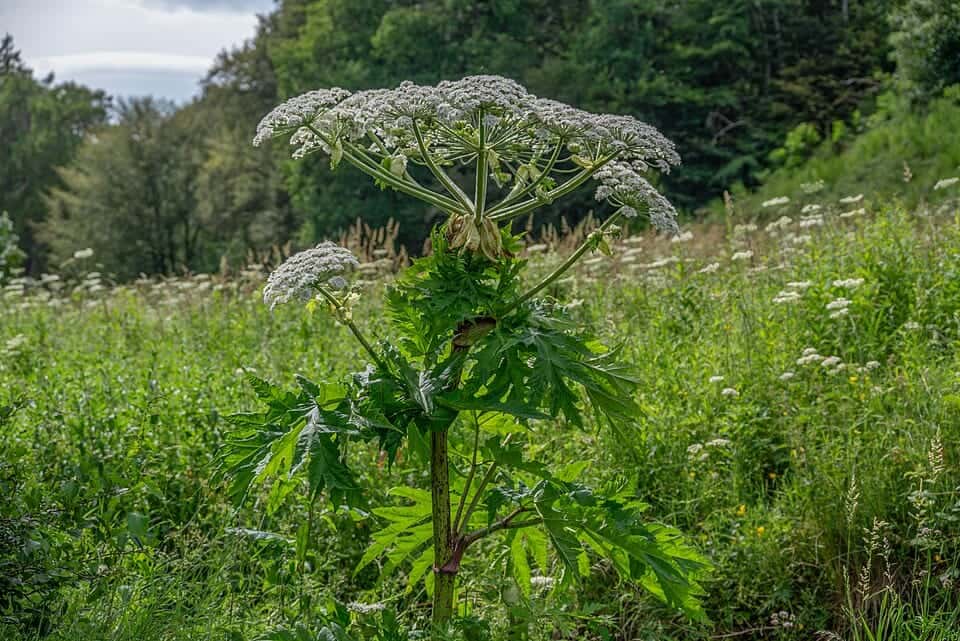
Giant hogweed (Heracleum mantegazzianum) is a towering invasive plant from the Caucasus whose clear, watery sap can cause severe skin burns and even blindness. It is a genuine public-health concern where it grows, so learning to recognize it — from a safe distance — matters. Never touch a plant you suspect is giant hogweed.
How to Identify Giant Hogweed
- Enormous size — mature plants tower 8 to 14 feet tall
- Huge, flat-topped white flower clusters (umbels) up to 2.5 feet across, like a giant Queen Anne's lace
- Thick green stems with dark reddish-purple blotches and coarse white hairs
- Massive, deeply cut, jagged leaves up to 5 feet wide
Why It Is Dangerous
Giant hogweed sap contains compounds that make skin extremely sensitive to sunlight (phytophotodermatitis). Contact followed by sun exposure can cause painful blistering burns within a day or two, long-lasting scars and dark marks, and serious eye injury if sap reaches the eyes.
What to Do If You Touch It
- Wash the area immediately with soap and water and keep it out of sunlight for at least 48 hours
- Flush eyes with water and wear sunglasses if sap contacts them, and seek medical care
- See a doctor for any burns or blistering
- Do not try to cut or remove giant hogweed yourself — report it to your state agriculture or environmental agency for professional removal
Look-alikes like cow parsnip, angelica, and Queen Anne's lace cause needless panic — and true giant hogweed is sometimes missed. From a safe distance, photograph the plant and let Spotter help identify it before you go anywhere near it.
Try Spotter free on iPhone or Android
Plants, animals, fungi and rocks from one photo. 5 free identifications every day, no card required.