FG-0005 · Wild Plants · 6 species
Identifying Wild Plants of Kentucky
By Derek Gauger · Updated
Overview
Kentucky sits at the heart of the eastern deciduous forest, one of the most biodiverse temperate ecosystems on Earth. The Appalachian foothills, the Bluegrass region, and the Mississippi alluvial plain each host their own distinctive plant communities.
This guide helps you recognize some of Kentucky's most characteristic wild plants — from the ramp-covered hollows of the east to the pawpaw patches along creek bottoms statewide. For each species you'll find the key identifying features, preferred habitat, and the season when it's easiest to spot.
Key species to know
FG-0005.01
Ramps (Wild Leek)
Allium tricoccum
March–May
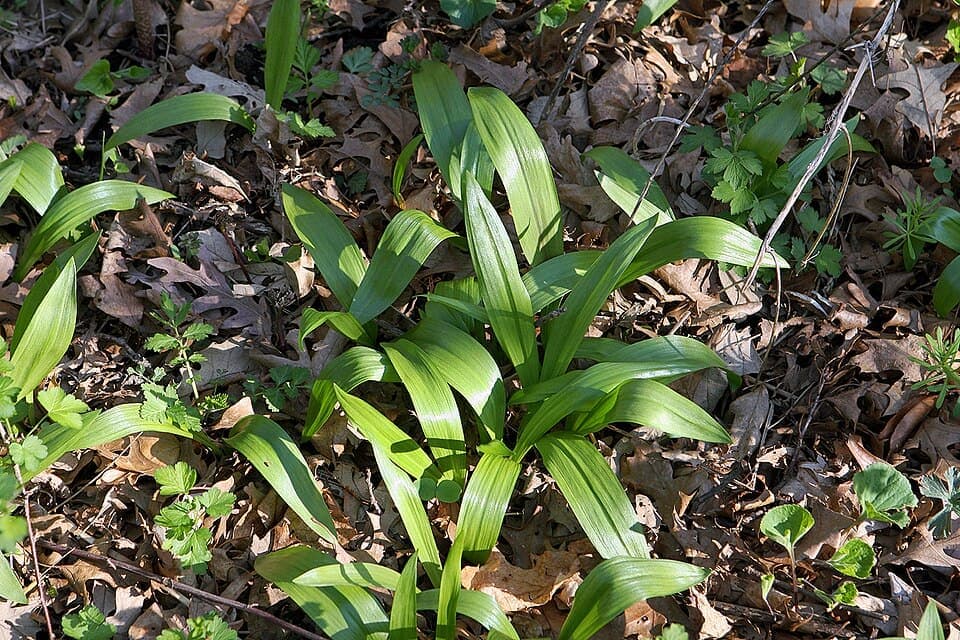
A spring ephemeral with broad, smooth green leaves and a pungent garlic-onion scent — one of the most recognizable spring plants of Appalachian forests.
Habitat: Rich, moist hardwood hollows; north-facing slopes under maple, beech, and tulip poplar.
A key ID feature is the unmistakable garlic-onion smell of the crushed leaf. Similar-looking spring plants such as lily of the valley lack that scent entirely.
FG-0005.02
Pawpaw
Asimina triloba
August–October
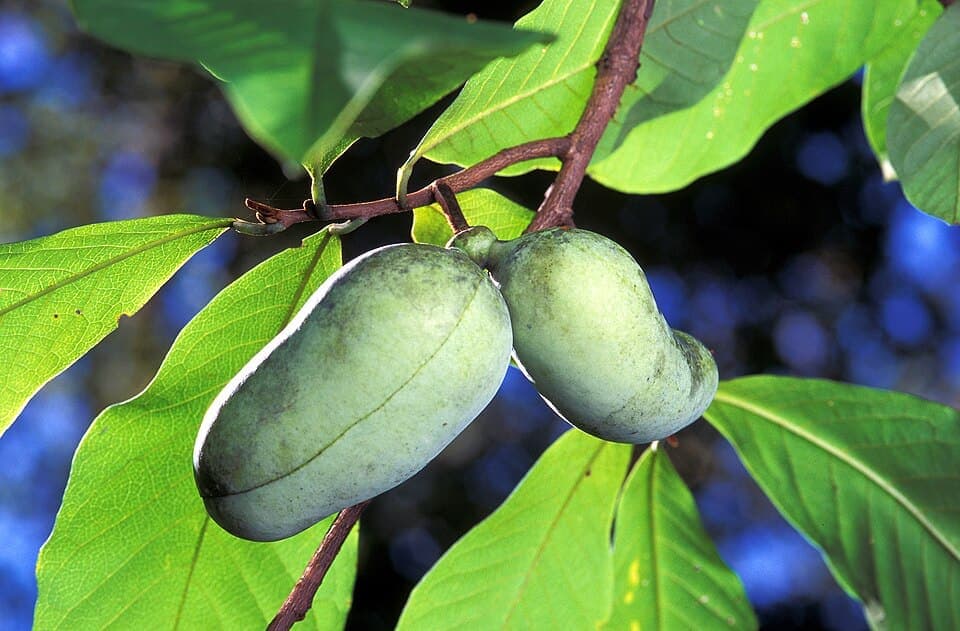
North America's largest native fruit — a green oblong pod with large tropical-looking leaves. Forms dense colonies and is easiest to recognize when fruiting in late summer.
Habitat: Moist bottomlands and stream banks; often forms dense colonies (patches).
FG-0005.03
Elderberry
Sambucus nigra
Flowers: June–July; Berries: August–September
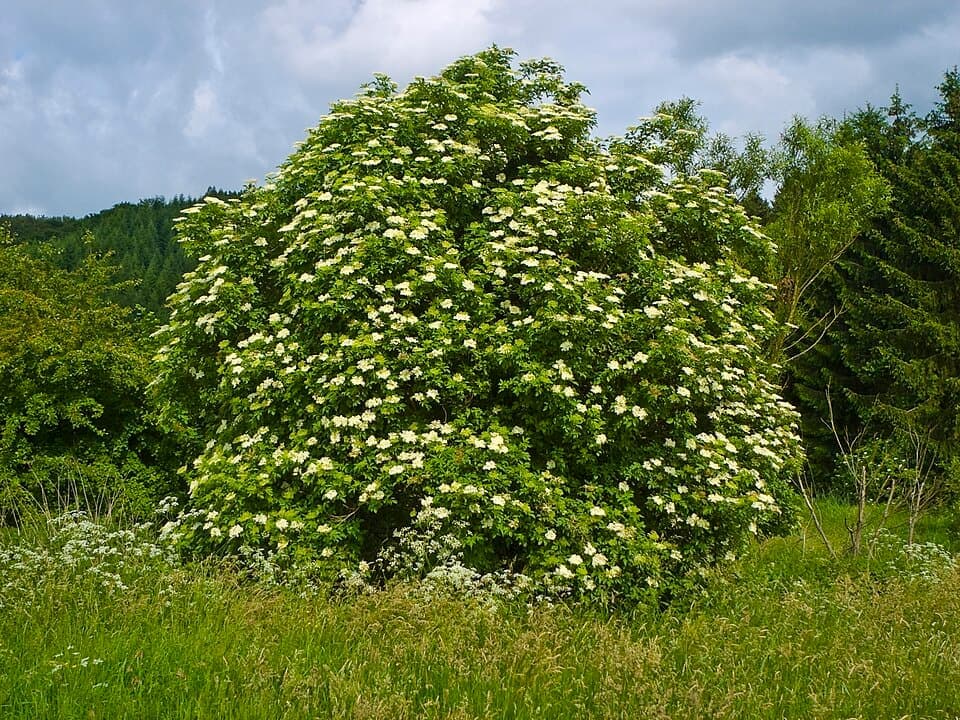
A shrubby tree with flat-topped clusters of tiny white flowers in spring and dense clusters of small dark berries in late summer — a distinctive silhouette along field edges.
Habitat: Roadsides, field edges, stream banks, and forest margins.
Note the flat-topped flower and berry clusters; the red-berried elderberry (Sambucus racemosa) has a dome-shaped, pyramidal cluster instead.
FG-0005.04
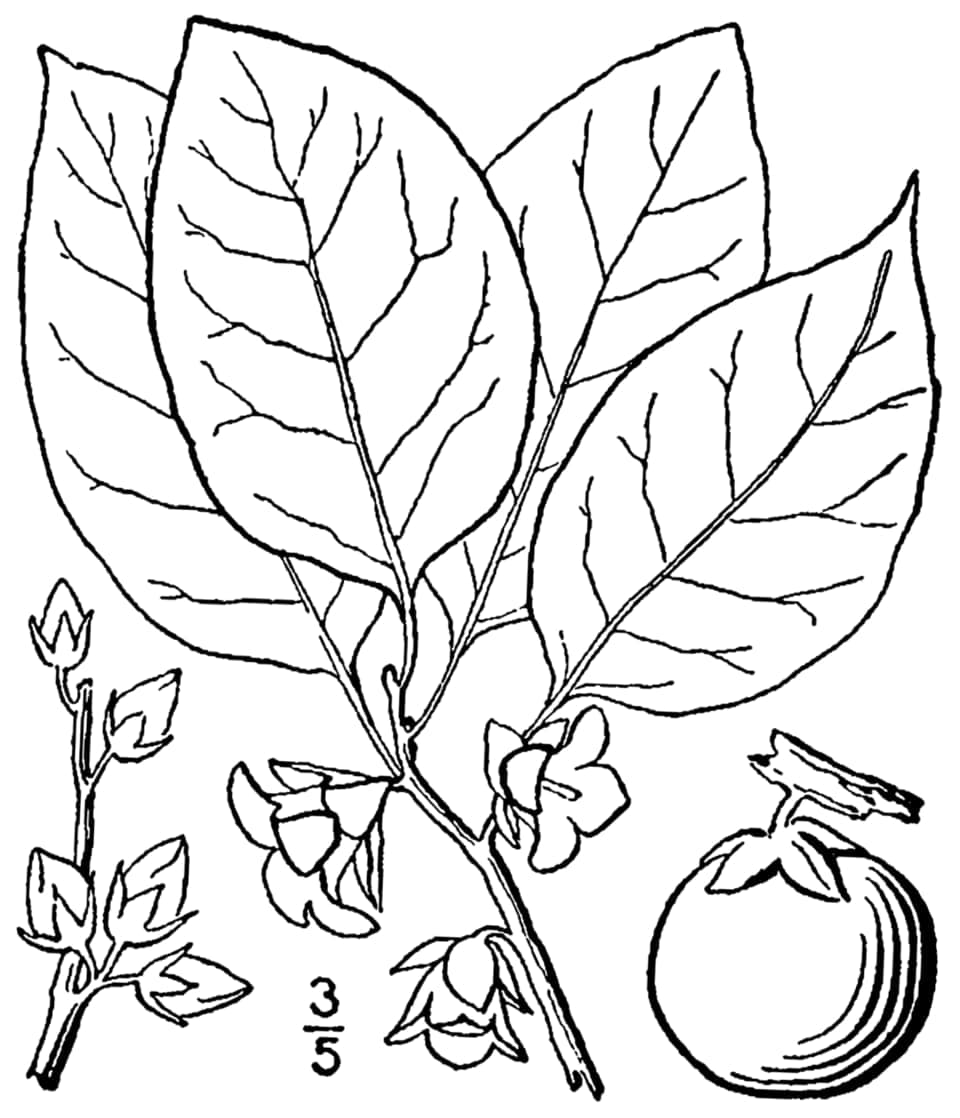
American Persimmon
Diospyros virginiana
Fruit persists October–December
A small to medium tree with distinctive blocky, dark gray bark broken into square plates, and small round orange fruits that persist after leaf drop.
Habitat: Old fields, forest edges, roadsides, and disturbed areas throughout Kentucky.
FG-0005.05
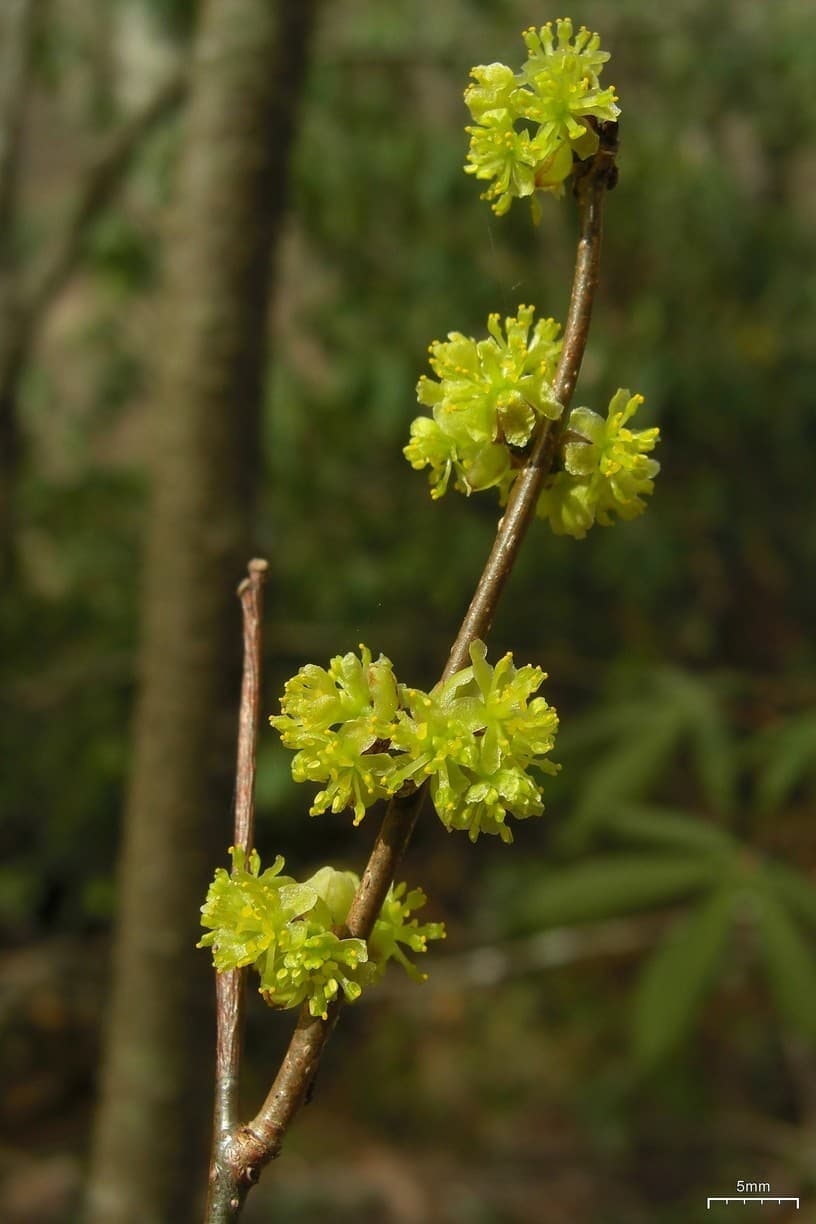
Spicebush
Lindera benzoin
Berries September–October
A fragrant understory shrub with bright red oval berries and smooth twigs that release a strong spicy-citrus scent when scratched — a reliable ID feature.
Habitat: Moist forest understory, especially along streams and in bottomland forests.
FG-0005.06
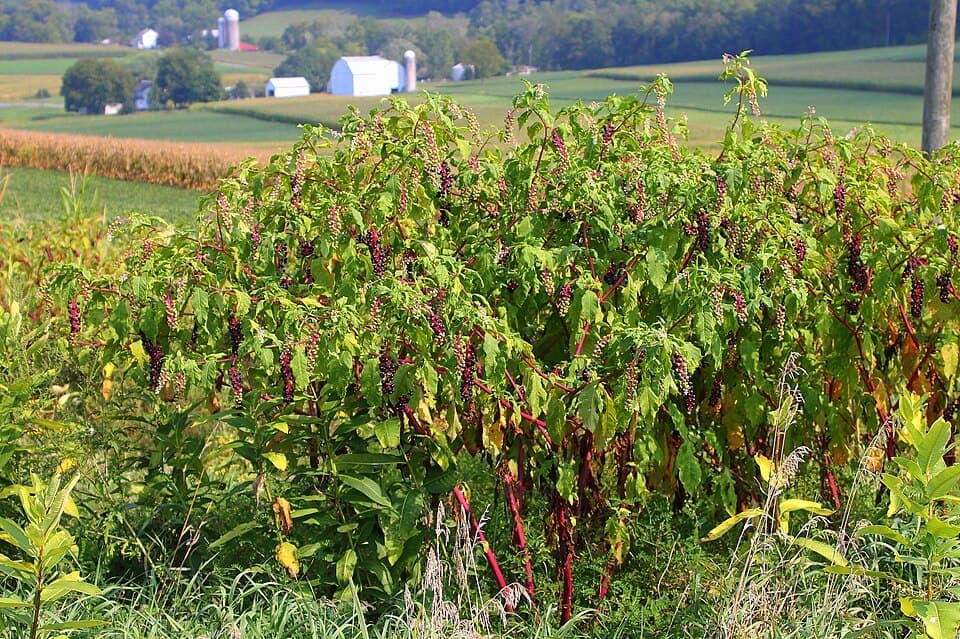
Pokeweed
Phytolacca americana
ToxicBerries in fall
A large native perennial with striking magenta stems, big smooth leaves, and drooping clusters of dark purple berries — one of the easiest plants to recognize across Kentucky.
Habitat: Disturbed areas, field edges, roadsides, and woodland margins.
Worth learning to recognize because all parts are toxic. Look for the magenta stem, large alternate leaves, and hanging clusters of dark berries.
Through the seasons
- March–April: Ramps are easiest to spot on north-facing forest hollows as spring wildflowers emerge.
- May–June: Elderflower clusters appear; wood sorrel and lamb's quarters green up.
- August–September: Pawpaw fruit and elderberry clusters make these species easy to identify.
- October–November: American persimmon fruit persists after leaf drop; spicebush berries show red.
Questions
- Where are ramps most easily spotted in Kentucky?
- Eastern Kentucky's Appalachian counties (Pike, Leslie, Bell, Harlan) have dense ramp populations. Look in moist, north-facing hollows under mature hardwoods; Daniel Boone National Forest has good populations on public land.
- How do I recognize a pawpaw in Kentucky?
- Pawpaws form dense colonies of small understory trees with large, drooping tropical-looking leaves. In late summer they bear green oblong fruit. The distinctive leaf shape and colonial growth habit make them easy to identify even before fruiting.
- What features should I photograph to identify a wild plant?
- Capture the whole plant plus close-ups of leaves (top and underside), stem, and any flowers or fruit. Leaf arrangement, edge shape, and bark are all useful ID clues. Spotter can analyze these details and suggest the species.
From Field Notes
Not sure what you found?
Take a photo with Spotter for the name, field marks, look-alikes and safety notes in seconds.


In this guide
- Species
- 6
- Region
- Kentucky