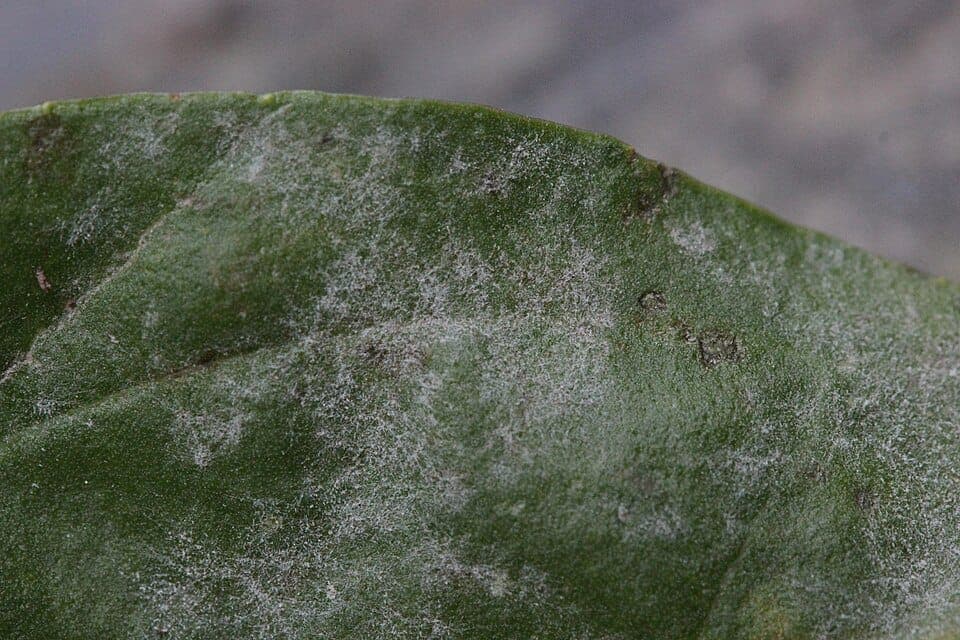
You look at the squash patch, the zinnias, the bee balm, or the lilac in late summer and the leaves have gone strange: a dusty white-to-gray film is spreading across them, so even and powdery that it looks as though someone sifted flour over the plant. Wipe a leaf and some of it comes off on your finger. It seems to appear on more and more plants as the season wears on. This is powdery mildew, one of the most common and recognizable plant diseases of late summer and early fall — and the question of what it is, and whether it will kill the plant, is one of the most frequent a gardener asks this time of year.
How to Identify Powdery Mildew
Powdery mildew is not a single organism but a group of related fungi, each fairly specialized to particular plants. Despite the variety, the symptom they produce is remarkably consistent and easy to recognize:
- A white to grayish, powdery or dusty coating on the upper surfaces of leaves — the signature symptom, often starting as small round spots that spread and merge
- The coating can also appear on stems, buds, and flowers, and in heavy cases seems to cover a leaf almost completely
- It rubs off, at least partly, when you wipe it — unlike the plant’s own coloring
- Yellowing, curling, browning, or distorted leaves under and around the affected areas as the infection progresses; badly hit leaves may drop early
- A pattern that worsens through late summer and shows up first on crowded, shaded, or poorly ventilated plants
The classic hosts make identification easier because they are so predictable: cucurbits (squash, pumpkins, cucumbers, melons) are almost expected to show it by late summer, and in the flower garden roses, phlox, bee balm, zinnias, dahlias, and lilacs are frequent victims. If you see that flour-dusted look on any of these in August or September, powdery mildew is the overwhelmingly likely answer.
Try Spotter Free on iOS & Android
Plants, animals, fungi, and rocks — all from a photo. 5 free identifications every day, no credit card required.
Why Powdery Mildew Shows Up in Late Summer
Powdery mildew is a bit of a contrarian among plant diseases. Most fungal problems need prolonged leaf wetness to take hold, so they favor cool, rainy spells. Powdery mildew is the opposite: it flourishes in warm, dry days paired with humid nights, and — unusually — its spores do not need standing water on the leaf to germinate, only high humidity in the air. That is exactly the weather pattern of late summer, when warm afternoons give way to muggy, dewy nights. Add the crowded, mature foliage of an end-of-season garden, and you have ideal conditions for the disease to spread from plant to plant on the wind.
That is why it seems to erupt everywhere at once in August and September, and why the plants that get it worst are often the ones packed tightly together, sitting in a still, shaded corner, or crowded enough that air cannot move through the leaves. Good airflow and sun are the natural enemies of powdery mildew.
What Powdery Mildew Means for Your Plants
The good news is that for most established ornamentals and many vegetables, powdery mildew is more of a cosmetic and vigor problem than a death sentence, especially when it arrives late in the season as the plant is already winding down. It shades the leaf surface and saps some energy, which can reduce yields on things like squash and cucumbers and make flowers look tired, but a healthy plant hit in late summer often finishes its season and recovers the next year. The disease is host-specific enough that the mildew on your lilac is not the same fungus attacking your squash, so it does not all spread from one plant to every other.
If you want to limit it, the most effective steps are cultural rather than chemical: space and prune plants for good airflow, water at the base rather than wetting the leaves, plant in full sun where you can, remove and discard badly infected leaves (do not compost them), and choose mildew-resistant varieties of prone plants like phlox, bee balm, and squash next year. There are fungicidal and homemade sprays that can help protect new growth when applied early, but for an established garden hit in late summer, most gardeners simply clean up affected foliage and rely on prevention next season. Powdery mildew is not harmful to people or pets, and it does not spread to your lawn or your house.
Not sure whether the white coating on your plant is powdery mildew, downy mildew, or something else entirely? Snap a photo and let Spotter identify the plant and help you get oriented — a useful first step toward knowing what you are dealing with and how much to worry.
Try Spotter Free on iOS & Android
Plants, animals, fungi, and rocks — all from a photo. 5 free identifications every day, no credit card required.