You are lying awake on a cool fall night when it drifts through the window: a deep, rhythmic hooting from the trees, or maybe a wild, wavering whinny that raises the hair on your neck. You go to the window and see nothing — because owls are creatures of sound far more than sight, and this is their loud season. As nights lengthen in fall, owls become noticeably more vocal: this year’s young are dispersing to find their own territories, and the larger species are already staking out nesting ground for a winter breeding season that starts remarkably early. Since you will almost always hear an owl before you ever see one, the fastest way to identify the one in your neighborhood is to learn its voice. Here are the calls of the owls you are most likely to hear across North America.
Why a Nighttime "Hawk Scream" Is Usually an Owl
First, a useful rule of thumb: hawks and other daytime raptors are rarely vocal after dark, so a mysterious screech, hoot, or scream coming from the night woods is far more likely to be an owl. Owls own the night shift. Once you accept that the caller is probably an owl, the specific sound narrows it down quickly — each common species has a distinctive voice.
The Great Horned Owl: The Classic Hoot
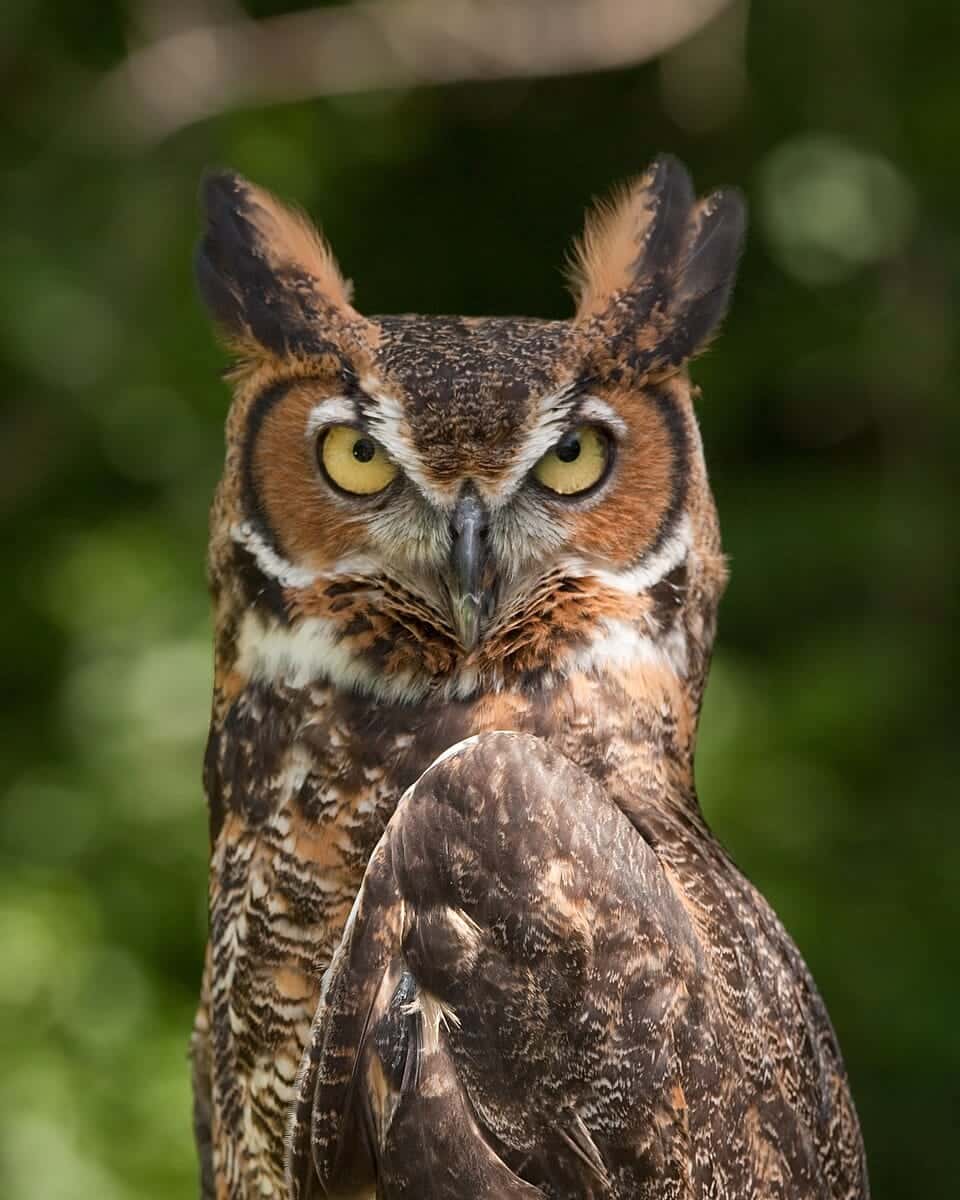
When people imagine an owl, they hear the great horned owl. Its call is a deep, soft, evenly spaced series of hoots — often written as "hoo-hoo-hoo, hoo, hoo" — with a mellow, resonant quality that carries a long way through still night air. Great horned owls are our earliest nesters, and pairs begin dueting to claim territory in fall and early winter, which is why their hooting seems to ramp up just as the weather turns. If you hear a classic, low, hollow hoot on an autumn night, this big, powerful, tufted owl is the usual answer.
Try Spotter free on iPhone or Android
Plants, animals, fungi and rocks from one photo. 5 free identifications every day, no card required.


The Barred Owl: "Who Cooks for You?"
The barred owl has one of the most recognizable and easily remembered calls in all of North American birding: a rhythmic, hooting phrase that birders memorize as "Who cooks for you? Who cooks for you-all?" It is a bird of wet woodlands and wooded suburbs, and it is unusually willing to call during the day as well as at night, especially on cloudy afternoons. Barred owls are also famous for their raucous, cackling, caterwauling duets — a startling racket of hoots, gurgles, and monkey-like whoops that sounds like the woods have gone mad. If you hear "who cooks for you," you have a barred owl.
The Eastern Screech-Owl: A Spooky Whinny
Despite its name, the eastern screech-owl does not really screech. Its two signature sounds are a descending, horse-like whinny — a wavering, tremulous cry that falls in pitch and sounds genuinely eerie in the dark — and a soft, even trill on one pitch, like a small purring monotone. This is a tiny owl, not much bigger than a soda can, and it is common in towns, parks, and backyards with old trees, so its ghostly whinny is one of the owl sounds suburban listeners hear most. A small, quavering, descending wail from a neighborhood tree is very likely a screech-owl.
The Barn Owl and Other Voices
Not every owl hoots. The barn owl — the pale, heart-faced owl of barns, silos, and open country — does not hoot at all; instead it gives a long, harsh, rasping shriek, an unsettling scream that has fueled countless "haunted" stories. In the North and West you may hear the great gray, long-eared, or northern saw-whet owl, the last of which gives a monotonous, tooting beep repeated over and over on a single pitch, often for minutes at a time. The point is that "owl" is not one sound: matching the specific call to the species is the whole game.
How to Enjoy Owls Without Disturbing Them
The best way to identify a hooting owl is simply to stop and listen, note the rhythm and quality of the call, and match it to the species above. Playing recorded calls to lure owls in can stress the birds and pull them away from real territorial business, so it is best avoided, especially during the fall-to-winter nesting run-up when the birds are already working hard to establish territory. If you are lucky enough to spot the owl itself, keep your distance and keep any light brief and dim. Owls are easiest to appreciate as voices in the dark — and once you know the voices, your own backyard gets a lot more interesting after sunset.
Caught a glimpse of the owl making all that noise, or found a big feather or a pellet beneath a roost tree? Photograph the bird, the feather, or the sign and let Spotter help you identify it, so you can finally put a name to the voice haunting your autumn nights.
Try Spotter free on iPhone or Android
Plants, animals, fungi and rocks from one photo. 5 free identifications every day, no card required.