FG-0017 · Wildlife · 6 species
Identifying Snakes in Arizona
By Derek Gauger · Updated
Overview
Arizona has more rattlesnake species than any other state — thirteen — plus dozens of harmless snakes, all suited to its deserts, canyons, and sky-island mountains. Most encounters are with non-venomous species, but the state's rattlesnakes deserve real respect.
The safest way to identify any snake is from several feet away with a photo — never handle, corner, or try to move one. This guide covers the snakes you are most likely to meet on Arizona trails, washes, and yards.
Key species to know
FG-0017.01
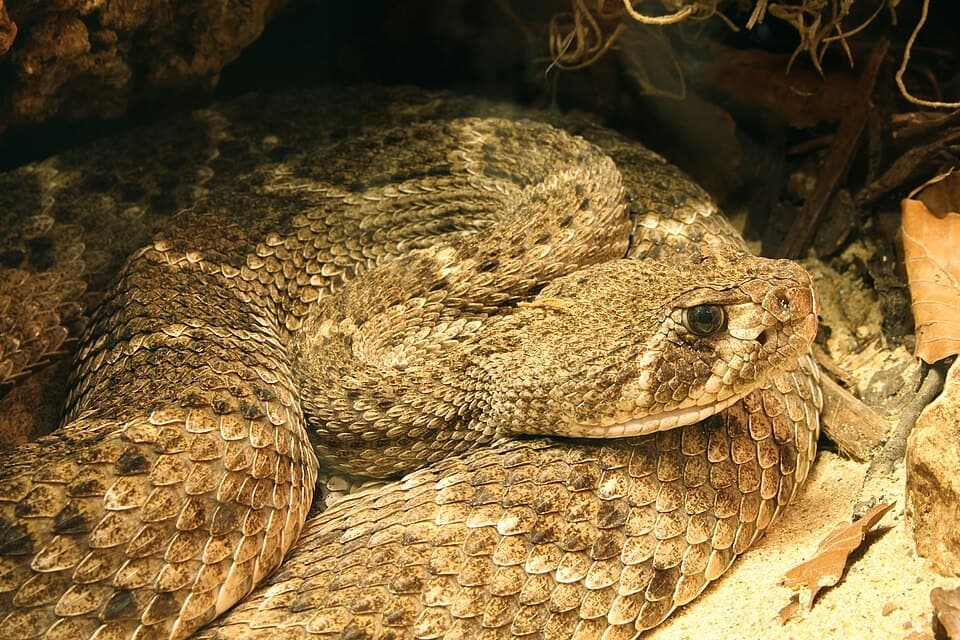
Western Diamondback Rattlesnake
Crotalus atrox
Arizona's most widespread and frequently encountered rattlesnake — heavy-bodied with diamond blotches and a black-and-white banded "coon tail" ahead of the rattle. Venomous; buzzes a clear warning when threatened.
Habitat: Desert flats, rocky foothills, and grassland across most of the state.
Venomous. Keep well back and never try to handle or kill it — most bites happen during those attempts.
FG-0017.02
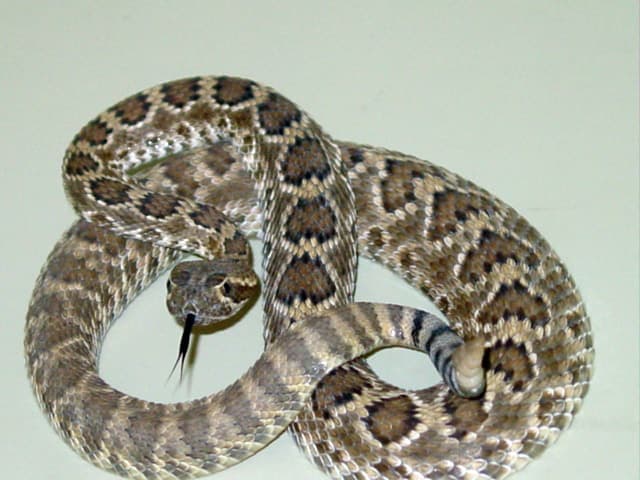
Mojave Rattlesnake
Crotalus scutulatus
Similar to the diamondback but usually greenish-tinged with narrower black tail bands and wider white ones. Venomous, with a particularly potent venom; found in open desert and grassland.
Habitat: Open desert scrub, creosote flats, and grassland in southern and western Arizona.
Venomous with potent venom. Give it a very wide berth and treat any bite as an emergency.
FG-0017.03
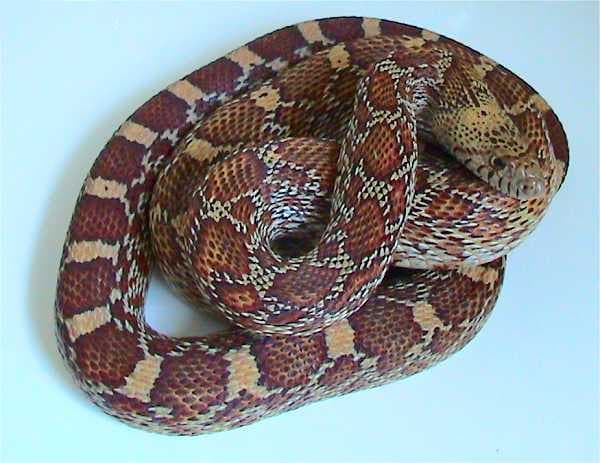
Sonoran Gopher Snake
Pituophis catenifer affinis
A large, non-venomous constrictor with brown blotches on a cream body. Often mistaken for a rattlesnake — it will hiss loudly, flatten its head, and vibrate its tail — but it has no rattle and is harmless.
Habitat: Deserts, grassland, farmland, and rocky slopes statewide.
FG-0017.04
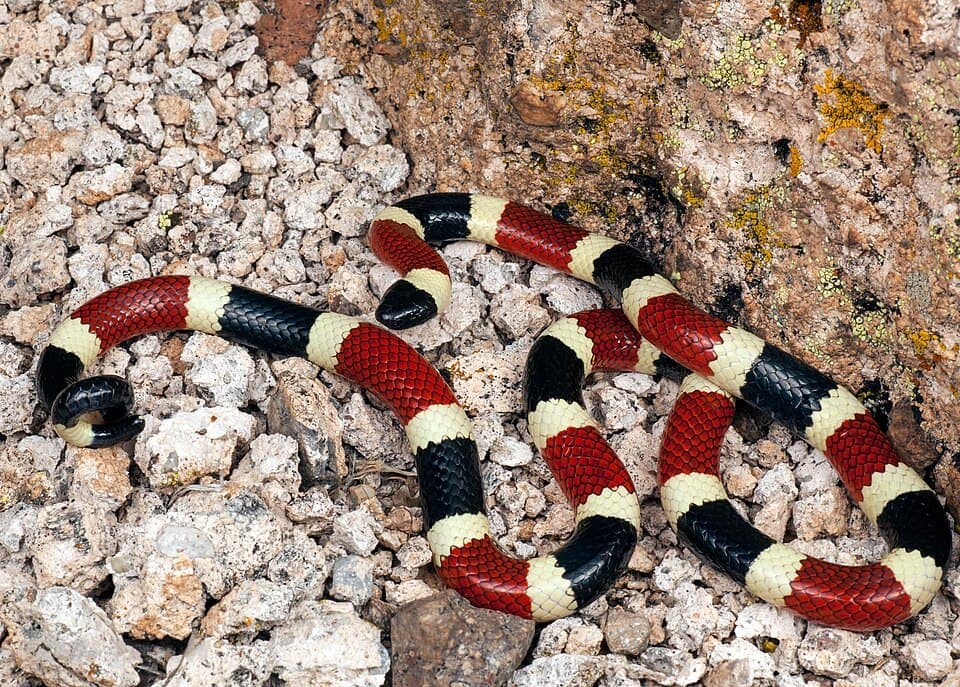
Sonoran Coral Snake
Micruroides euryxanthus
A small, secretive snake ringed in red, black, and yellow, with red and yellow bands touching. Venomous but shy, with a small mouth; bites are very rare.
Habitat: Rocky desert, thornscrub, and under debris in southern Arizona.
Venomous. Never handle any small banded snake — confirm from a distance and leave it alone.
FG-0017.05
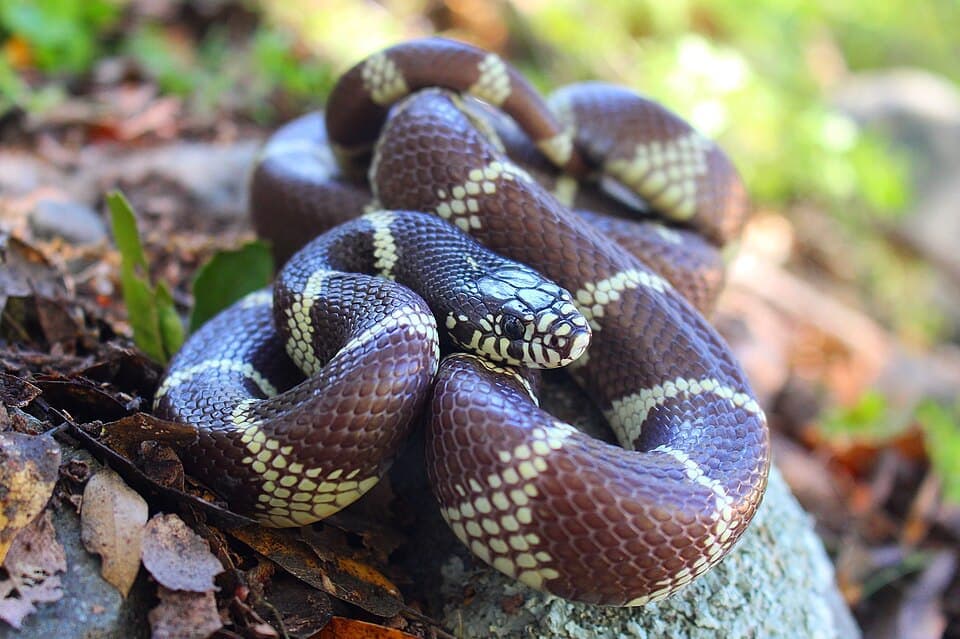
California Kingsnake
Lampropeltis californiae
A glossy, non-venomous snake in bold black-and-white (or brown-and-cream) bands. Harmless to people and famous for preying on rattlesnakes, to whose venom it is largely immune.
Habitat: Deserts, chaparral, farmland, and suburbs across much of the state.
FG-0017.06
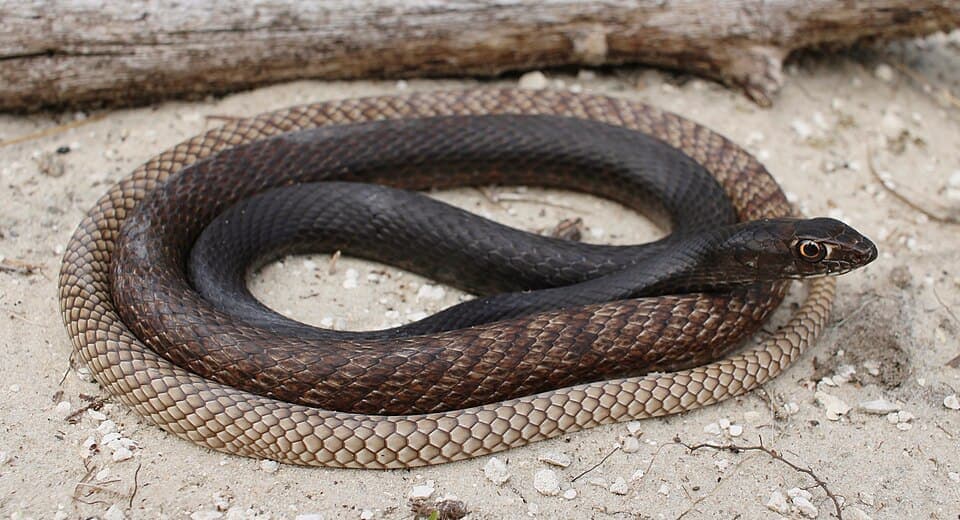
Coachwhip
Masticophis flagellum
A long, slender, extremely fast non-venomous snake, often pink, tan, or two-toned with a braided-whip look to its tail. Curious and quick to flee rather than fight.
Habitat: Open desert, grassland, and brush statewide.
Through the seasons
- Rattlesnakes are most active in spring and fall, and on warm summer evenings and nights.
- Watch your step and your hands around rocks, woodpiles, and desert washes — reach only where you can see.
- Most bites occur when people try to handle or kill a snake — give any snake room and it will move on.
Questions
- How many venomous snakes are in Arizona?
- Arizona has thirteen rattlesnake species — the most of any state — plus the Sonoran coral snake. The western diamondback and Mojave rattlesnake are among the most commonly encountered.
- What is the best way to identify a snake safely?
- From a distance. Take a photo from several feet away and use an app like Spotter to identify the species — never pick up or corner a snake to get a closer look.
From Field Notes
Not sure what you found?
Take a photo with Spotter for the name, field marks, look-alikes and safety notes in seconds.


In this guide
- Species
- 6
- Region
- Arizona