FG-0011 · Wild Plants · 5 species
Desert Plants of Arizona & the Southwest
By Derek Gauger · Updated
Overview
The American Southwest contains four distinct desert ecosystems, each with its own characteristic flora. The Sonoran Desert — covering southern Arizona and extending into Mexico — is the richest desert in North America, supporting over 2,500 plant species including the iconic saguaro cactus.
Springtime brings spectacular wildflower superbloom events when rainfall timing is right. Year-round, the desert's specialized flora — adapted to extreme heat, drought, and intense sunlight — offers fascinating study and, in many cases, edible and medicinal plants that sustained Indigenous communities for thousands of years.
Key species to know
FG-0011.01
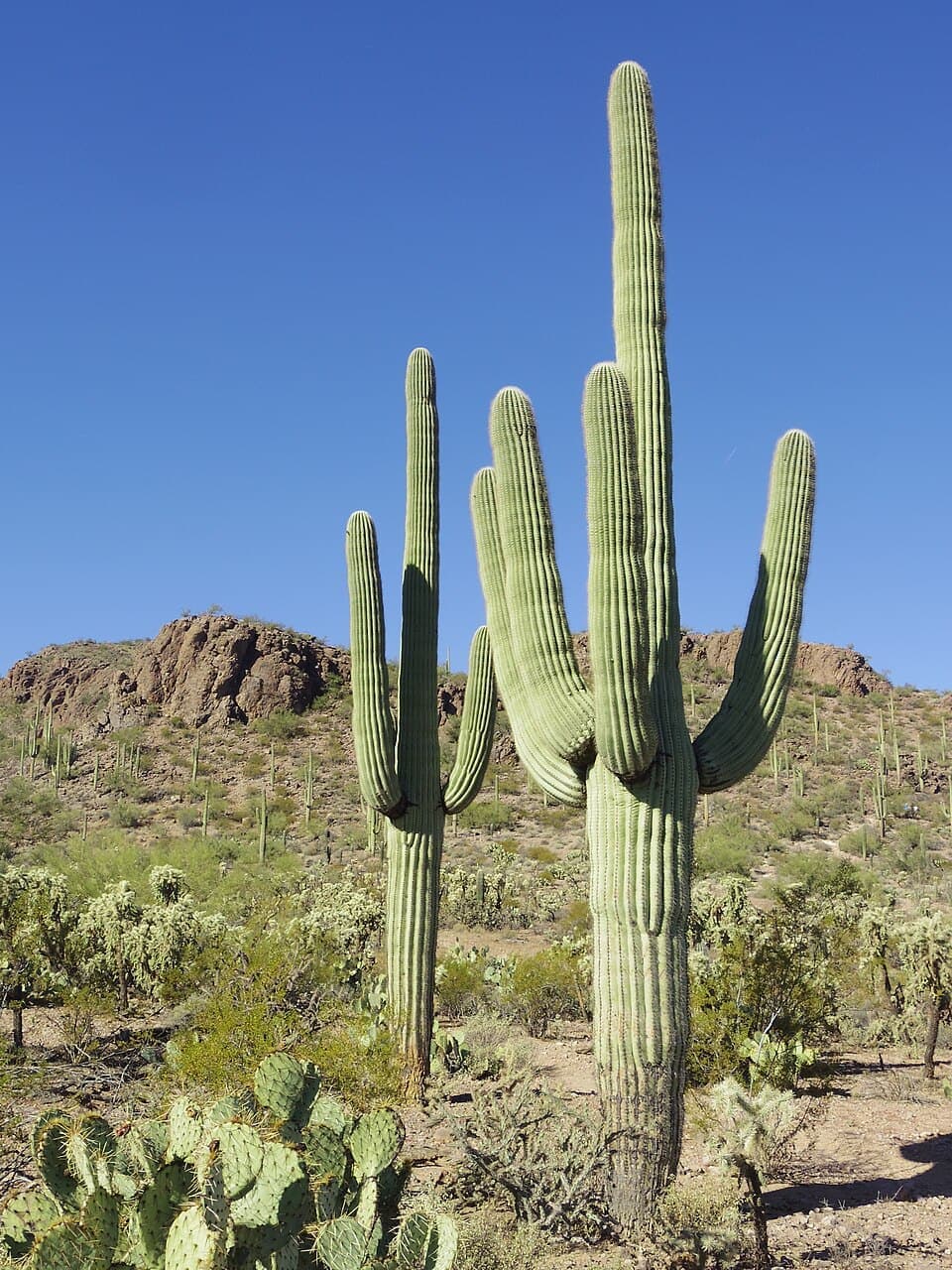
Saguaro Cactus
Carnegiea gigantea
Flowers: May–June; Fruit: June–July
The iconic symbol of the American West. Can live 150+ years, reach 40 feet tall, and weigh 6 tons. White flowers bloom in May; red edible fruits ripen in June. Arms don't typically appear until the cactus is 75+ years old.
Habitat: Rocky slopes and bajadas of the Sonoran Desert; limited to southern Arizona and Sonora, Mexico.
Protected by Arizona law — removing, injuring, or destroying a saguaro without permit carries fines up to $25,000.
FG-0011.02
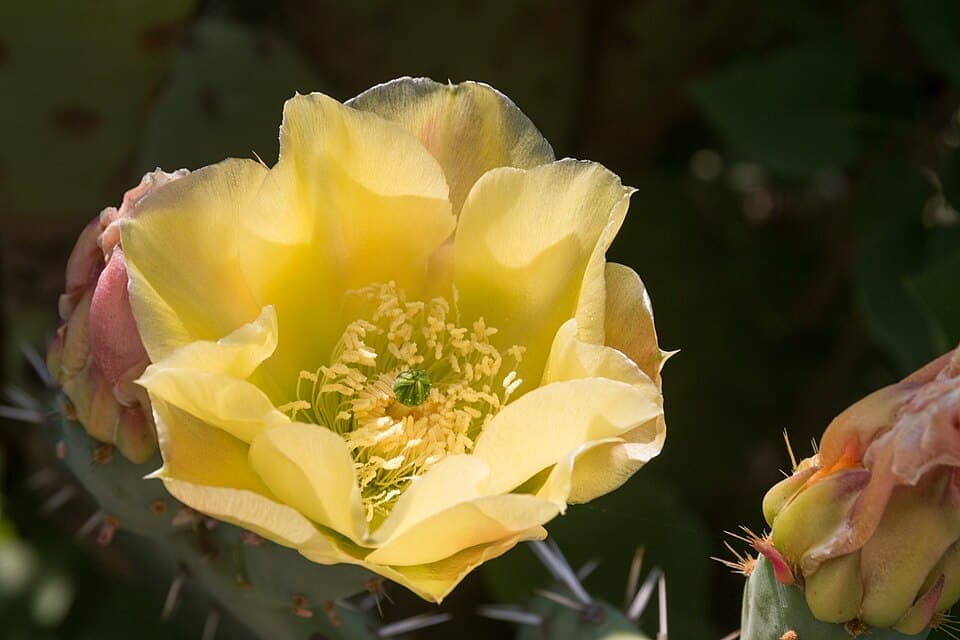
Prickly Pear Cactus
Opuntia engelmannii
EdibleFlowers: April–June; Fruit: September–October
Flat paddle-shaped pads with clusters of spines and red to purple fruits (tunas). One of the most widely distributed cacti in the Southwest. Pads (nopalitos) and fruits are both edible and widely used in Mexican cuisine.
Habitat: Desert flats, slopes, and grasslands throughout the Southwest; also common in Texas.
Fine hair-like spines (glochids) detach easily and are very difficult to remove from skin. Use tongs or thick gloves when harvesting fruit; singe off glochids before eating.
FG-0011.03
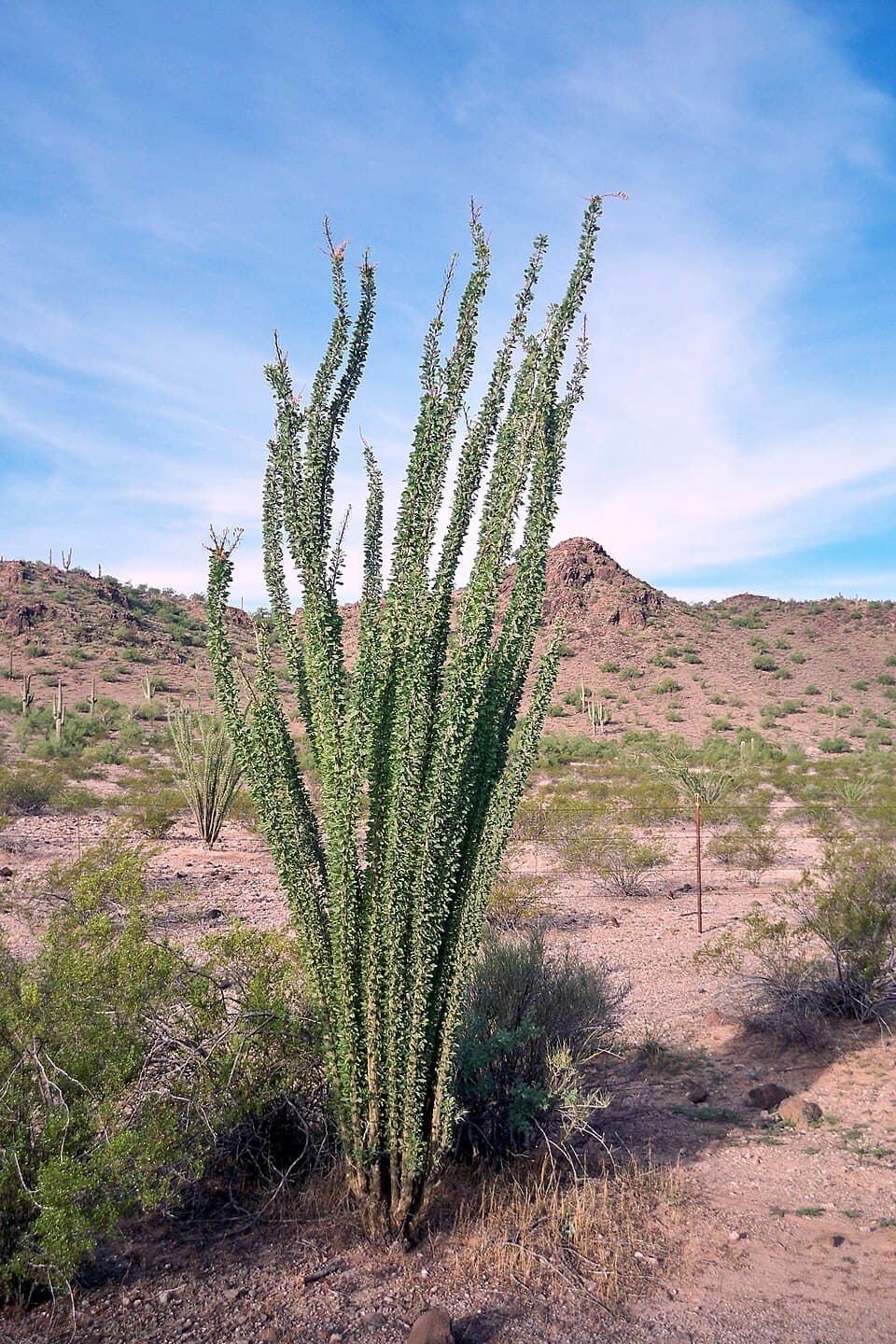
Ocotillo
Fouquieria splendens
Flowers: February–June (triggered by rain)
Not a true cactus — a distinctive desert shrub with long, whip-like spiny canes that leaf out within days of rain and produce brilliant red flower clusters at the tips. Blooms attract hummingbirds.
Habitat: Rocky desert slopes and alluvial fans in the Sonoran and Chihuahuan Deserts.
FG-0011.04
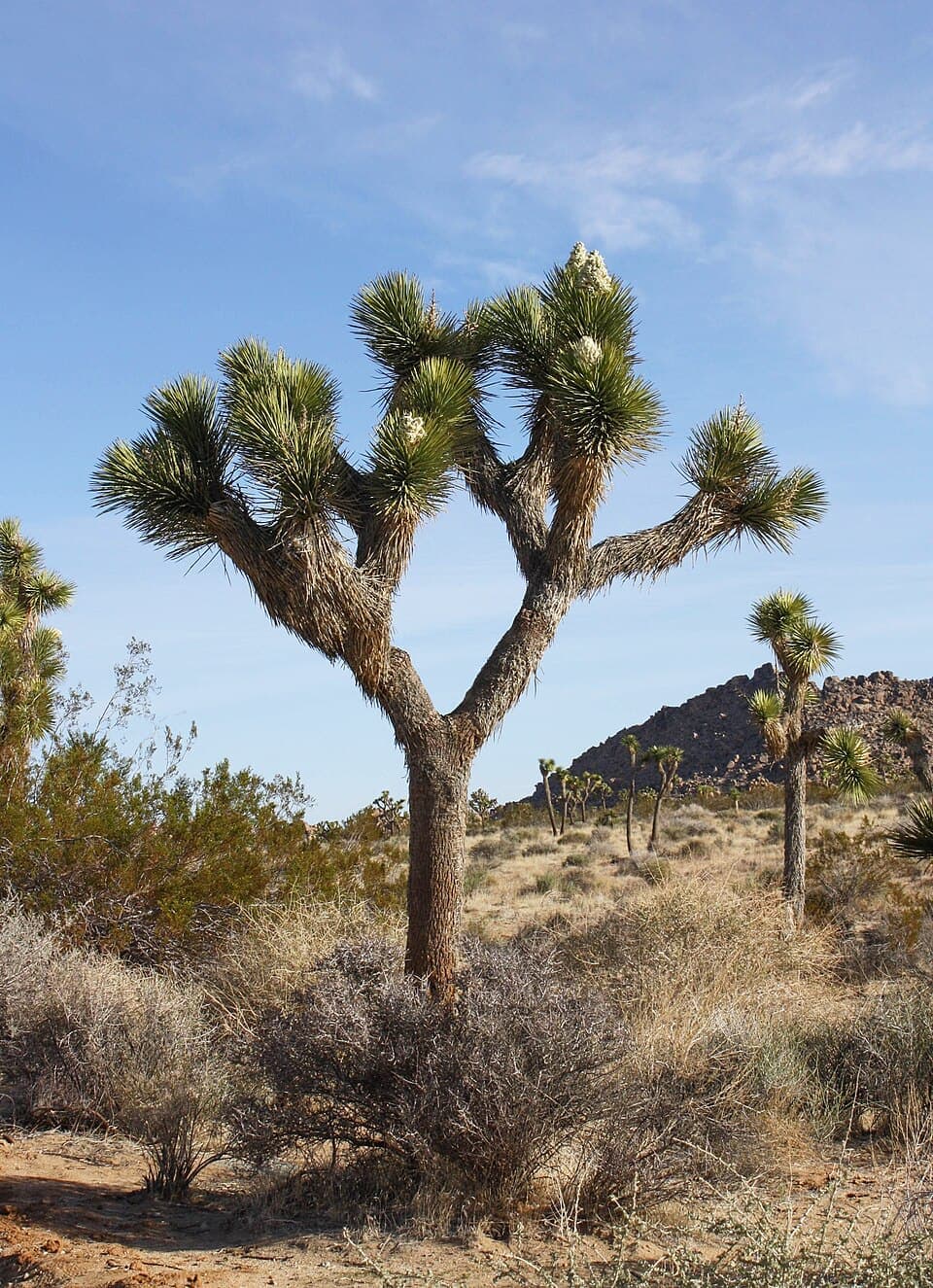
Joshua Tree
Yucca brevifolia
Flowers: February–April
The signature plant of the Mojave Desert — a spiky-branched tree yucca that can live 500 years. White flower clusters appear in late winter. Historically vital to Cahuilla and other Indigenous peoples.
Habitat: Mojave Desert, primarily in California at 2,000–6,000 ft elevation; some range into Nevada and Arizona.
Federally protected in California; Joshua Tree National Park has strict plant protection laws.
FG-0011.05
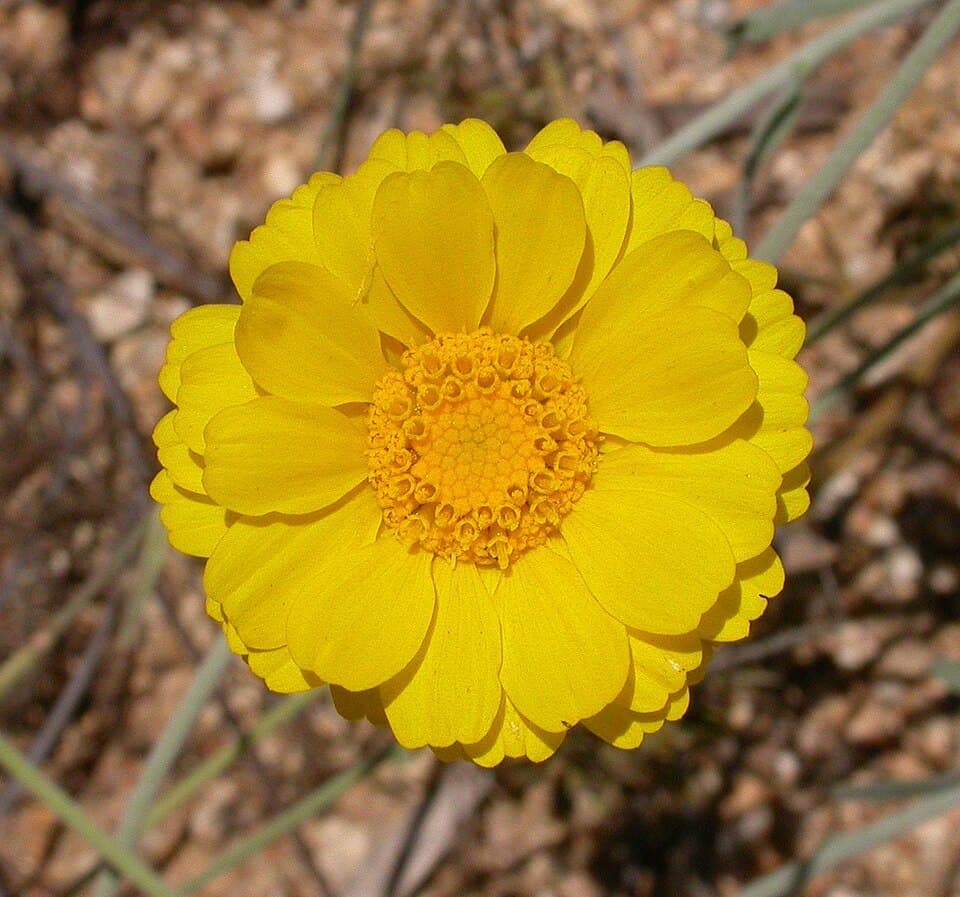
Desert Marigold
Baileya multiradiata
ToxicMarch–October (primarily after rains)
A cheerful yellow daisy-like wildflower that blooms prolifically after rains, often carpeting roadsides and desert flats in gold. One of the most recognizable Southwest wildflowers.
Habitat: Sandy and gravelly desert flats and roadsides throughout the Sonoran and Chihuahuan Deserts.
Moderately toxic to livestock, though rarely a concern for humans. Do not eat.
Through the seasons
- February–March: Lower desert wildflower superbloom season (rain-dependent); ocotillo begins to bloom.
- April–May: Peak Sonoran Desert bloom; saguaro flowers attract bats, bees, and birds.
- June: Saguaro fruit ripening; monsoon season begins in early July.
- September–October: Post-monsoon second wildflower bloom; prickly pear fruit harvest.
Questions
- When is the best time to see wildflowers in the Arizona desert?
- The Arizona Sonoran Desert typically peaks from mid-February to late March, depending on winter rainfall. Organ Pipe Cactus National Monument, Saguaro National Park, and the Antelope Hills near Congress are known superbloom locations.
- Can I eat prickly pear cactus fruit in Arizona?
- Yes — prickly pear tunas are delicious and widely eaten. They're made into jellies, juices, candies, and syrups. Use tongs to harvest and carefully remove all glochids (hair-like spines) by singing with a flame or rubbing with a cloth before eating.
From Field Notes
Not sure what you found?
Take a photo with Spotter for the name, field marks, look-alikes and safety notes in seconds.


In this guide
- Species
- 5
- Edible
- 1
- Toxic
- 1
- Region
- Arizona & Southwest