
FG-0037 · Wildlife · 6 species
Identifying Snakes in Missouri
By Derek Gauger · Updated
Overview
Missouri has around 40 snake species across its Ozark forests, prairies, and river bottoms, and only five are venomous. The great majority are harmless and beneficial.
Identify from a distance — a photo from several feet away is all you need. This guide covers the snakes you are most likely to encounter in Missouri.
Key species to know
FG-0037.01
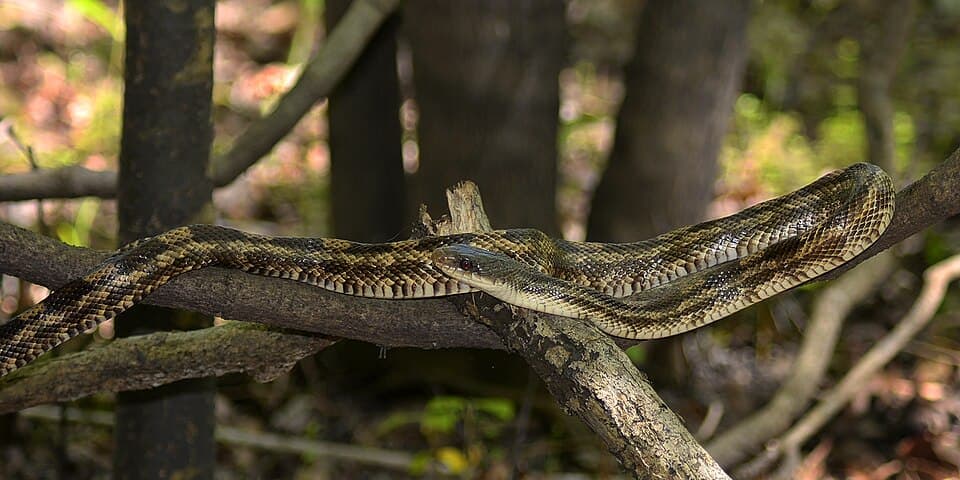
Black Rat Snake
Pantherophis obsoletus
A large, mostly black non-venomous constrictor, often the biggest snake people meet in Missouri. A skilled climber that hunts rodents around barns and woods; harmless despite its size.
Habitat: Woodlands, farmland, and suburbs statewide.
FG-0037.02
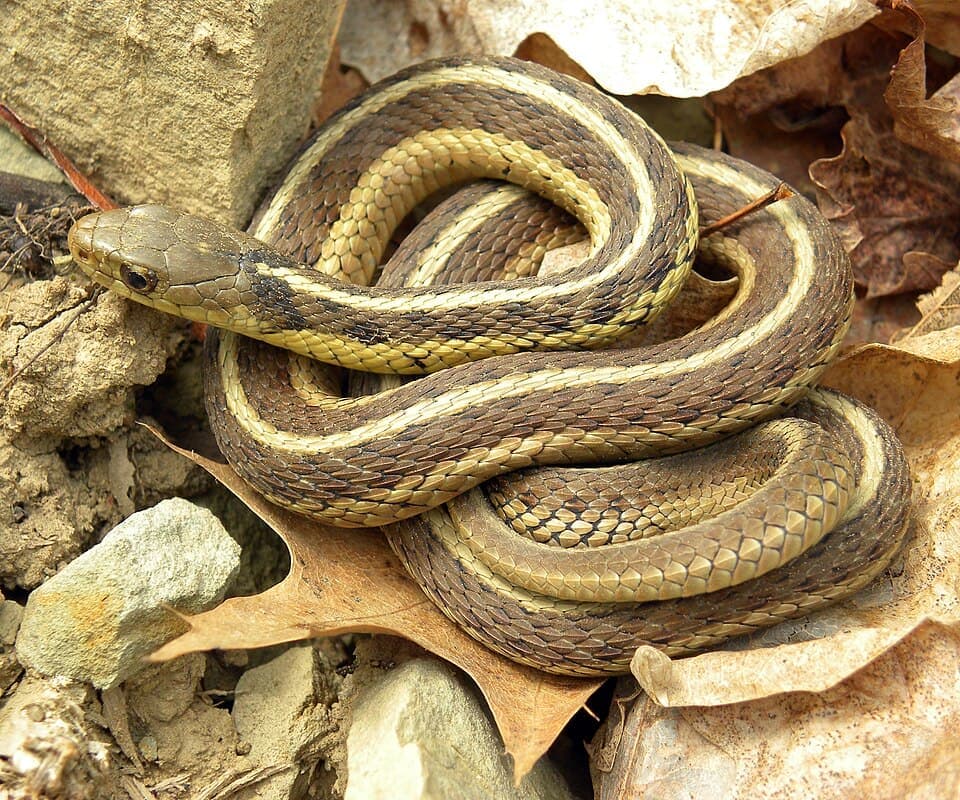
Common Garter Snake
Thamnophis sirtalis
A slender, harmless snake with three pale stripes down a dark body. Common in gardens and near water; gentle and quick to flee.
Habitat: Meadows, gardens, and damp areas near water.
FG-0037.03
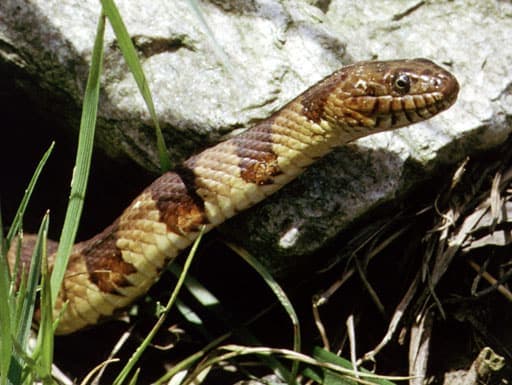
Northern Water Snake
Nerodia sipedon
A non-venomous water snake with dark bands and blotches, frequently mistaken for a cottonmouth and needlessly killed. Harmless but will flatten and bite if cornered.
Habitat: Ponds, rivers, lakes, and wetland edges.
FG-0037.04
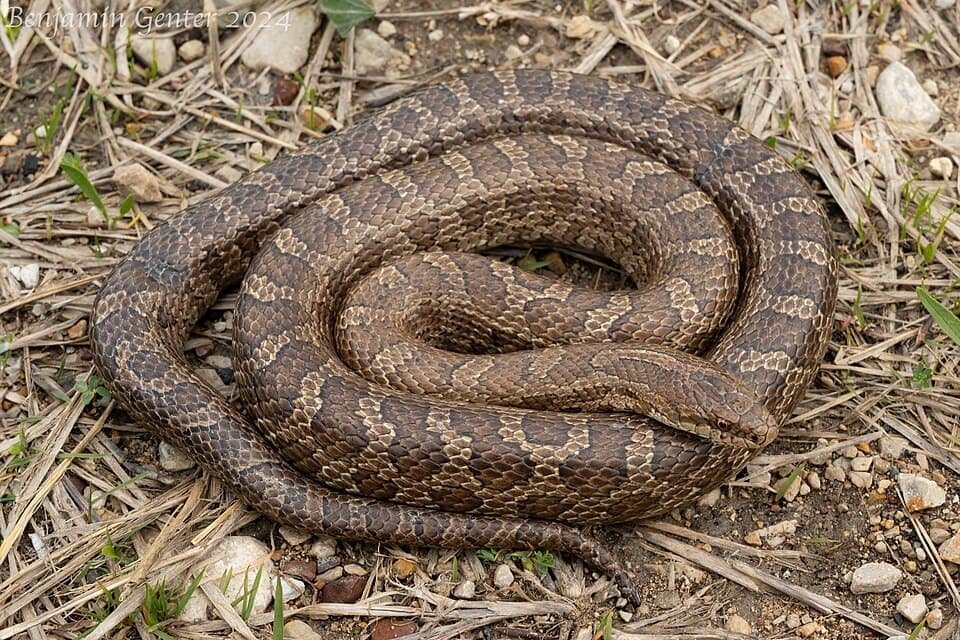
Prairie Kingsnake
Lampropeltis calligaster
A tan-to-gray non-venomous snake with dark-edged brown blotches, often found in fields and old farmland. Harmless and a valuable rodent-hunter.
Habitat: Prairies, pastures, and grassy field edges.
FG-0037.05
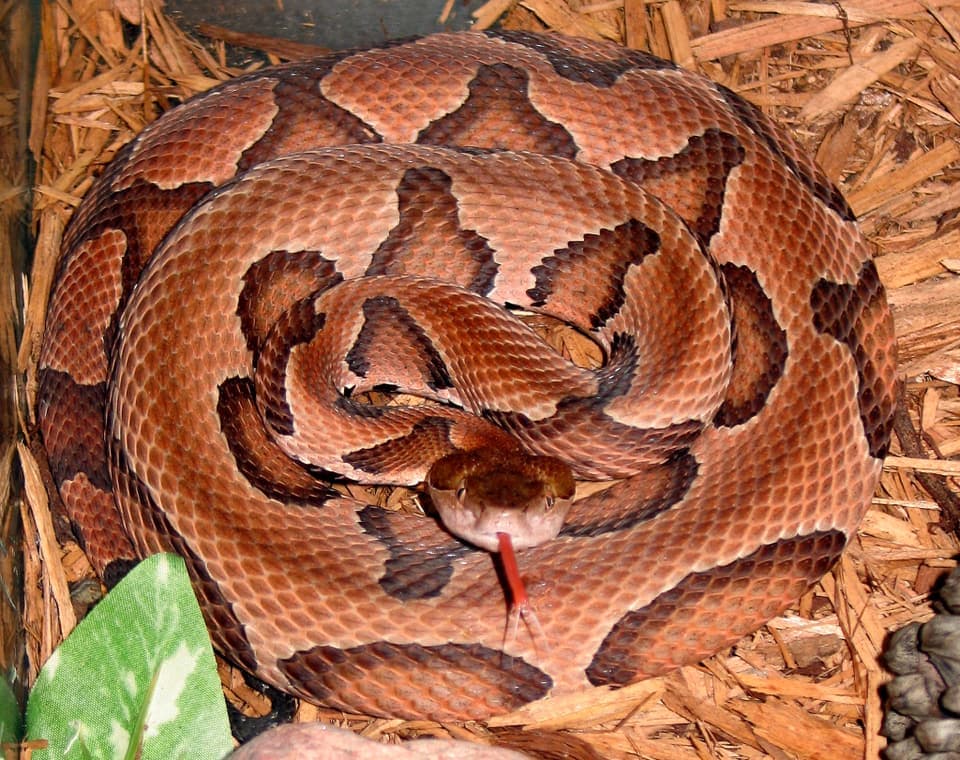
Copperhead
Agkistrodon contortrix
A pit viper with hourglass-shaped chestnut bands over a tan body, superbly camouflaged in leaf litter. Missouri's most common venomous snake; generally mild.
Habitat: Rocky wooded hillsides, glades, and creek edges.
Venomous. Watch where you step and reach on rocky, wooded slopes.
FG-0037.06
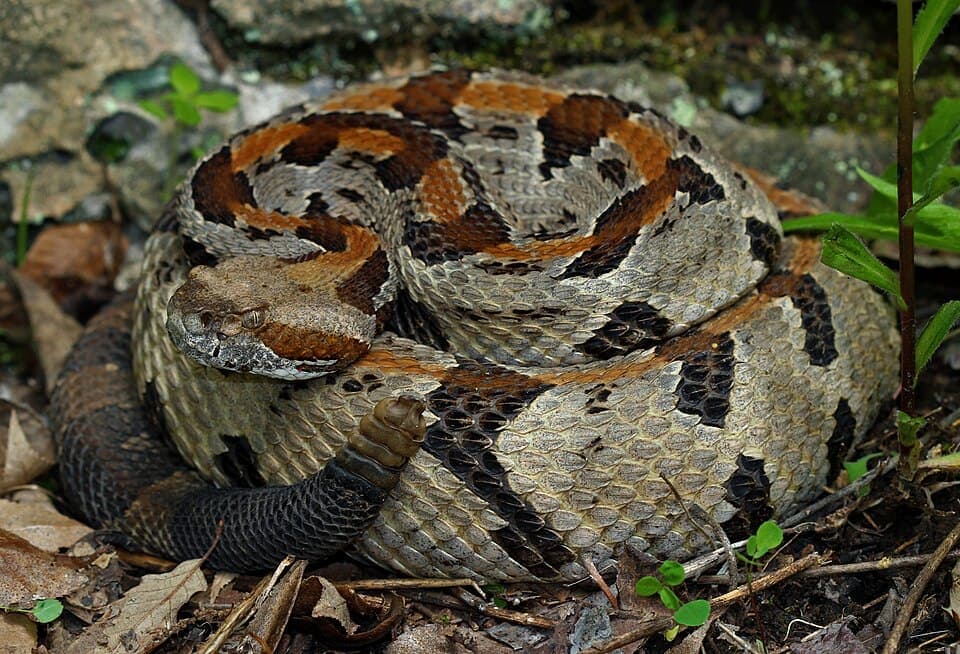
Timber Rattlesnake
Crotalus horridus
A large, heavy-bodied rattlesnake with dark chevron crossbands and a rattle. Venomous but usually reluctant to strike; gives a buzzing warning when disturbed.
Habitat: Forested hills, rocky bluffs, and Ozark glades.
Venomous. Keep well back and never attempt to handle or kill it.
Through the seasons
- Snakes are most active in spring and fall, and on warm summer evenings.
- Watch your footing around rocky glades, bluffs, and woodpiles in the Ozarks.
- Most bites occur when people try to handle or kill a snake — give it room and it will leave.
Questions
- How many venomous snakes are in Missouri?
- Five: the copperhead, cottonmouth (in the southeast), timber rattlesnake, eastern massasauga, and western pygmy rattlesnake. The copperhead is by far the most commonly encountered.
- Is that big black snake in my barn dangerous?
- Almost certainly a harmless black rat snake — Missouri's largest common snake and a beneficial rodent-hunter. Photograph it from a distance and use an app like Spotter to confirm.
From Field Notes
Not sure what you found?
Take a photo with Spotter for the name, field marks, look-alikes and safety notes in seconds.


In this guide
- Species
- 6
- Region
- Missouri