FG-0034 · Wildlife · 6 species
Identifying Snakes in South Carolina
By Derek Gauger · Updated
Overview
South Carolina has around 38 snake species spread across mountains, piedmont, sandhills, and coastal swamp, and only six are venomous. The overwhelming majority are harmless and help control rodents and pests.
Always identify a snake from a distance — a photo from several feet away is safer and just as reliable as a close look. This guide covers the snakes you are most likely to meet in South Carolina yards, woods, and wetlands.
Key species to know
FG-0034.01
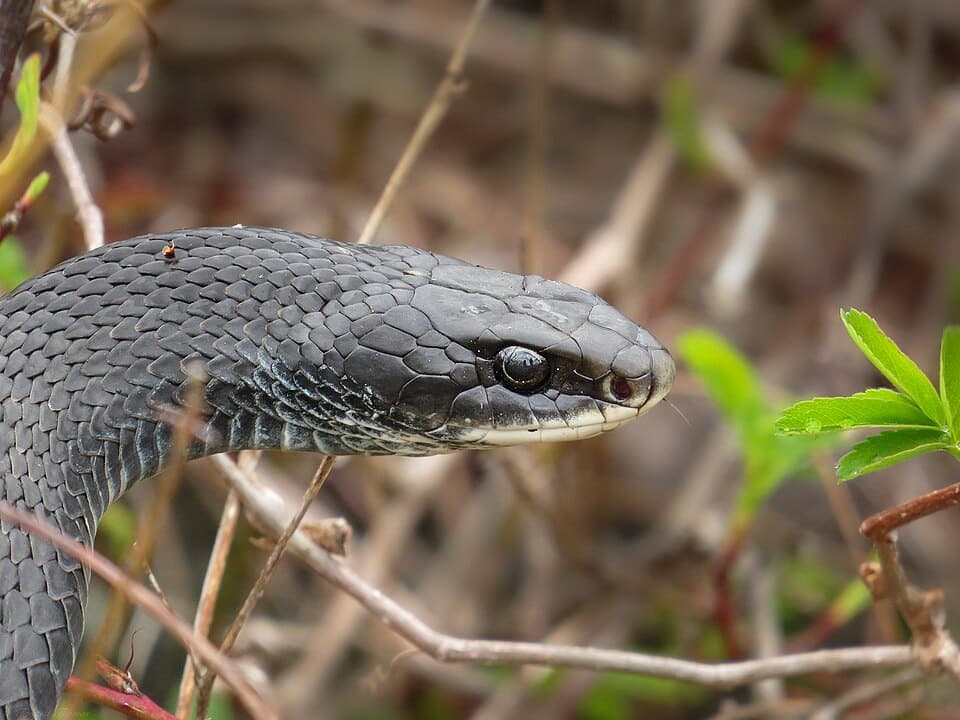
Black Racer
Coluber constrictor
A sleek, fast, solid-black non-venomous snake with a pale chin and large eyes, common in yards and field edges. Nervous and quick to flee rather than fight.
Habitat: Fields, suburbs, and woodland edges statewide.
FG-0034.02
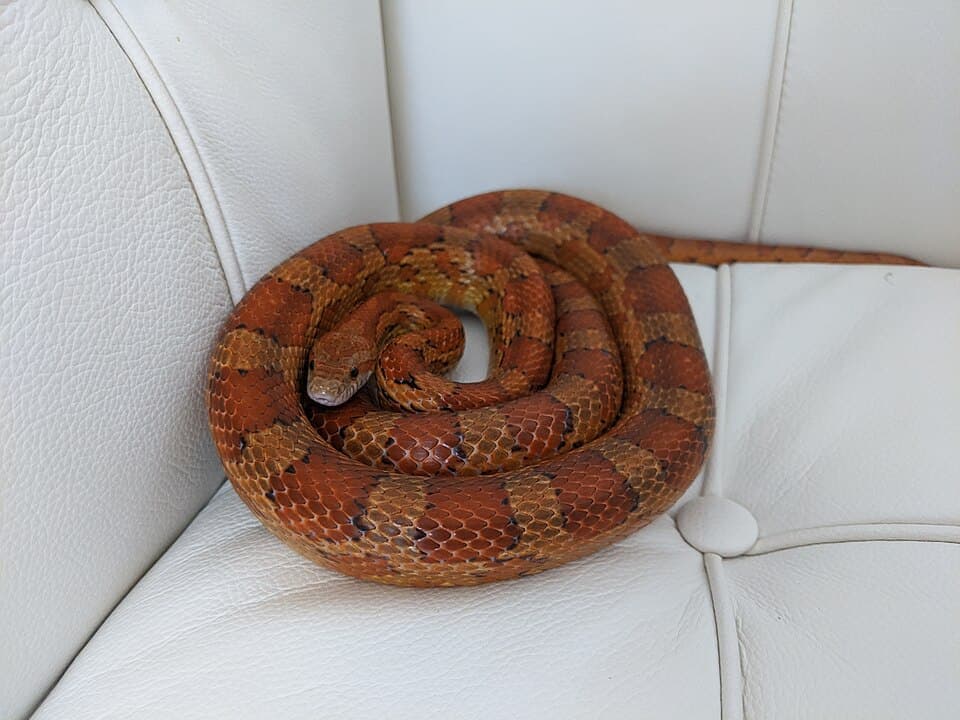
Corn Snake
Pantherophis guttatus
A brightly patterned orange-and-red non-venomous constrictor, sometimes mistaken for a copperhead but slimmer and more vividly marked. A gentle rodent-hunter.
Habitat: Pine woods, farmland, and around buildings.
FG-0034.03
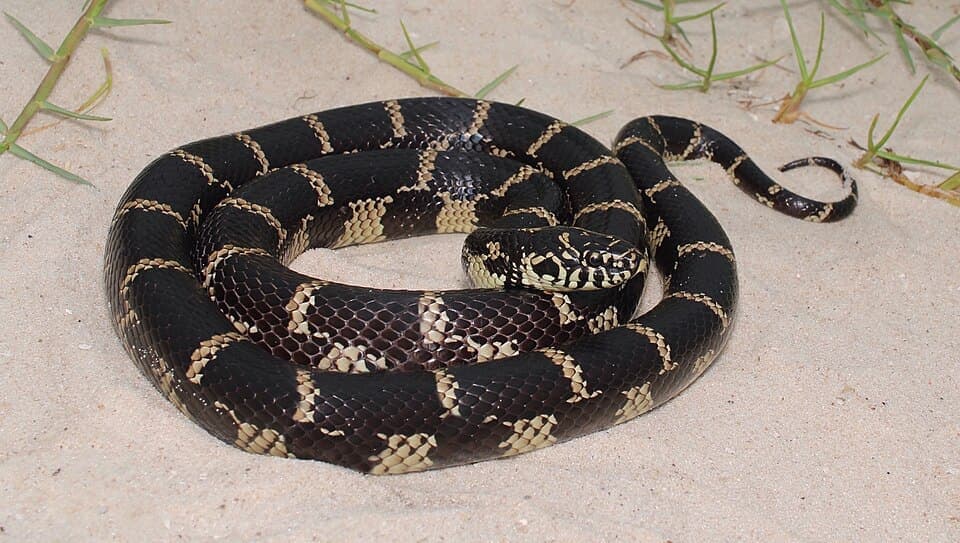
Eastern Kingsnake
Lampropeltis getula
A glossy black non-venomous snake with thin white or cream chain-link bands. Famous for eating other snakes, including venomous ones, and completely harmless to people.
Habitat: Swamp edges, fields, and pine woods.
FG-0034.04
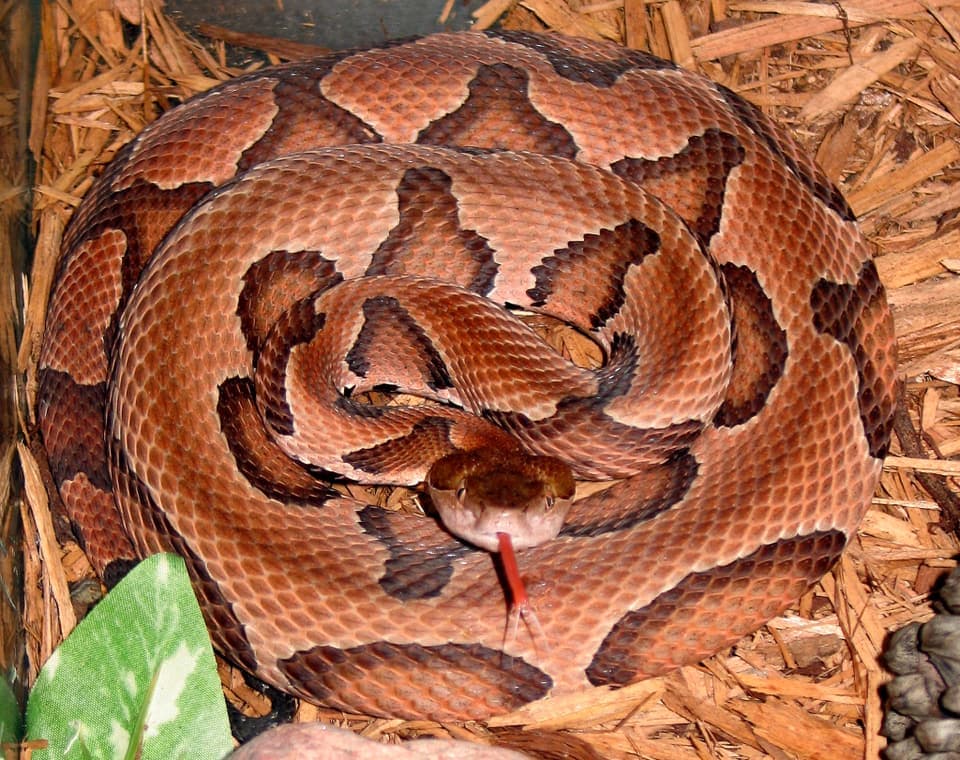
Copperhead
Agkistrodon contortrix
A pit viper with hourglass-shaped chestnut bands over a tan body, blending into leaf litter. Venomous but generally mild; relies on camouflage and often holds still.
Habitat: Wooded areas, rocky slopes, and suburban edges.
Venomous. Watch where you step and reach in leaf litter and woodpiles.
FG-0034.05
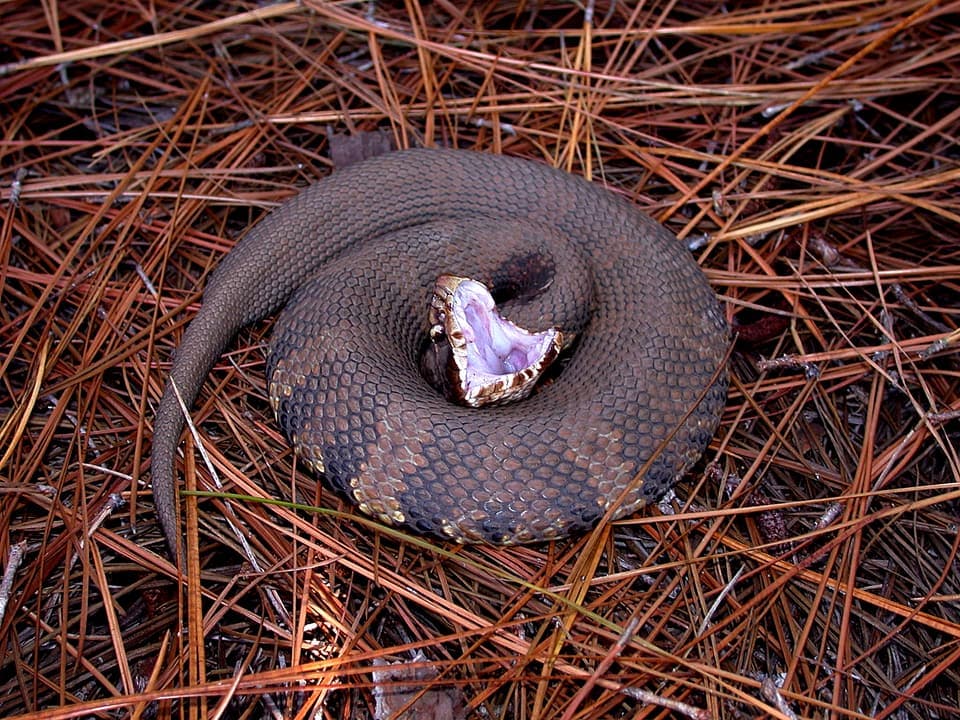
Cottonmouth
Agkistrodon piscivorus
A thick-bodied semi-aquatic pit viper, dark with a pale-lined face, that gapes to show a white "cotton" mouth when threatened. Venomous and often confused with harmless water snakes.
Habitat: Swamps, marshes, and slow streams, especially in the coastal plain.
Venomous. Give a wide berth to any thick-bodied snake near water and never handle it.
FG-0034.06
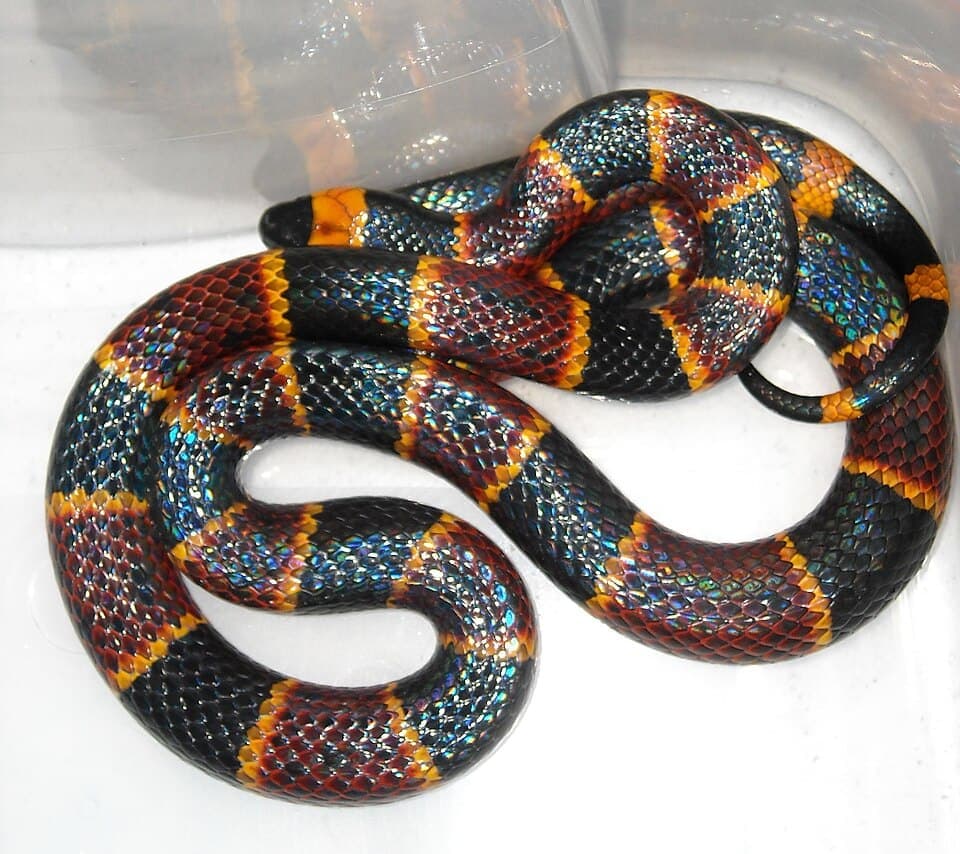
Eastern Coral Snake
Micrurus fulvius
A small, secretive snake ringed in red, yellow, and black, with red and yellow bands touching. Venomous but shy and rarely seen.
Habitat: Sandy, wooded areas and mulch beds in the coastal plain.
Venomous. Never handle any small banded snake — confirm the species from a distance.
Through the seasons
- Snakes are most active spring through fall, and on warm evenings in summer.
- Be cautious around water edges, where cottonmouths and harmless water snakes both bask.
- Most bites happen when people try to handle or kill a snake — give any snake room and it will leave.
Questions
- What venomous snakes live in South Carolina?
- Six: the copperhead, cottonmouth, eastern coral snake, eastern diamondback rattlesnake, timber rattlesnake, and pigmy rattlesnake. Copperheads are the most commonly encountered.
- Is the snake in my yard dangerous?
- Most South Carolina yard snakes — black racers, rat snakes, kingsnakes — are harmless. Photograph it from a safe distance and use an app like Spotter to identify it rather than approaching.
From Field Notes
Not sure what you found?
Take a photo with Spotter for the name, field marks, look-alikes and safety notes in seconds.


In this guide
- Species
- 6
- Region
- South Carolina