FG-0039 · Wildlife · 6 species
Identifying Snakes in Virginia
By Derek Gauger · Updated
Overview
Virginia has around 32 snake species from the Blue Ridge to the tidewater, and only three are venomous. The overwhelming majority are harmless and help control rodents.
Identify from a distance — a photo from several feet away is all you need. This guide covers the snakes you are most likely to encounter in Virginia.
Key species to know
FG-0039.01
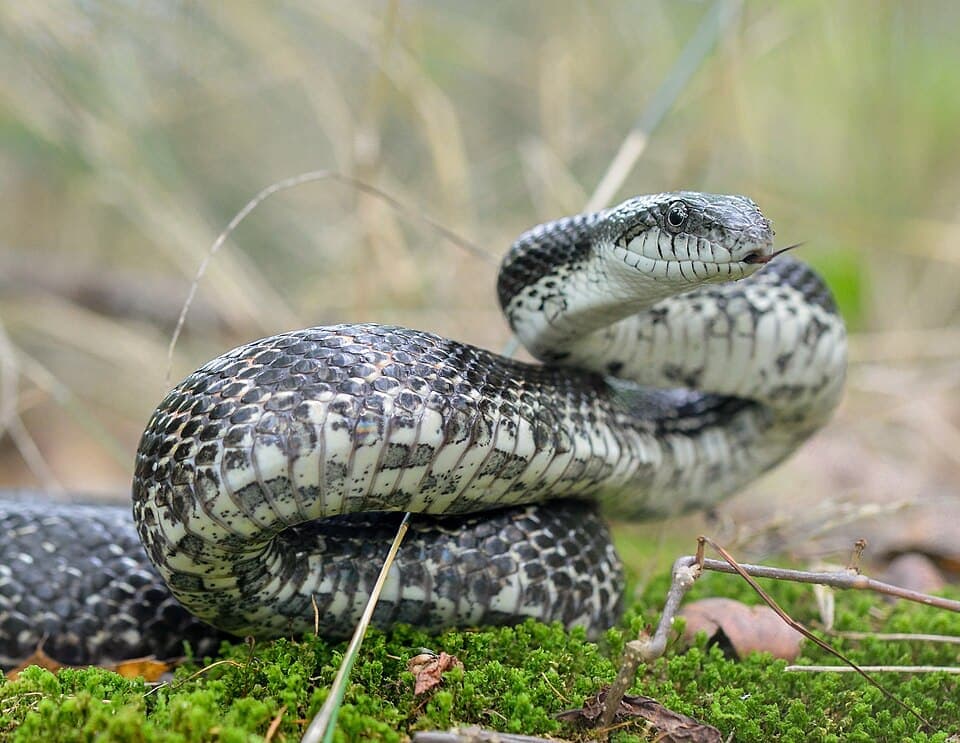
Eastern Rat Snake
Pantherophis alleghaniensis
A large, mostly black non-venomous constrictor with faint blotches and a pale belly, a strong climber often found around barns and attics. Harmless and a valuable rodent-hunter.
Habitat: Woodlands, farmland, and suburbs statewide.
FG-0039.02
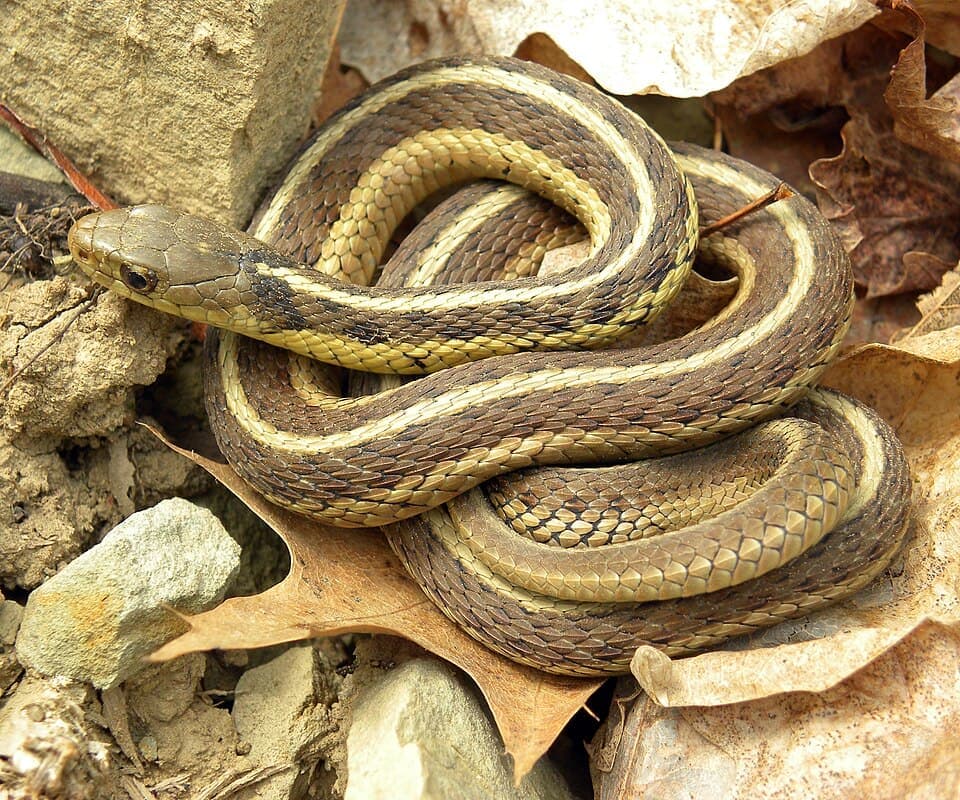
Eastern Garter Snake
Thamnophis sirtalis
A slender, harmless snake with three pale stripes down a dark body. One of the most common backyard snakes; gentle and quick to flee.
Habitat: Gardens, meadows, and damp areas near water.
FG-0039.03
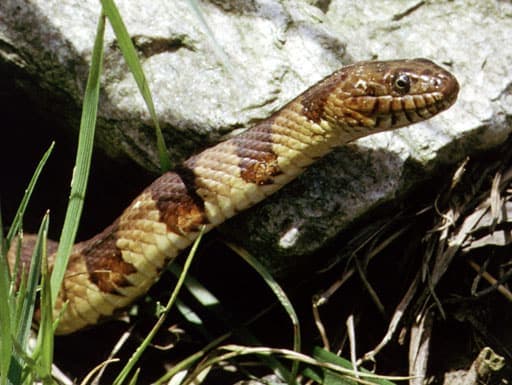
Northern Water Snake
Nerodia sipedon
A non-venomous water snake with dark bands, frequently mistaken for a cottonmouth and needlessly killed. Harmless but will flatten and bite if cornered.
Habitat: Ponds, rivers, lakes, and wetland edges.
FG-0039.04
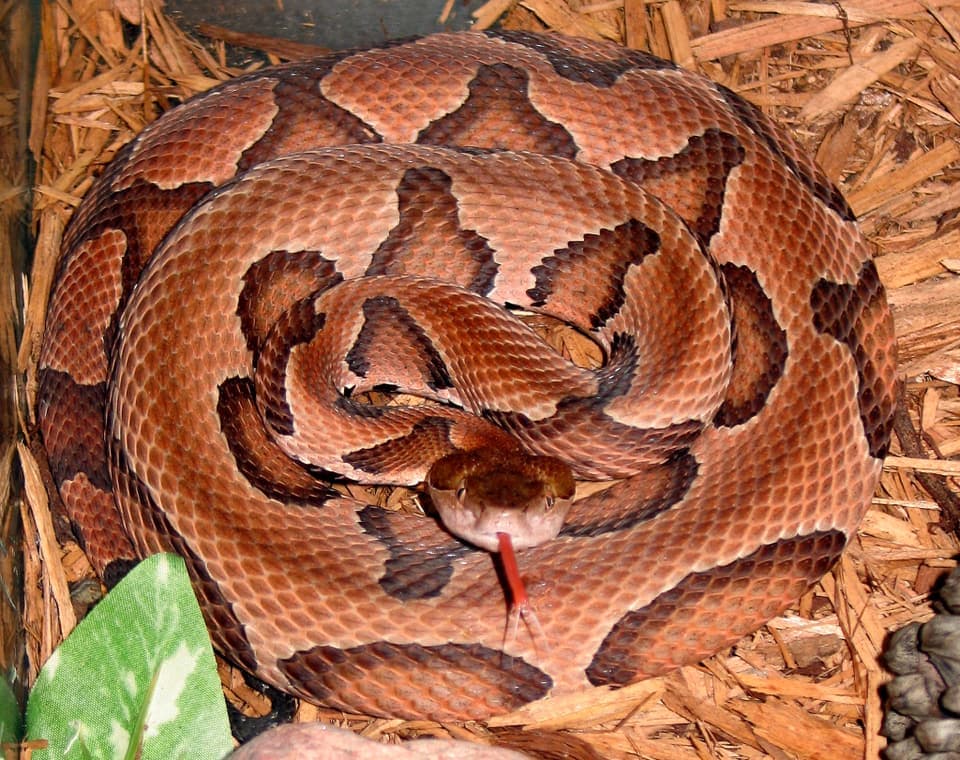
Copperhead
Agkistrodon contortrix
A pit viper with hourglass-shaped chestnut bands over a tan body, superbly camouflaged in leaf litter. Virginia's most common venomous snake; generally mild.
Habitat: Wooded areas, rocky slopes, and suburban edges statewide.
Venomous. Watch where you step and reach in leaf litter and woodpiles.
FG-0039.05
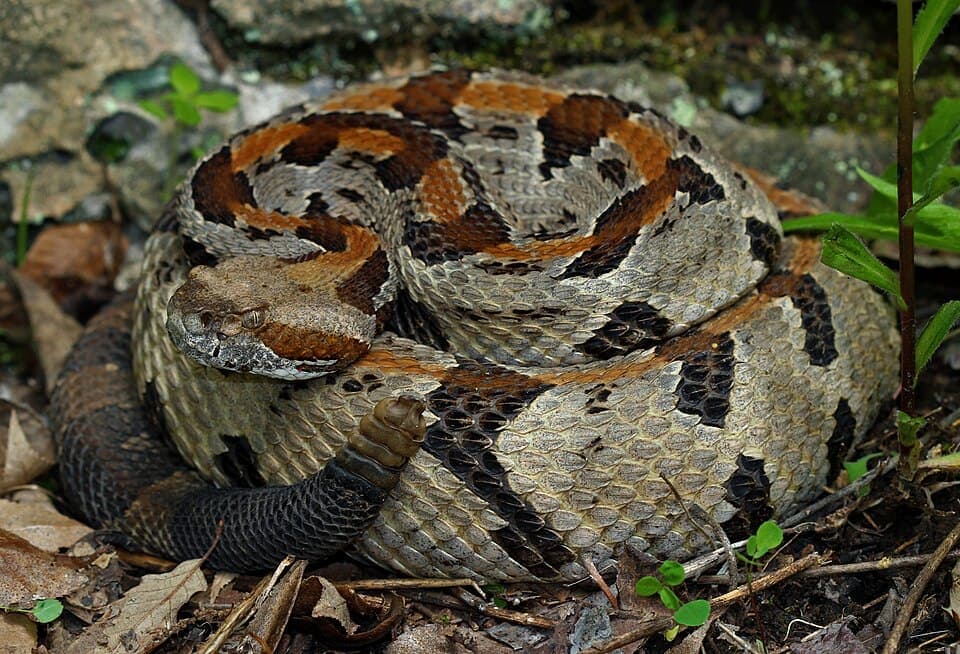
Timber Rattlesnake
Crotalus horridus
A large, heavy-bodied rattlesnake with dark chevron crossbands and a rattle. Venomous but usually reluctant to strike; gives a buzzing warning when disturbed.
Habitat: Forested mountains and rocky ridges, mainly in the west.
Venomous. Keep well back and never attempt to handle or kill it.
FG-0039.06
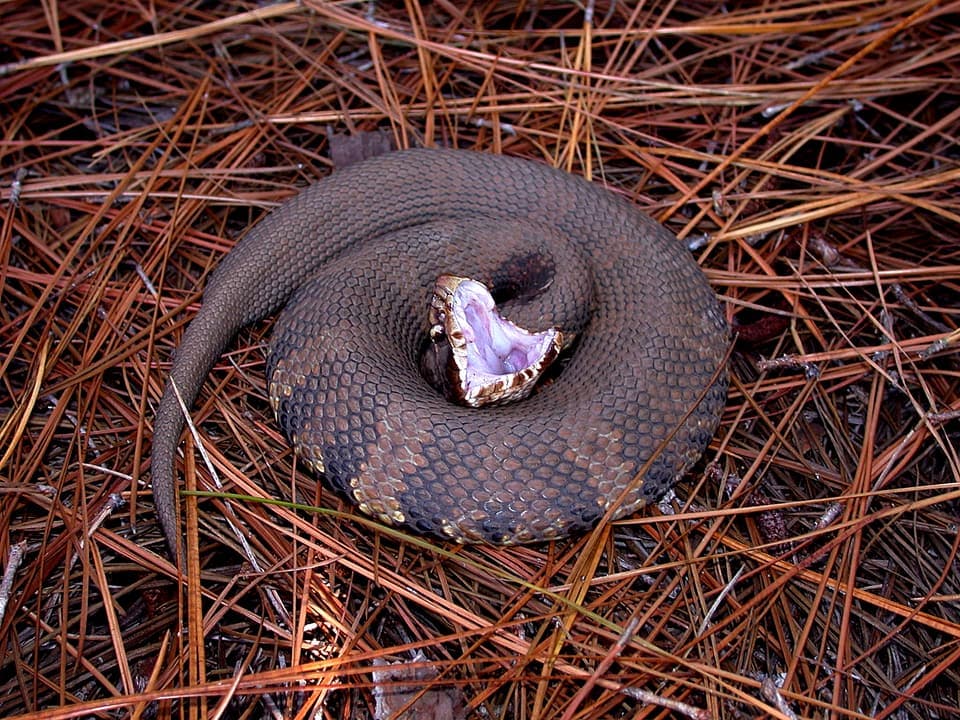
Cottonmouth
Agkistrodon piscivorus
A thick-bodied semi-aquatic pit viper, dark with a pale facial stripe, that gapes to show a white mouth when threatened. In Virginia it is limited to the southeastern corner.
Habitat: Swamps and slow water in the southeastern coastal plain.
Venomous. Give a wide berth to any thick-bodied snake near water in southeastern Virginia and never handle it.
Through the seasons
- Snakes are most active in spring and fall, and on warm summer evenings.
- Watch your footing on rocky mountain trails and around woodpiles.
- Most bites occur when people try to handle or kill a snake — give it room and it will leave.
Questions
- How many venomous snakes are in Virginia?
- Three: the copperhead (statewide and by far the most common), the timber rattlesnake (mountains and a coastal-plain population), and the cottonmouth (southeastern corner only).
- Is that big black snake dangerous?
- Almost certainly a harmless eastern rat snake, Virginia's largest common snake and a beneficial rodent-hunter. Photograph it from a distance and use an app like Spotter to confirm.
From Field Notes
- Is That a Cottonmouth or a Harmless Water Snake? How to Tell Them Apart Safely
- What Is the Snake That Plays Dead and Flattens Like a Cobra? Meet the Eastern Hognose
- What Is the Big Black Snake in My Yard? Identifying Rat Snakes and Black Racers
- What Is the Striped Snake in My Garden? Identifying the Garter Snake
Not sure what you found?
Take a photo with Spotter for the name, field marks, look-alikes and safety notes in seconds.


In this guide
- Species
- 6
- Region
- Virginia