FG-0029 · Wildflowers · 6 species
Wildflowers of Virginia
By Derek Gauger · Updated
Overview
Virginia's richest wildflower season is early spring, when "spring ephemerals" bloom on the forest floor in the brief window of sunlight before the trees leaf out. The Blue Ridge, Shenandoah National Park, and river-bottom woodlands hold spectacular displays.
This guide covers signature Virginia woodland wildflowers — the field marks that identify them, their habitats, and when they bloom. Pair it with a photo and the app to confirm what you find, and leave every flower where it grows.
Key species to know
FG-0029.01
Virginia Bluebells
Mertensia virginica
March–April
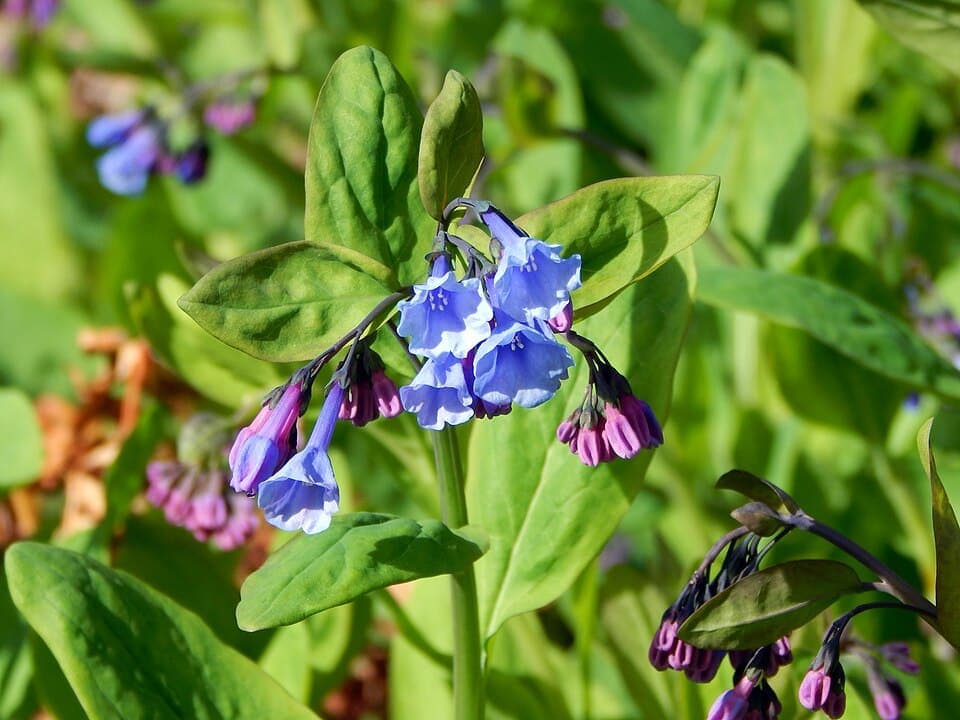
Clusters of nodding, trumpet-shaped flowers that open pink and turn sky-blue, above smooth gray-green leaves. Forms breathtaking blue carpets in damp river-bottom woods.
Habitat: Moist floodplain forests and stream banks, mainly in early spring.
FG-0029.02
Wild Columbine
Aquilegia canadensis
April–May
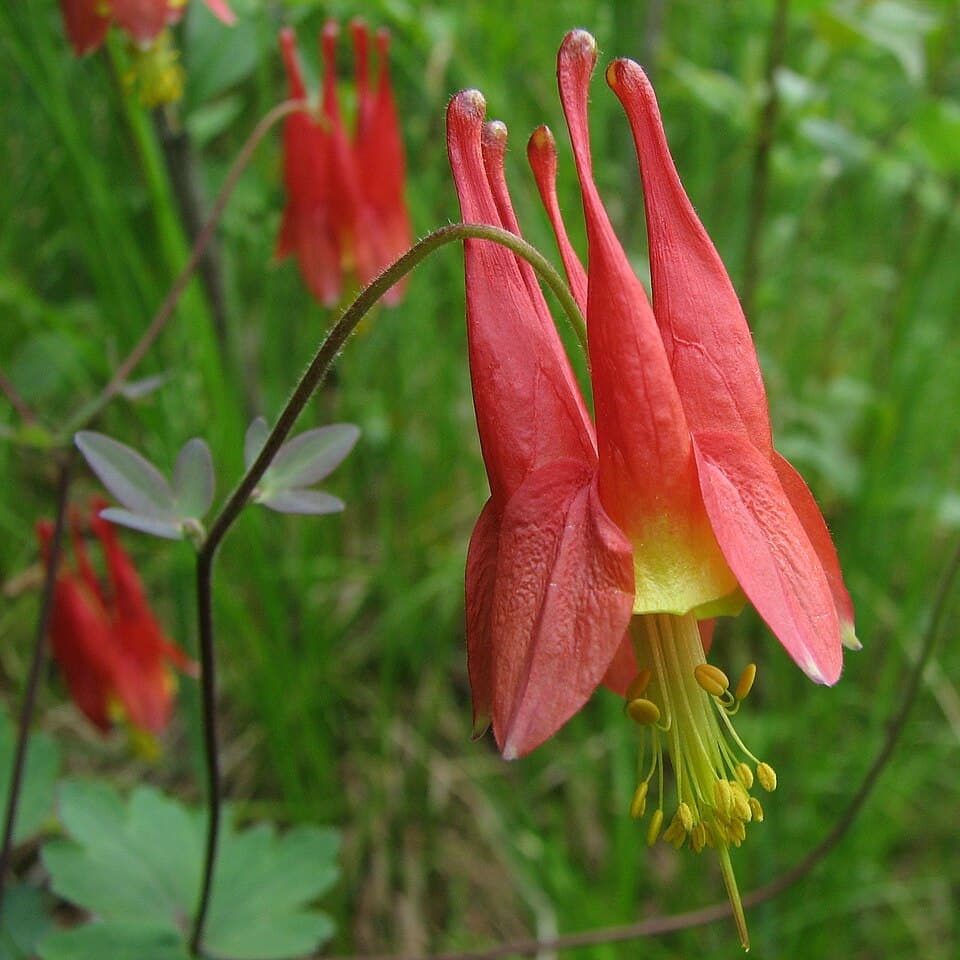
Nodding red-and-yellow flowers with backward-pointing spurs, dangling on wiry stems. A favorite of hummingbirds and often found on rocky slopes and ledges.
Habitat: Rocky woods, ledges, and slopes across the state.
FG-0029.03
Bloodroot
Sanguinaria canadensis
ToxicMarch–April
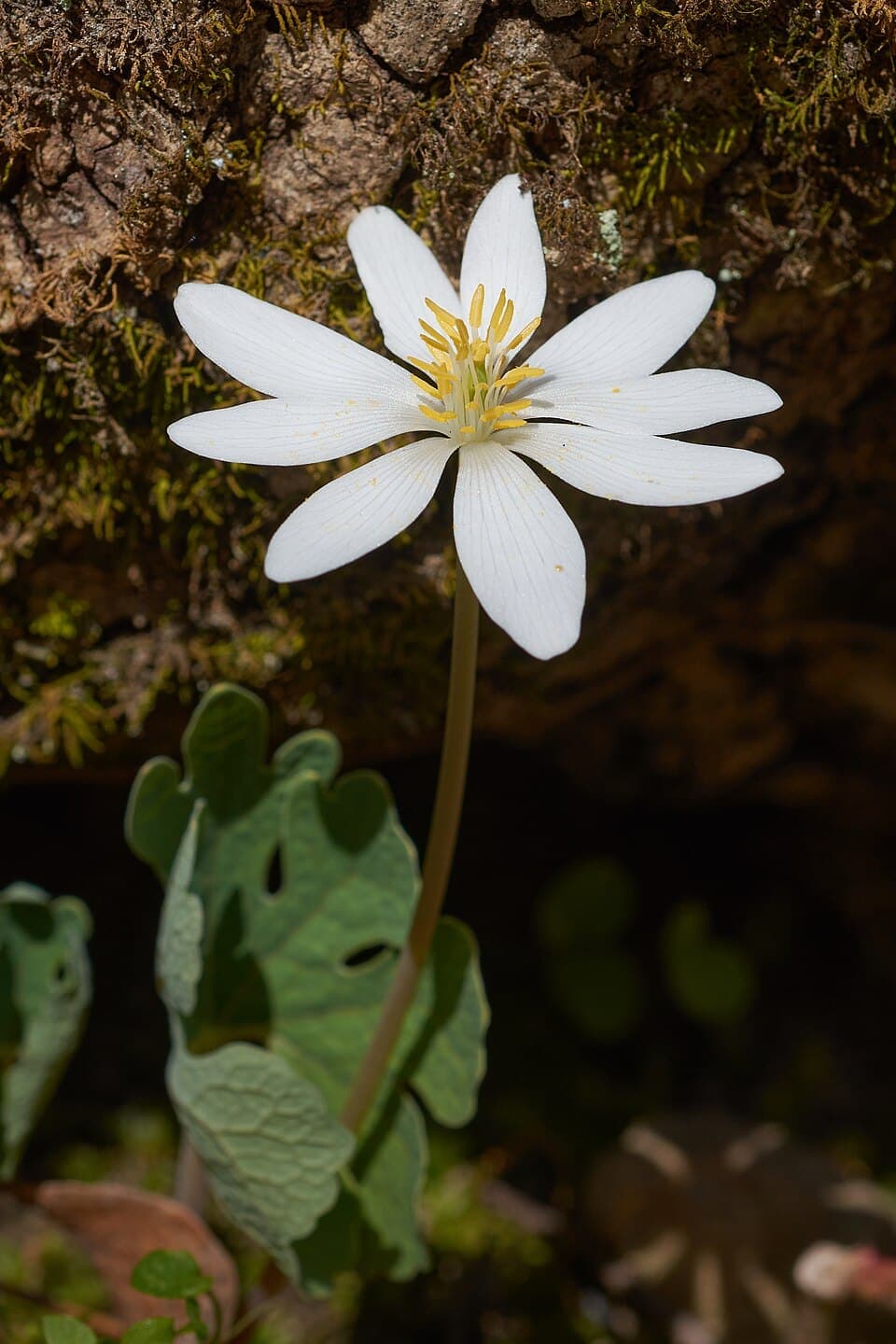
A single white flower with a golden center, wrapped in a lobed leaf; the root exudes a red-orange sap that gives the plant its name. One of the earliest woodland bloomers.
Habitat: Rich, moist deciduous woods and slopes.
All parts, especially the root, are toxic if eaten and the sap can irritate skin. For identification only.
FG-0029.04
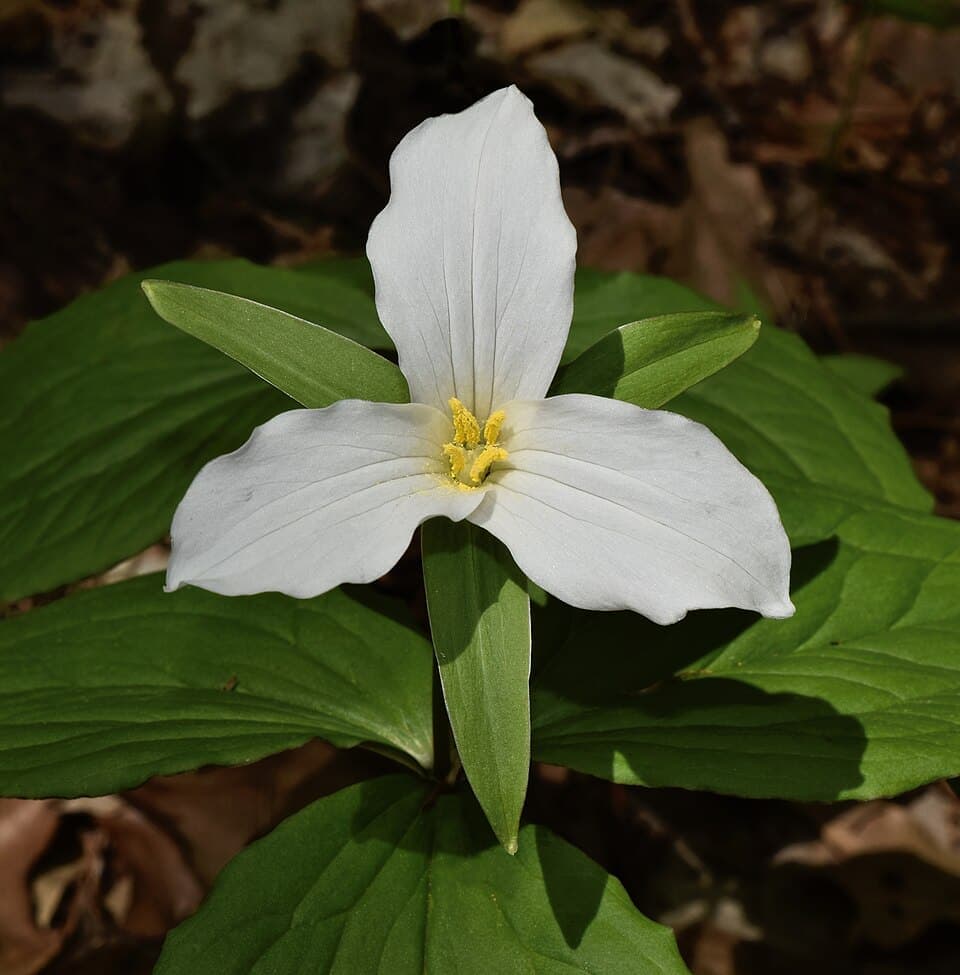
Large-flowered Trillium
Trillium grandiflorum
CautionApril–May
A showy three-petaled white flower above a whorl of three broad leaves, fading to pink with age. Slow-growing and long-lived; a highlight of Blue Ridge spring woods.
Habitat: Rich upland forests, especially in the mountains.
Trilliums are slow to recover from picking — never pick or transplant them. For identification only.
FG-0029.05
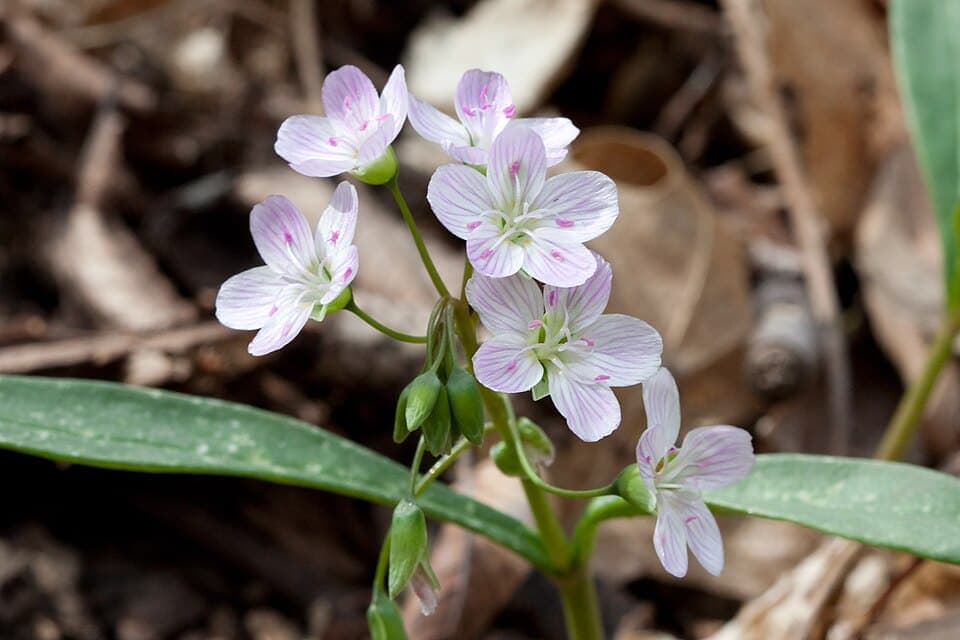
Virginia Spring Beauty
Claytonia virginica
February–April
A dainty, low wildflower with white-to-pink petals striped in deeper pink, carpeting the forest floor and lawns in early spring. Among the very first blooms of the year.
Habitat: Deciduous woods, clearings, and shaded lawns statewide.
FG-0029.06
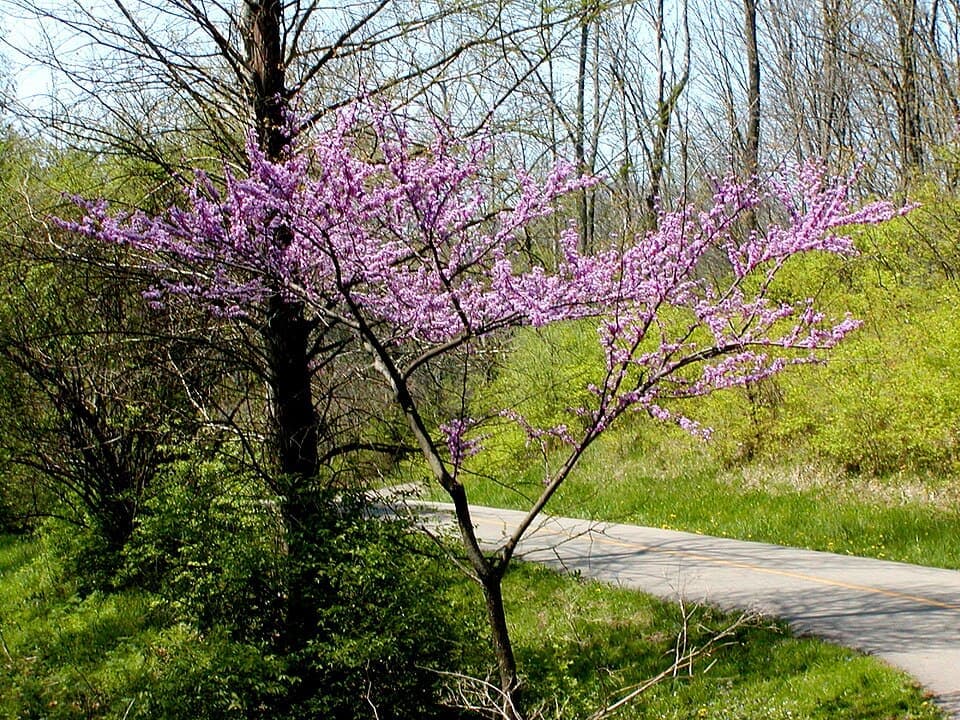
Eastern Redbud
Cercis canadensis
March–April
A small tree that bursts into clusters of rosy-pink pea flowers directly on its bare branches before leafing out. Its magenta haze is a signature of Virginia spring.
Habitat: Woodland edges, roadsides, and understory across the state.
Through the seasons
- March: Spring beauty, bloodroot, and bluebells lead the woodland bloom.
- April: Trillium, columbine, and redbud peak across the Blue Ridge.
- Early morning light and damp river-bottom trails offer the finest displays.
- Ephemerals fade quickly once the tree canopy leafs out — the window is short.
Questions
- When is the best time to see Virginia wildflowers?
- Late March through April is peak for woodland spring ephemerals like bluebells, trillium, and bloodroot, before the forest canopy leafs out and shades the forest floor.
- Where can I see wildflowers in Virginia?
- Shenandoah National Park, the Blue Ridge Parkway, and river-bottom woodlands such as those along the Potomac and James rivers are among the best places for spring wildflowers.
From Field Notes
- How to Identify Wildflowers on the Trail: A Practical Guide
- What Is the Purple Daisy-Like Wildflower Blooming in Fall? Identifying Asters
- What Is the Tall Pink-Purple Wildflower Buzzing With Butterflies in Late Summer? Identifying Joe-Pye Weed
- What Is Spotted Knapweed? Identifying the Invasive Purple Wildflower
Not sure what you found?
Take a photo with Spotter for the name, field marks, look-alikes and safety notes in seconds.


In this guide
- Species
- 6
- Edible
- 0
- Toxic
- 1
- Region
- Virginia