FG-0032 · Wild Plants · 6 species
Identifying Trees in North Carolina
By Derek Gauger · Updated
Overview
North Carolina spans mountains, piedmont, and coastal plain, and its forests are among the most diverse in the country — from spruce-fir summits to longleaf pine savanna. A few leaf, bark, and shape clues make many of its trees easy to name.
This guide covers common and iconic North Carolina trees — how to tell them apart by leaf, bark, and habit. Pair it with a photo of the leaf or bark and the app to confirm any tree you find.
Key species to know
FG-0032.01
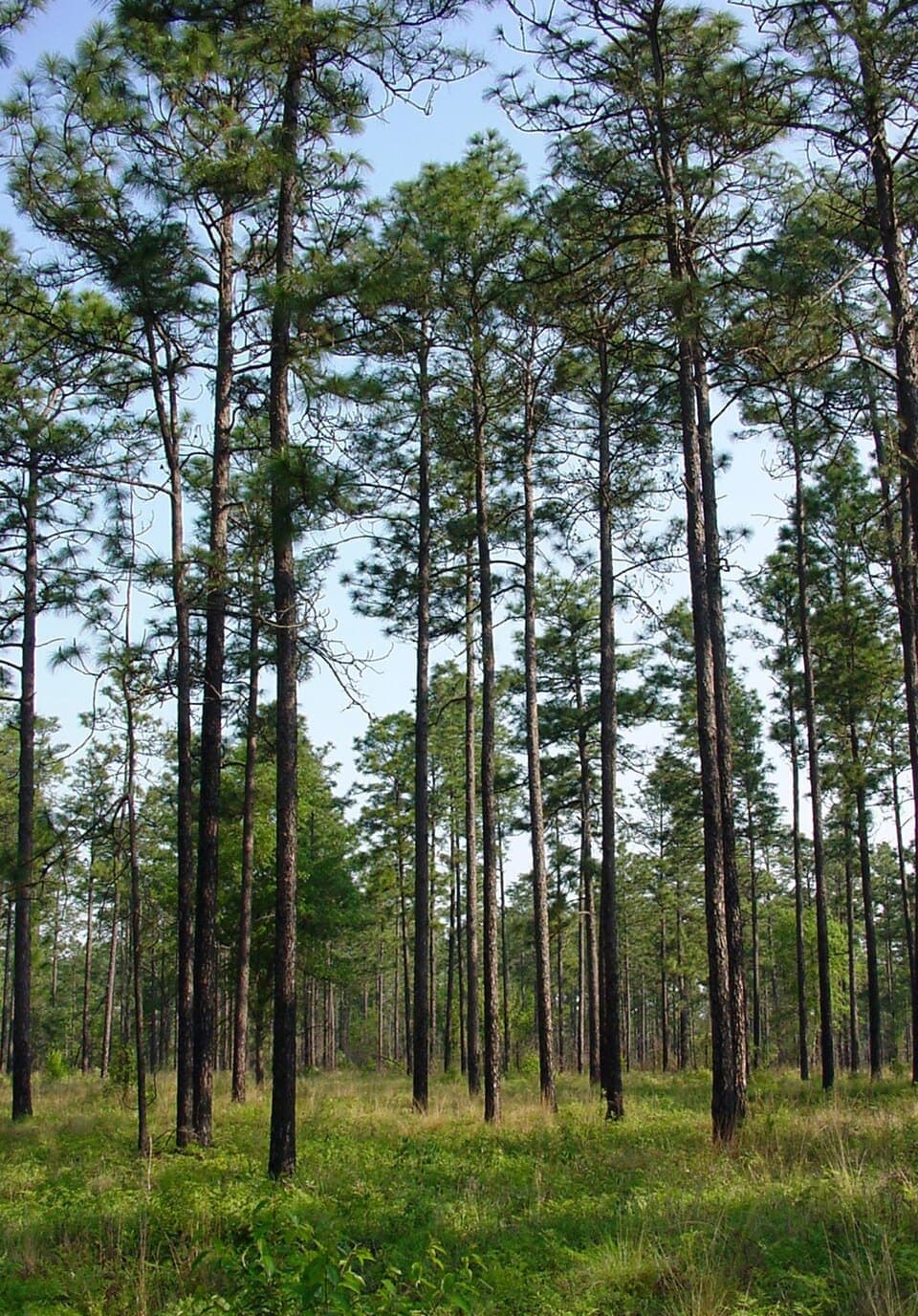
Longleaf Pine
Pinus palustris
A tall pine with very long needles (up to 18 inches) in bundles of three and large cones, historically the dominant tree of coastal-plain savannas. Seedlings pass through a grass-like stage.
Habitat: Sandy coastal-plain flatwoods and sandhills.
FG-0032.02
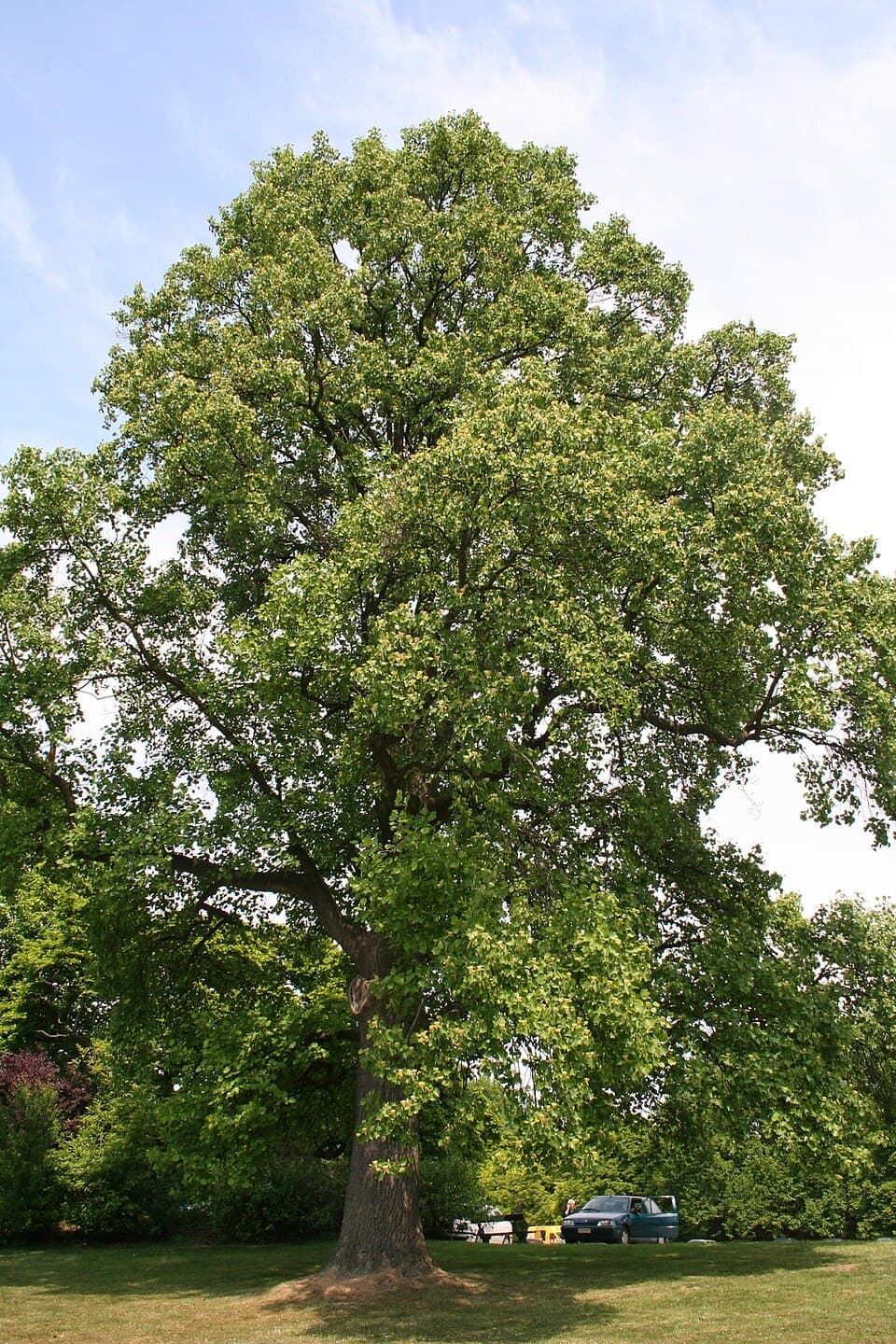
Tulip Poplar
Liriodendron tulipifera
A tall, straight hardwood with distinctive four-lobed, squared-off leaves and greenish-orange tulip-shaped flowers in spring. One of the tallest eastern hardwoods.
Habitat: Rich, moist forests and coves across the mountains and piedmont.
FG-0032.03
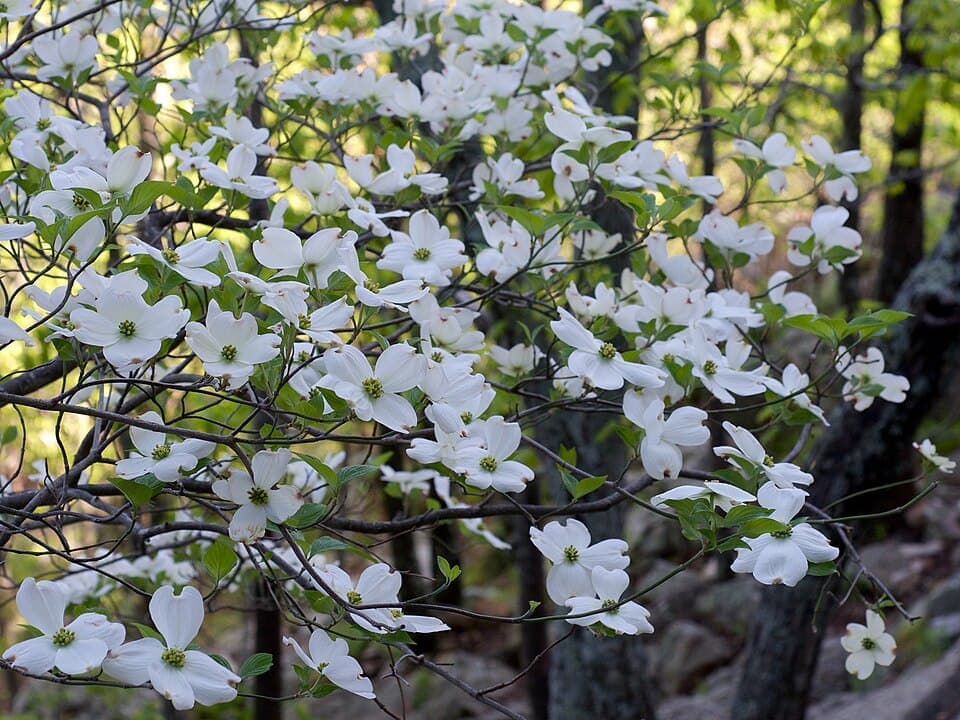
Flowering Dogwood
Cornus florida
North Carolina's state flower — a small understory tree with tiered branches, oval leaves, and showy white spring bracts followed by red berries.
Habitat: Forest understory and edges throughout the state.
FG-0032.04
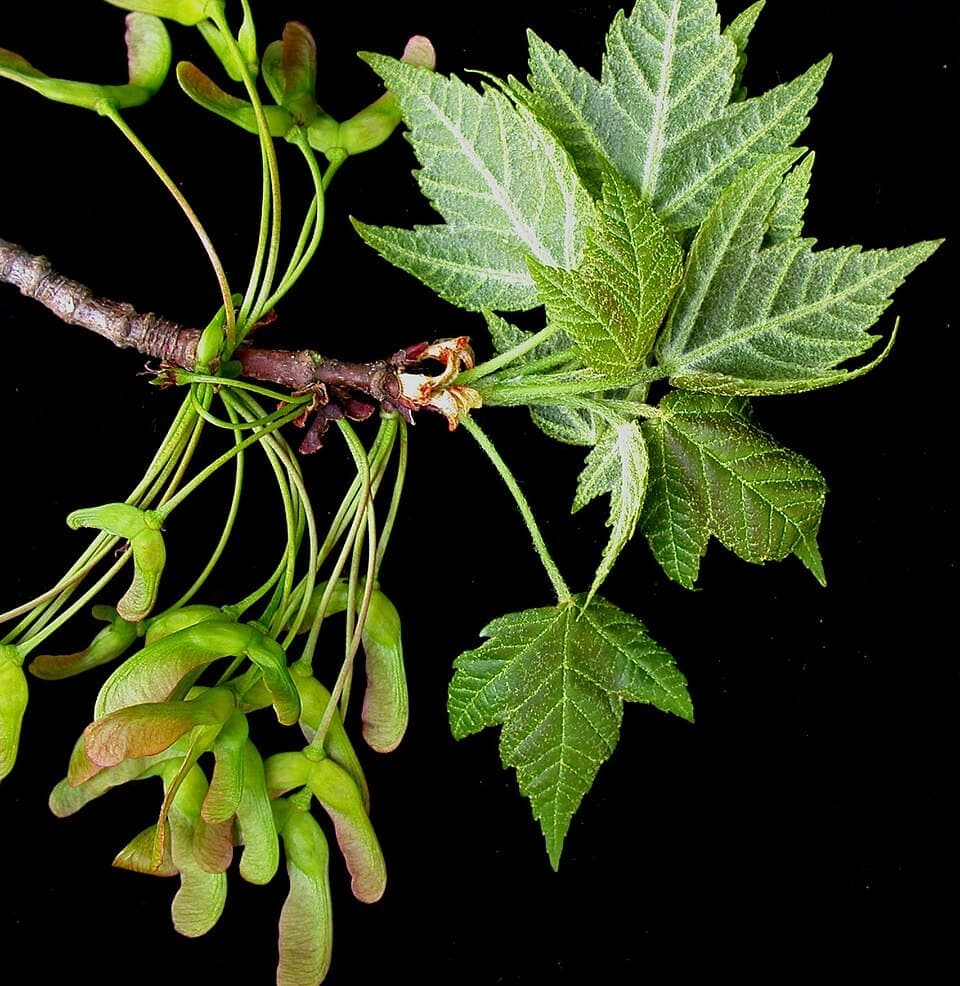
Red Maple
Acer rubrum
An adaptable maple with three- to five-lobed leaves, red twigs and buds, and brilliant red fall color. Perhaps the most widespread tree in the eastern U.S.
Habitat: Wetlands, uplands, and disturbed ground statewide.
FG-0032.05
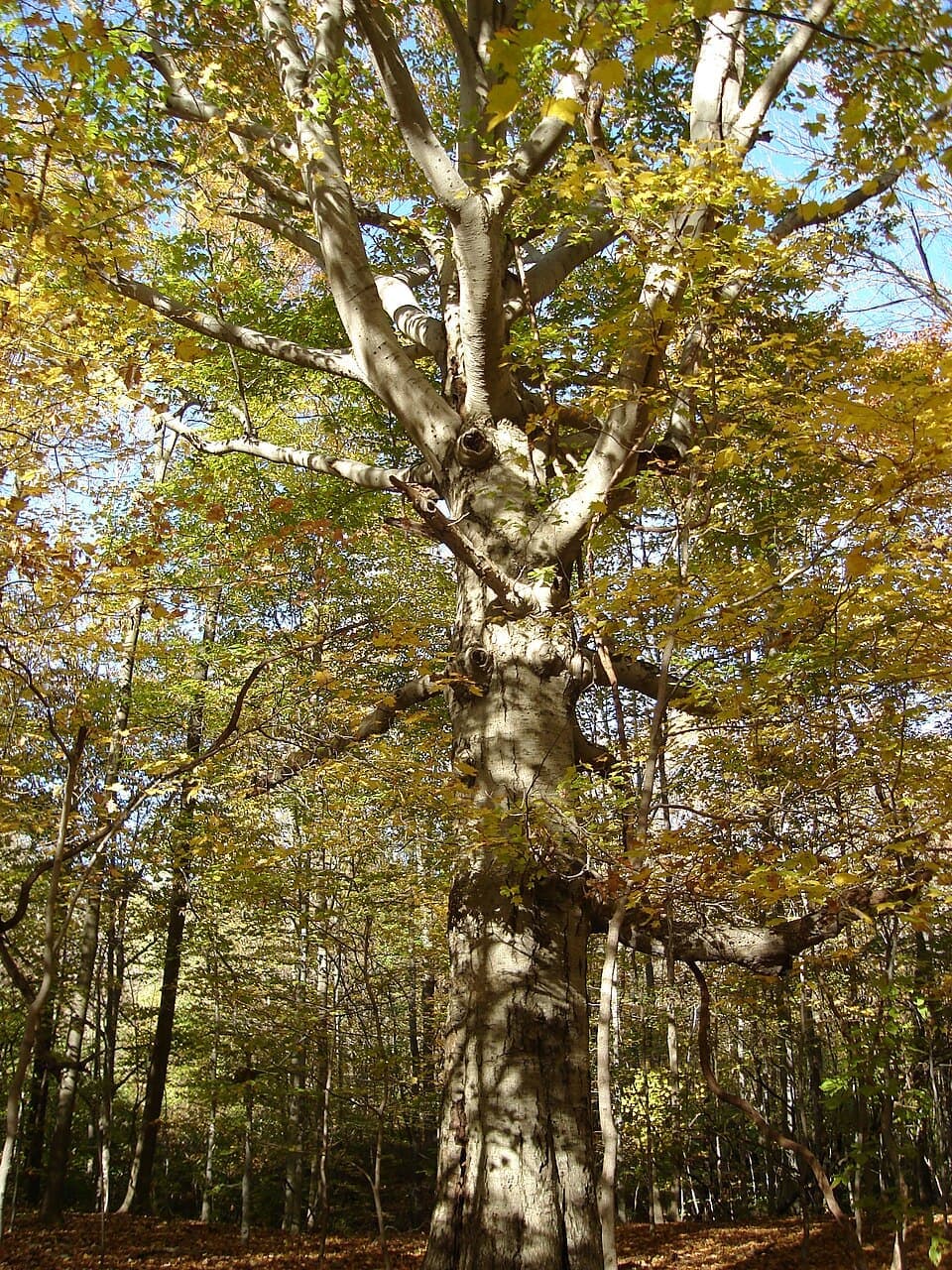
American Beech
Fagus grandifolia
A shade-tolerant hardwood with smooth, silvery-gray bark and toothed, oval leaves that often cling tan through winter. Common in mature forests.
Habitat: Rich, mature forests in the mountains and piedmont.
FG-0032.06
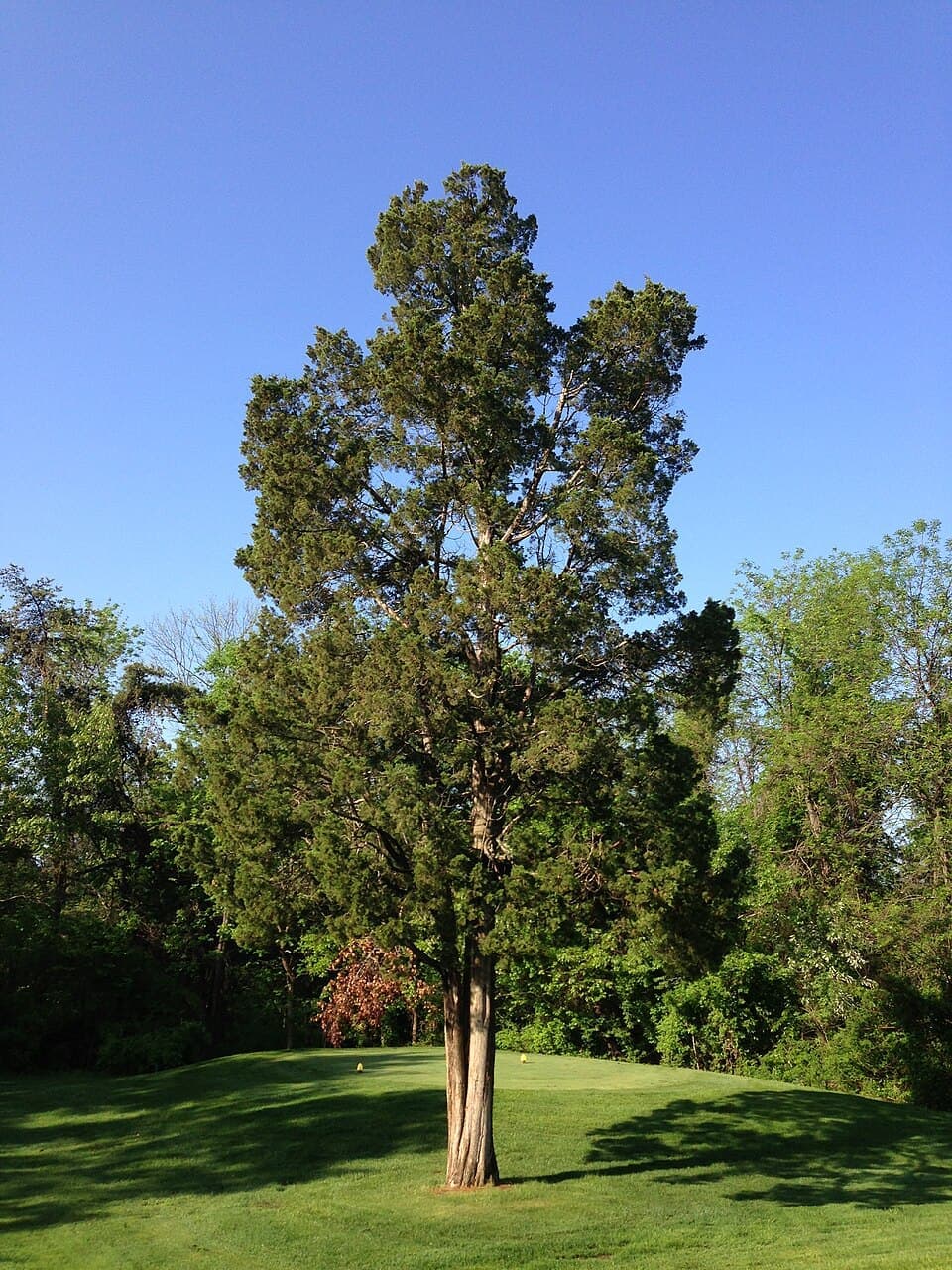
Eastern Red Cedar
Juniperus virginiana
A dense evergreen juniper with scaly, aromatic foliage, shreddy reddish bark, and blue berry-like cones. A pioneer of old fields and fencerows.
Habitat: Old fields, roadsides, and dry slopes across the state.
Through the seasons
- Spring: dogwood and redbud flower in the understory before the canopy fills in.
- Fall: red maple and tulip poplar light up the piedmont and mountain slopes.
- Winter: smooth gray beech bark and clinging tan leaves, plus evergreen cedars and pines, stand out in bare woods.
Questions
- What is the state tree of North Carolina?
- The pine (as a group, and long associated with the longleaf pine) is the state tree of North Carolina, reflecting the historic importance of the pine forests and naval-stores industry.
- How can I identify a tree in North Carolina?
- Photograph the leaves and the bark, note the habitat and elevation, and use an app like Spotter to identify the species along with its range.
From Field Notes
Not sure what you found?
Take a photo with Spotter for the name, field marks, look-alikes and safety notes in seconds.


In this guide
- Species
- 6
- Region
- North Carolina