FG-0062 · Wild Plants · 6 species
Identifying Trees in Arizona
By Derek Gauger · Updated
Overview
Arizona's trees range from desert legumes that photosynthesize through green bark to one of the largest ponderosa pine forests on Earth up on the Mogollon Rim. Elevation and water tell you what to expect.
This guide covers common and iconic Arizona trees — how to tell them apart by leaf, bark, and habit. Pair it with a photo of the foliage or bark and the app to confirm any tree you find.
Key species to know
FG-0062.01
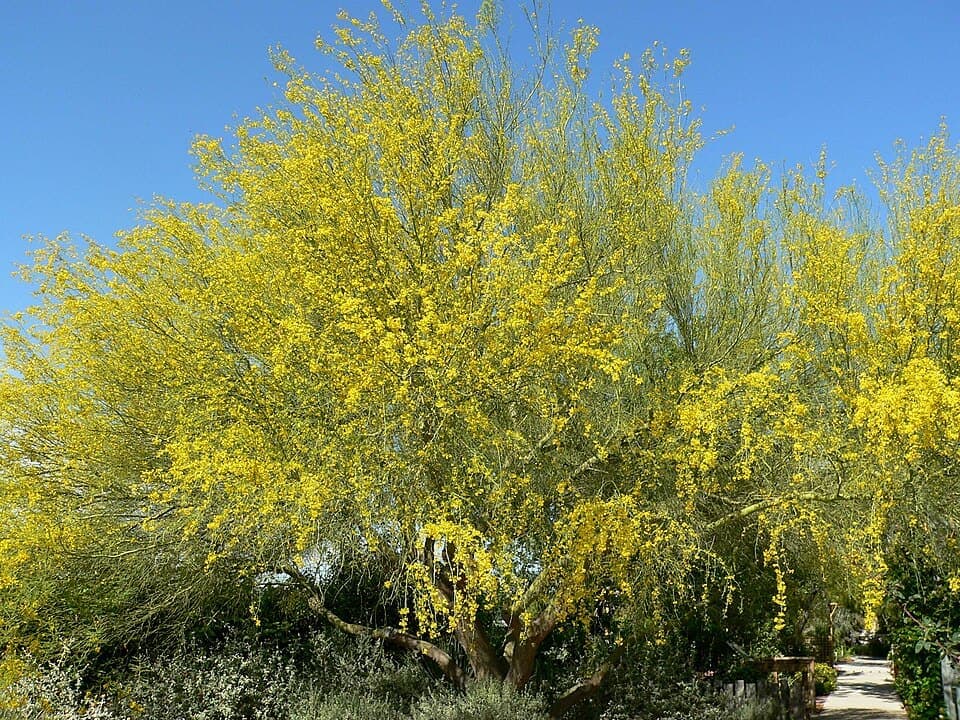
Blue Palo Verde
Parkinsonia florida
A desert tree with smooth blue-green bark that photosynthesizes, tiny leaflets, and a blaze of yellow flowers in spring. Arizona's state tree is the palo verde.
Habitat: Desert washes and flats in the low deserts.
FG-0062.02
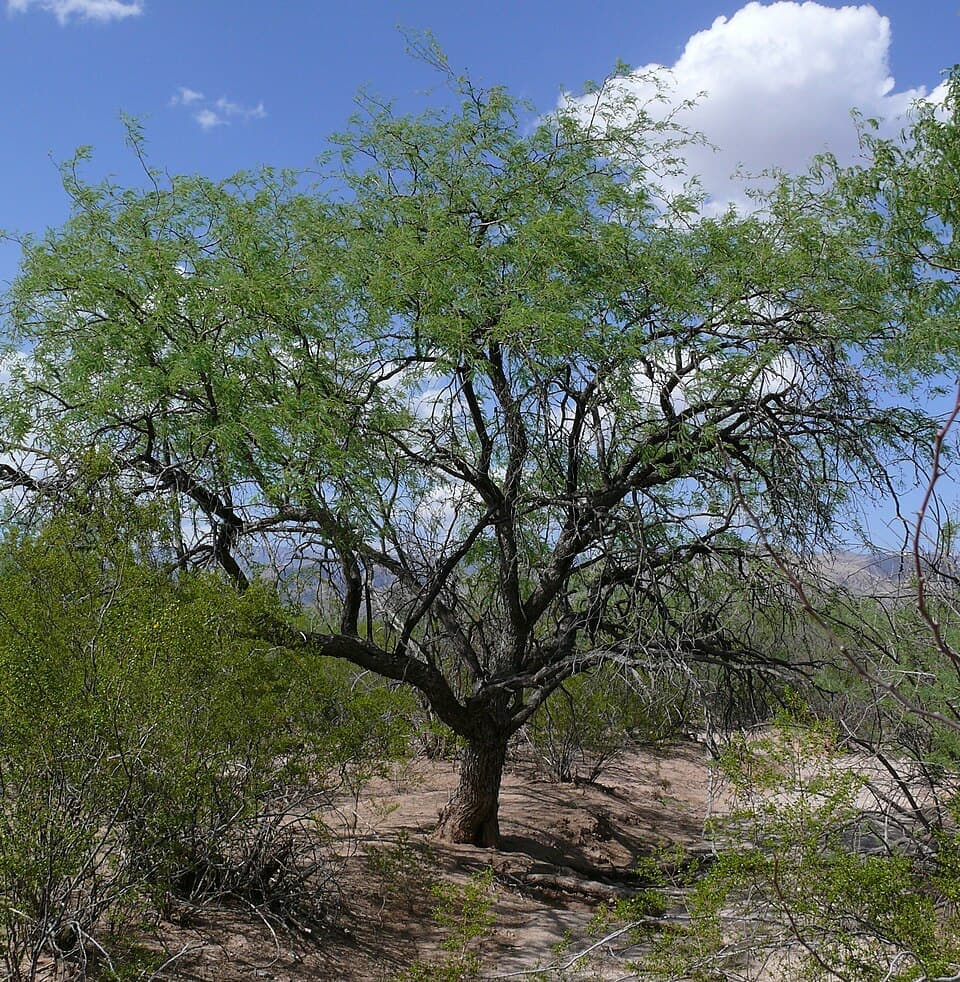
Velvet Mesquite
Prosopis velutina
A thorny desert tree with lacy, twice-divided leaves and long seed pods, casting light shade over the Sonoran Desert. Deep-rooted and drought-hardy.
Habitat: Desert grassland, washes, and floodplains.
FG-0062.03
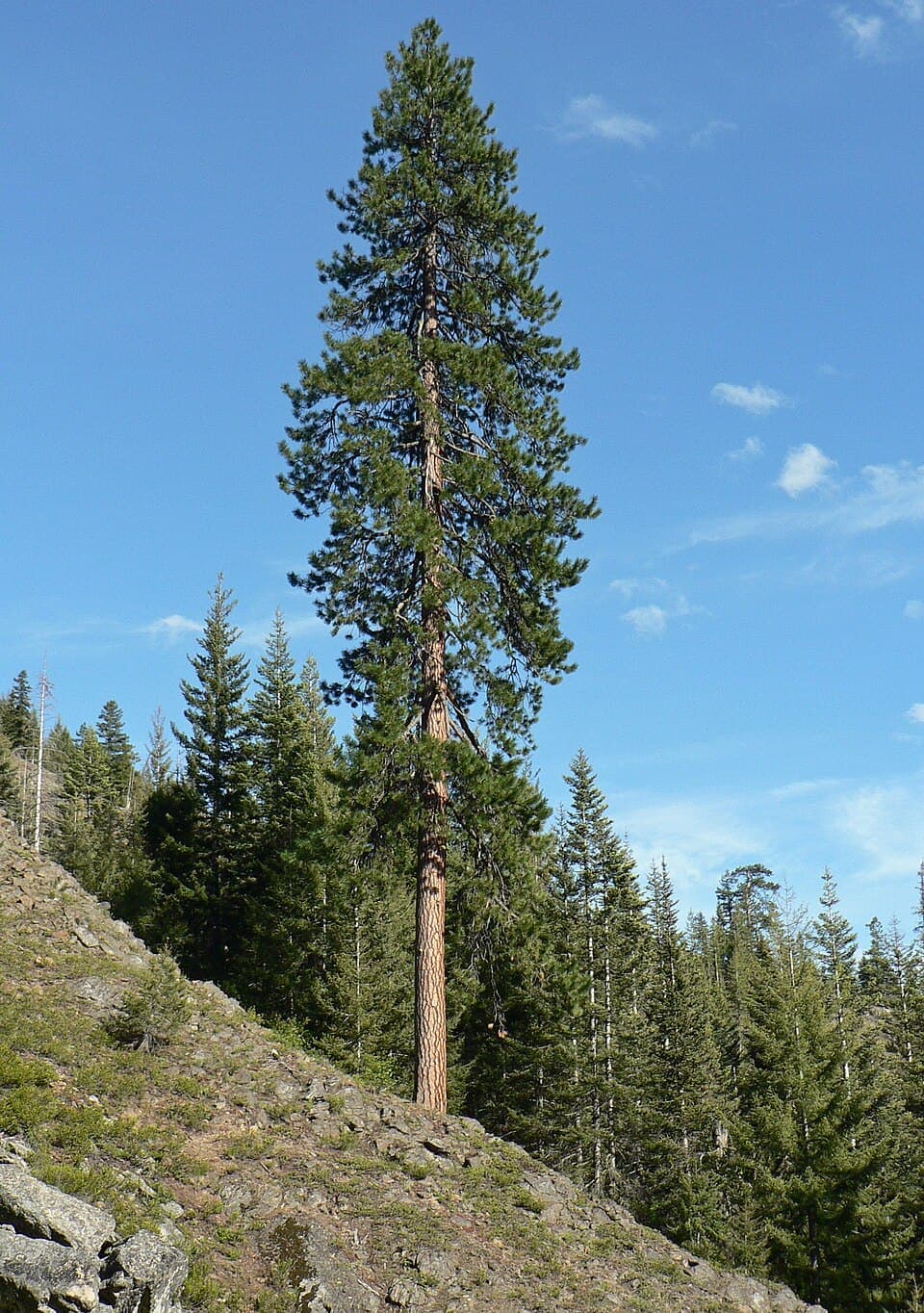
Ponderosa Pine
Pinus ponderosa
A tall pine with long needles in bundles of three and orange, jigsaw-plated bark that smells of vanilla. Forms vast forests on the Mogollon Rim and northern plateau.
Habitat: High country of the Mogollon Rim and northern Arizona.
FG-0062.04
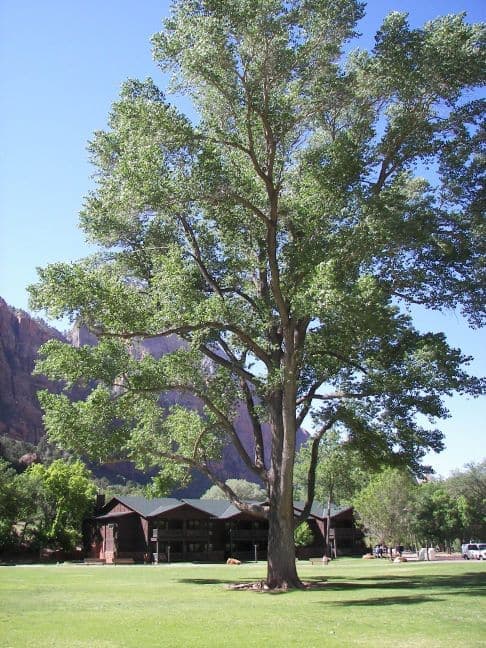
Fremont Cottonwood
Populus fremontii
A large streamside tree with broad, triangular toothed leaves that flutter and turn gold in fall. Marks water in an otherwise dry landscape.
Habitat: Desert rivers, washes, and springs.
FG-0062.05
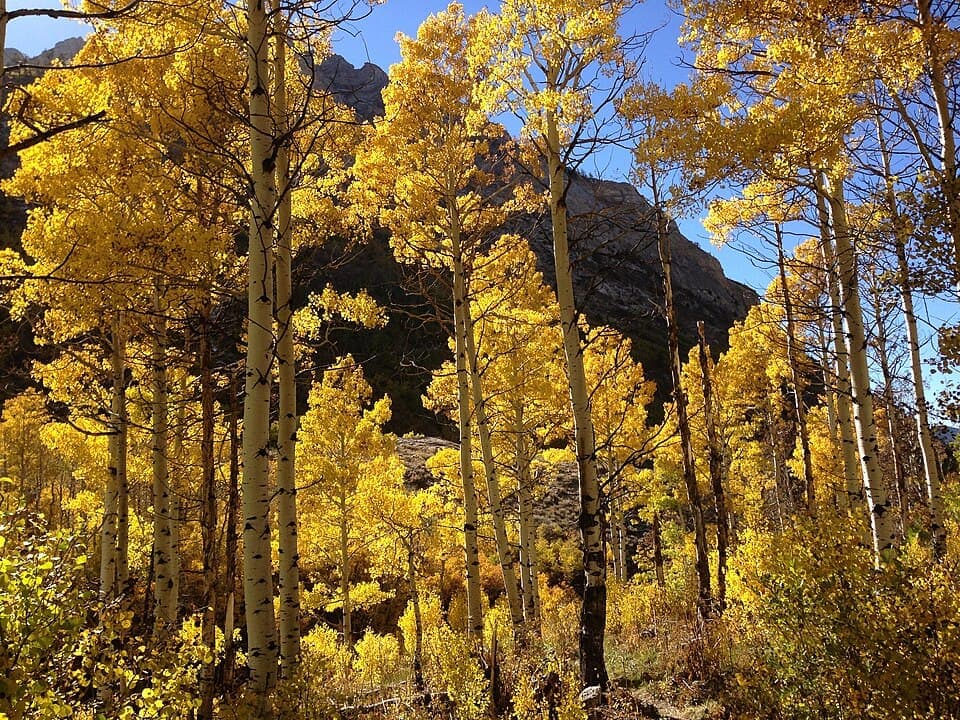
Quaking Aspen
Populus tremuloides
A slender tree with smooth white-green bark and round, trembling leaves that turn gold in fall. Grows in high mountain groves in the north.
Habitat: High mountains and the San Francisco Peaks.
FG-0062.06
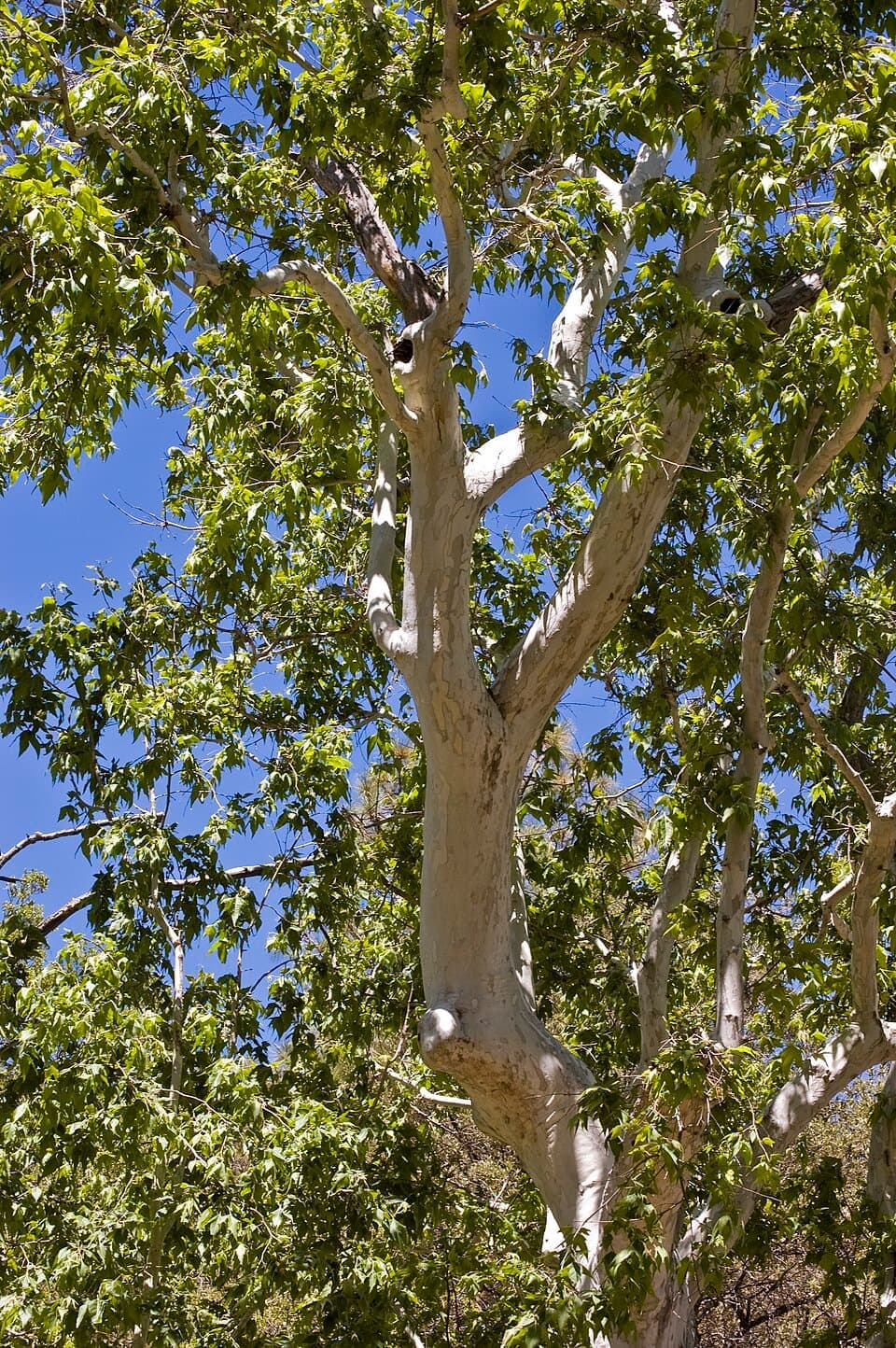
Arizona Sycamore
Platanus wrightii
A streamside tree with large, deeply cut lobed leaves and pale, mottled bark that flakes to near-white. Lines canyon creeks and riparian corridors.
Habitat: Canyon streams and riparian corridors.
Through the seasons
- Spring: palo verde and desert legumes flood the desert with yellow bloom.
- Fall: cottonwoods, sycamores, and high-country aspen mark the water and mountains in gold.
- Look for orange, vanilla-scented plated bark to pick out ponderosa pine up on the rim.
Questions
- What is the state tree of Arizona?
- The palo verde — a green-barked desert tree (the blue and foothill palo verde together) named the state tree in 1954 for its spring blaze of yellow flowers.
- What tree has green bark in the Arizona desert?
- The palo verde, whose smooth blue-green bark photosynthesizes to survive when the tiny leaves drop in drought. Photograph the bark and flowers and use an app like Spotter to confirm.
From Field Notes
- What Are the Shimmering Golden Trees Lighting Up the Mountains in Fall? Identifying Quaking Aspen
- Pine vs. Spruce vs. Fir: How to Identify Evergreen Trees
- What Is the Big Tree With White, Camouflage-Peeling Bark? Identifying the American Sycamore
- Why Is My Pine Turning Yellow and Dropping Needles This Fall? Understanding Seasonal Needle Drop
Not sure what you found?
Take a photo with Spotter for the name, field marks, look-alikes and safety notes in seconds.


In this guide
- Species
- 6
- Region
- Arizona