FG-0046 · Wildlife · 6 species
Identifying Common Birds of Arizona
By Derek Gauger · Updated
Overview
Arizona is one of the top birding states in the country, thanks to its Sonoran desert, sky-island mountains, and border specialties found nowhere else in the U.S. Deserts that look empty are full of remarkably adapted birds.
This guide covers common and iconic Arizona birds — the field marks that identify them, their habitats, and where to look. Pair it with a photo and the app to confirm any bird you spot.
Key species to know
FG-0046.01
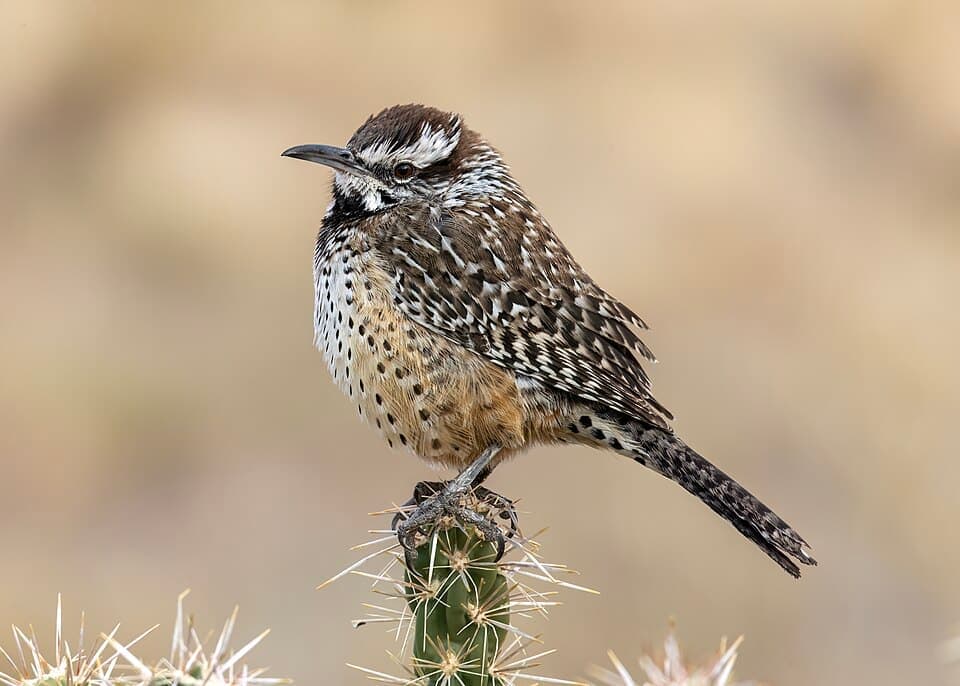
Cactus Wren
Campylorhynchus brunneicapillus
Arizona's state bird — a large, boldly spotted wren with a white eyebrow that builds football-shaped nests in cholla and cactus. Loud and conspicuous.
Habitat: Desert scrub with cactus and thorny shrubs.
FG-0046.02
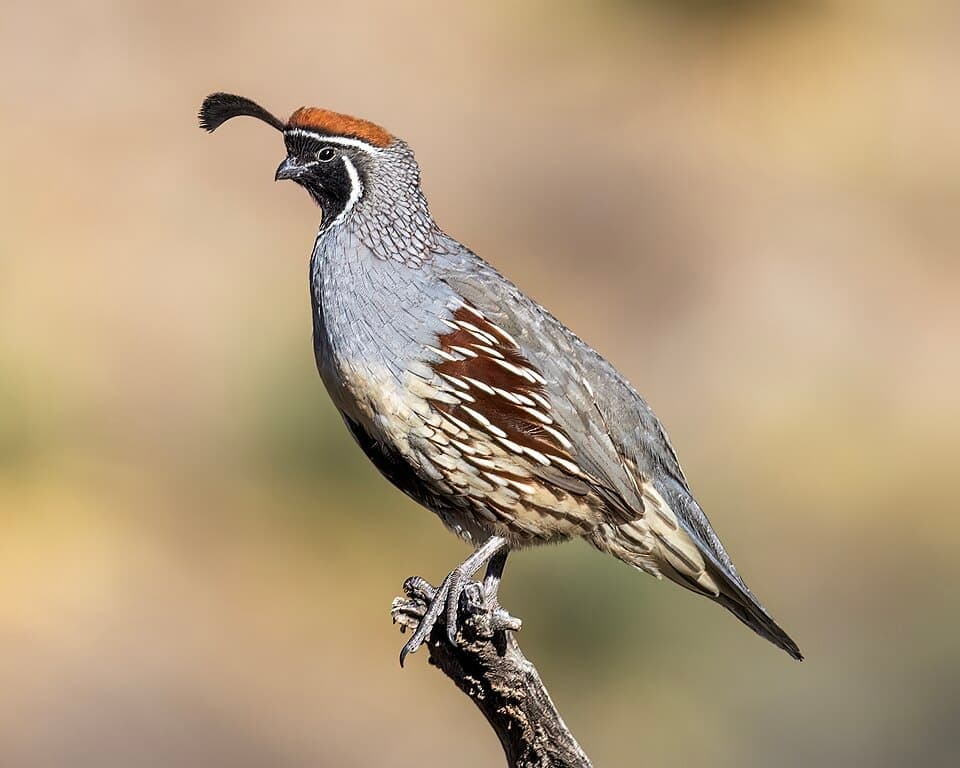
Gambel's Quail
Callipepla gambelii
A plump gray quail with a comma-shaped topknot and, on the male, a chestnut cap and black face. Runs in family coveys across the desert floor.
Habitat: Desert washes, brush, and suburban edges.
FG-0046.03
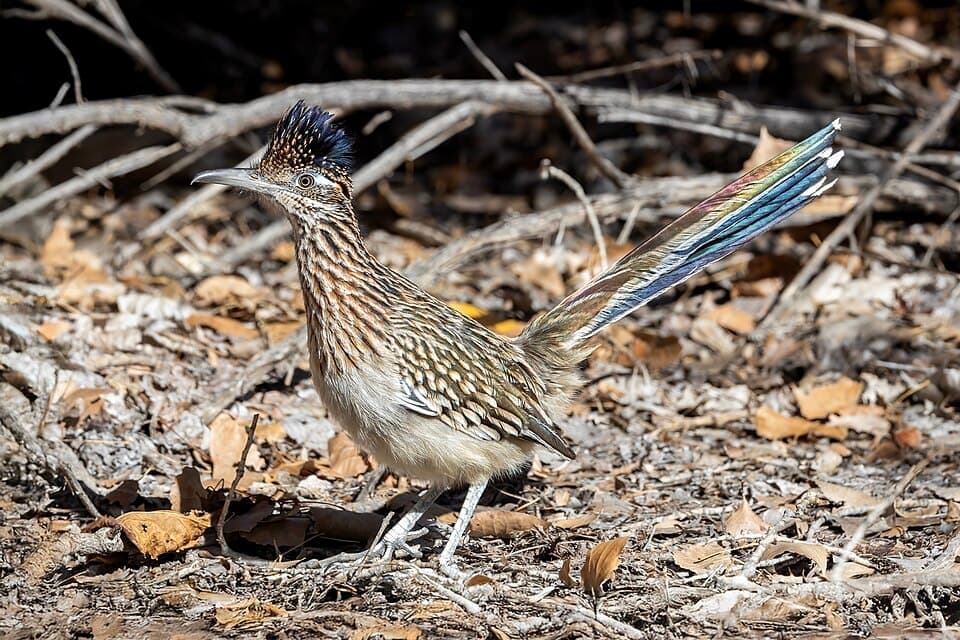
Greater Roadrunner
Geococcyx californianus
A large, ground-running cuckoo with a shaggy crest and long tail, sprinting after lizards and snakes. More often seen dashing than flying.
Habitat: Open desert, scrub, and roadsides.
FG-0046.04
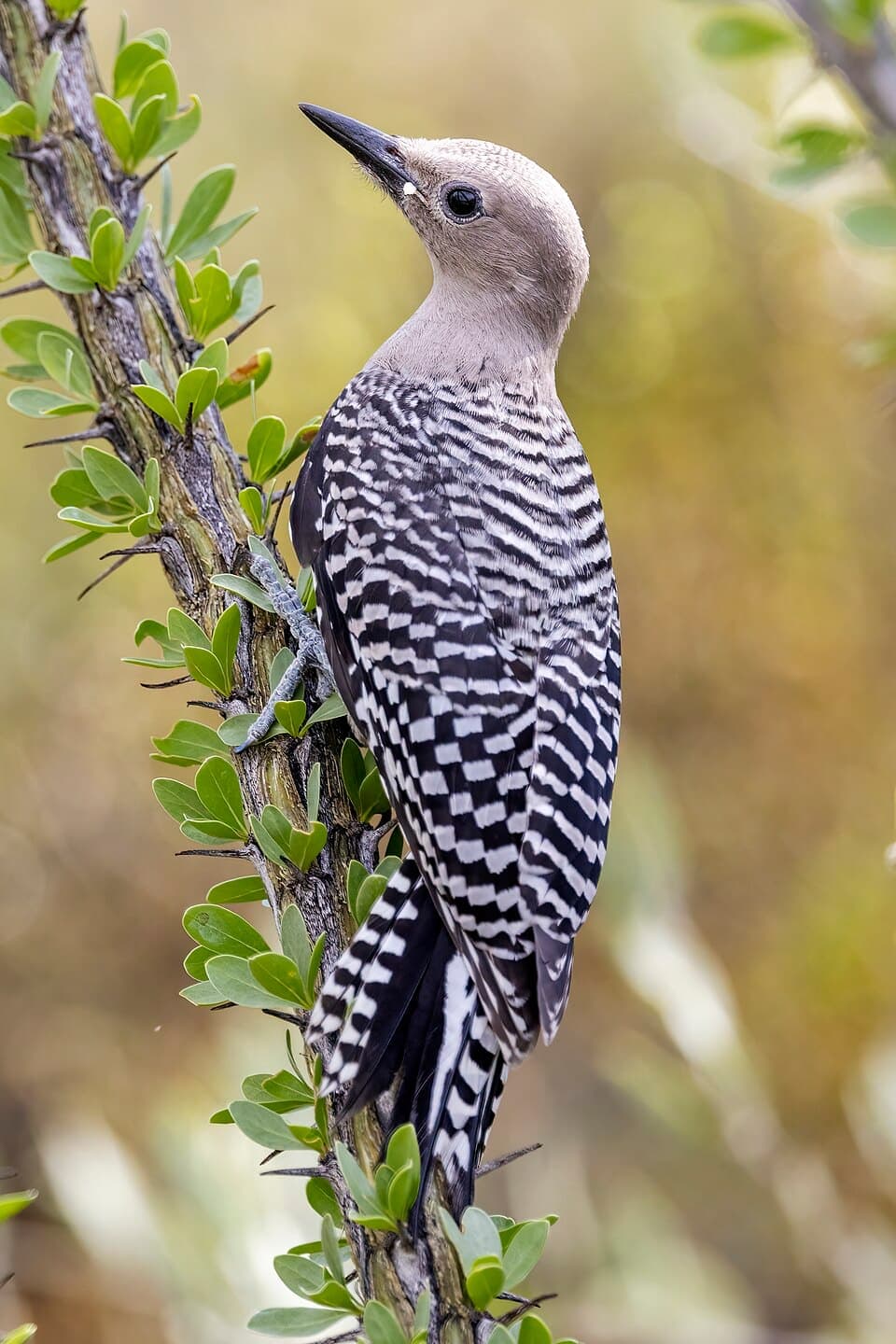
Gila Woodpecker
Melanerpes uropygialis
A tan woodpecker with a black-and-white barred back; the male has a small red cap. Nests in cavities it excavates in saguaro cactus.
Habitat: Saguaro desert, washes, and suburbs.
FG-0046.05
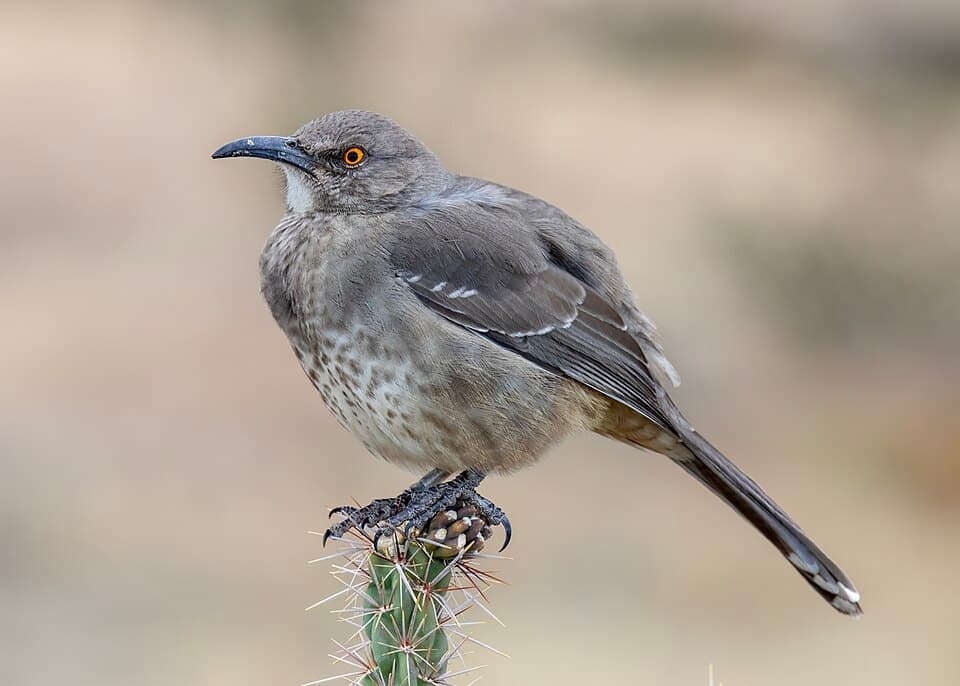
Curve-billed Thrasher
Toxostoma curvirostre
A gray-brown desert thrasher with a long down-curved bill and orange eye, often calling a sharp "whit-wheet" from a cactus perch.
Habitat: Desert scrub, cholla, and suburban yards.
FG-0046.06
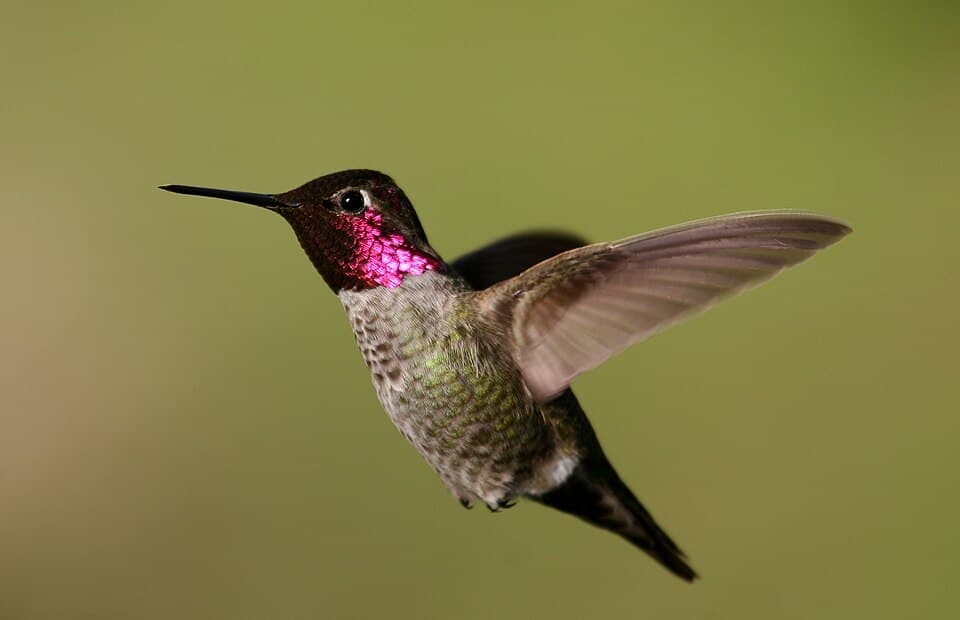
Anna's Hummingbird
Calypte anna
A stocky hummingbird; the male shows a flashing rose-pink head and throat. Common year-round at desert flowers and feeders.
Habitat: Deserts, gardens, and urban plantings.
Through the seasons
- Spring migration and the summer monsoon bring a surge of hummingbirds and mountain specialties.
- Early morning is by far the most active and coolest time to bird the desert.
- Desert washes and backyard feeders concentrate birds where water and flowers are available.
Questions
- What is the state bird of Arizona?
- The cactus wren — a large, spotted desert wren that builds bulky nests in cholla and cactus and is easy to spot and hear.
- How can I identify a bird I saw in Arizona?
- Note its size, shape, and field marks, then take a photo and use an app like Spotter to identify the species along with its habitat and range.
From Field Notes
Not sure what you found?
Take a photo with Spotter for the name, field marks, look-alikes and safety notes in seconds.


In this guide
- Species
- 6
- Region
- Arizona