FG-0061 · Wild Plants · 6 species
Identifying Trees in Colorado
By Derek Gauger · Updated
Overview
Colorado's trees sort themselves by elevation, from foothill ponderosa pine up through aspen and spruce-fir to timberline. A few needle, leaf, and bark clues place most of them.
This guide covers common and iconic Colorado trees — how to tell them apart by foliage, bark, and habit. Pair it with a photo of the needles or leaves and the app to confirm any tree you find.
Key species to know
FG-0061.01
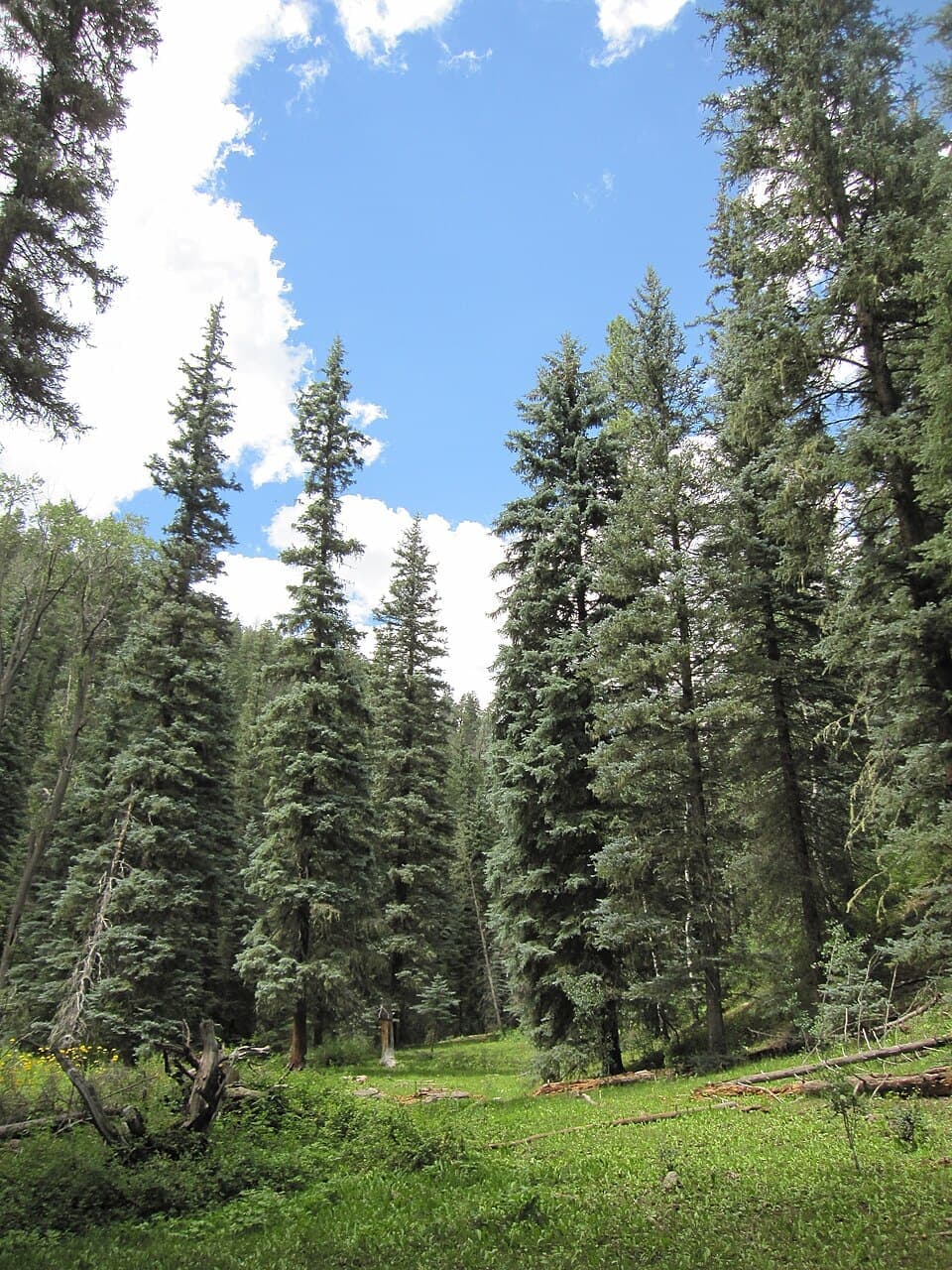
Colorado Blue Spruce
Picea pungens
The Colorado state tree — a conifer with stiff, sharp, silvery-blue needles arranged all around the twig, and hanging papery cones. Native to mountain streamsides.
Habitat: Montane streamsides and moist canyons.
FG-0061.02
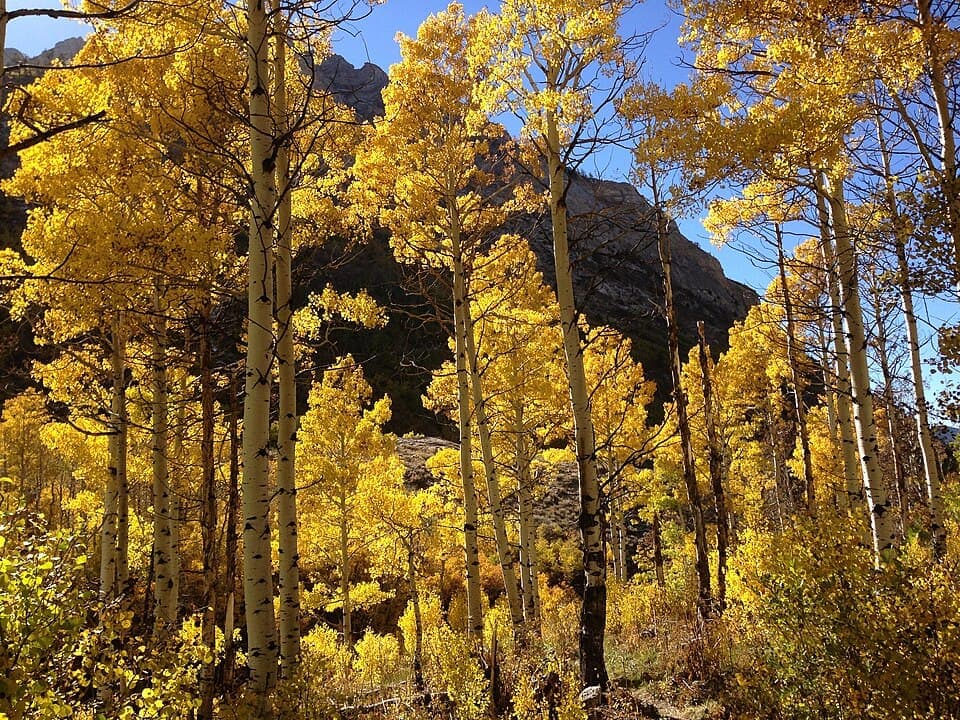
Quaking Aspen
Populus tremuloides
A slender tree with smooth white-green bark and round leaves that tremble in the slightest breeze, turning brilliant gold in fall. Grows in vast clonal groves.
Habitat: Montane slopes, burns, and meadow edges.
FG-0061.03
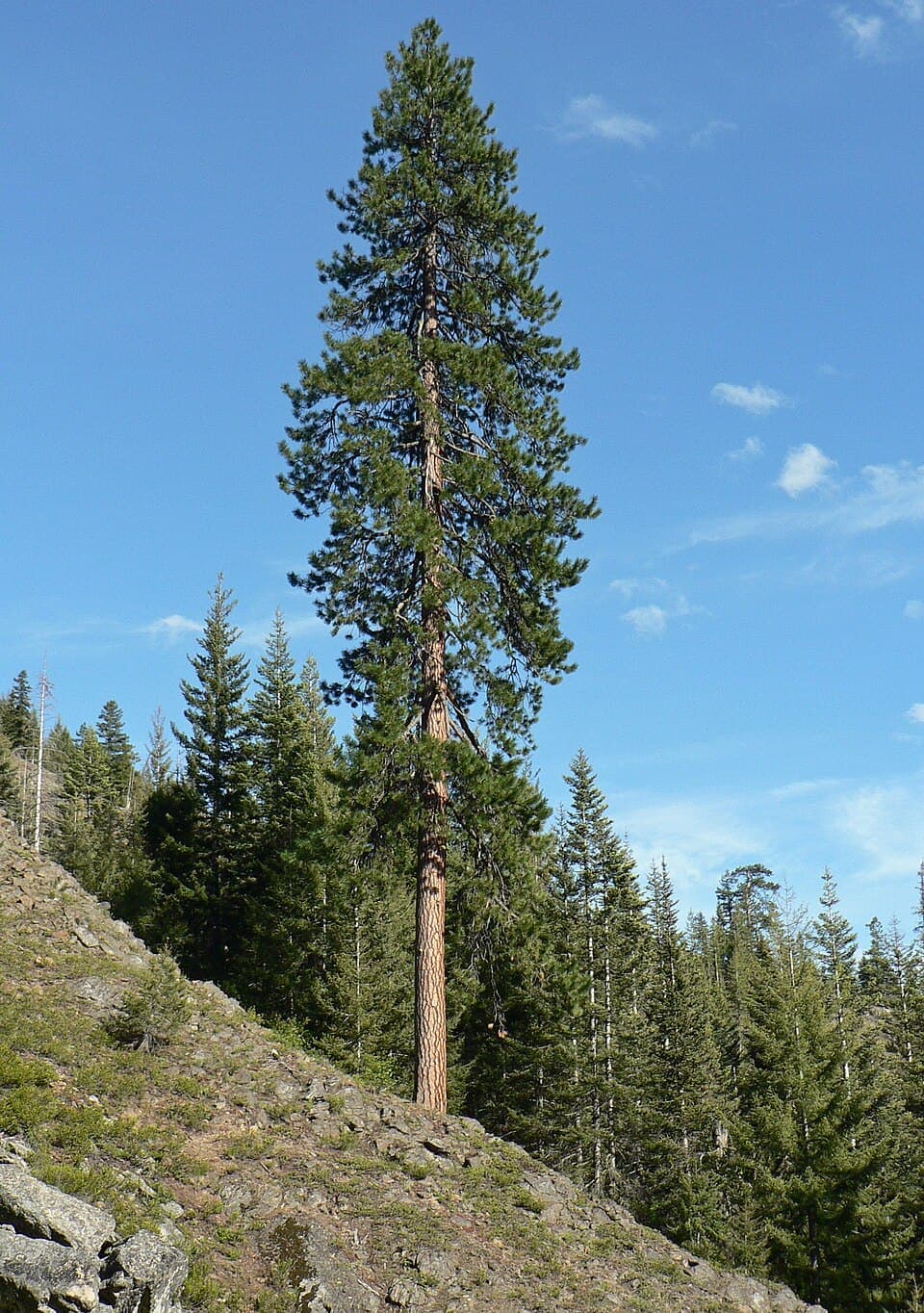
Ponderosa Pine
Pinus ponderosa
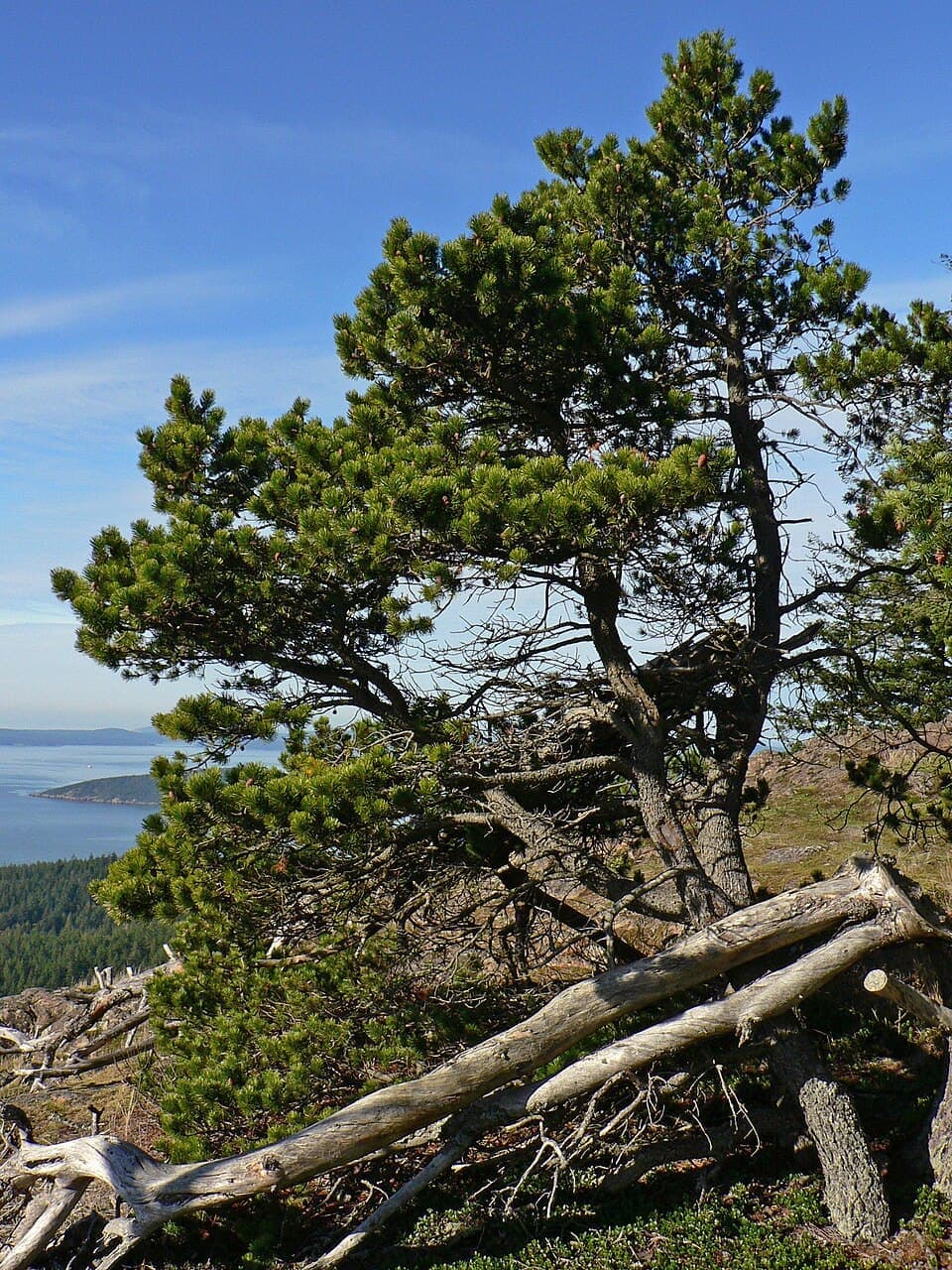
A tall pine with long needles in bundles of two and three and orange, jigsaw-plated bark that smells of vanilla. Common in the foothills and montane zone.
Habitat: Foothills and dry montane slopes.
FG-0061.04
Douglas-fir
Pseudotsuga menziesii
A conifer with soft, flat needles and cones bearing distinctive three-pronged bracts between the scales. Common on cooler, north-facing montane slopes.
Habitat: Montane forests, especially cool north slopes.
FG-0061.05
Lodgepole Pine
Pinus contorta
A straight, slender pine with short needles in bundles of two, forming dense even-aged stands after fire. Named for its use as tepee and cabin poles.
Habitat: Cool subalpine slopes and post-fire forests.
FG-0061.06
Gambel Oak
Quercus gambelii
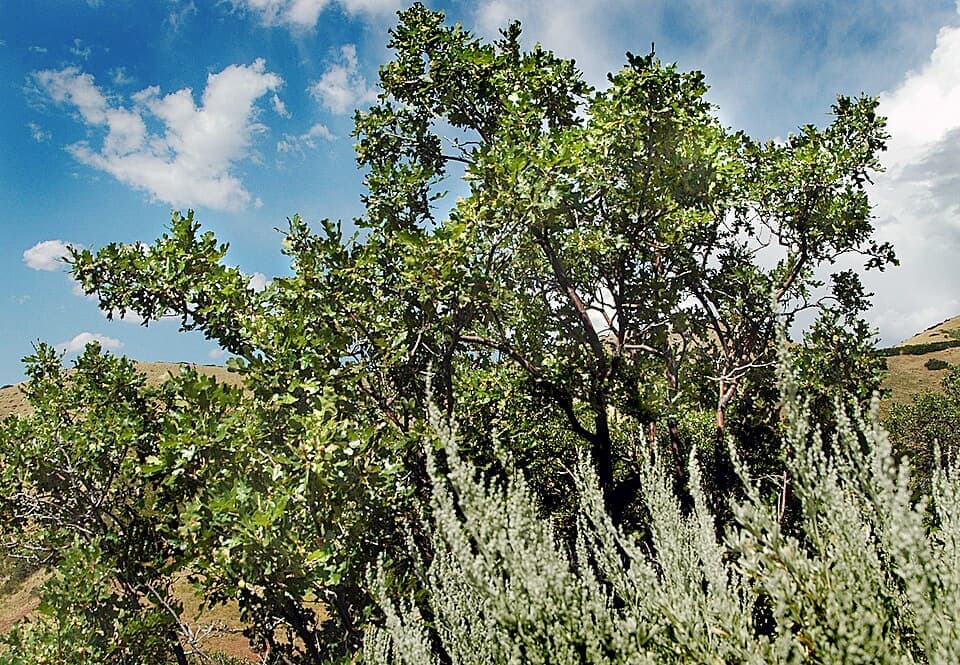
A shrubby oak with rounded-lobed leaves that forms dense thickets on foothill slopes, turning russet in fall. Often called "scrub oak" locally.
Habitat: Foothill slopes, mesas, and canyon sides.
Through the seasons
- Fall: aspen groves turn the mountainsides gold in late September, the state's signature display.
- Winter: blue spruce and the pines carry the montane forest green under snow.
- Look for orange, vanilla-scented plated bark to pick out ponderosa pine in the foothills.
Questions
- What is the state tree of Colorado?
- The Colorado blue spruce — a native mountain conifer prized for its stiff, silvery-blue needles, adopted as the state tree in 1939.
- What are the golden trees on Colorado mountainsides in fall?
- Quaking aspen, whose round, trembling leaves turn brilliant gold in late September. Photograph the leaves and white bark and use an app like Spotter to confirm.
From Field Notes
- Pine vs. Spruce vs. Fir: How to Identify Evergreen Trees
- What Are the Shimmering Golden Trees Lighting Up the Mountains in Fall? Identifying Quaking Aspen
- White Oak vs. Red Oak: How to Tell the Two Great Oak Groups Apart
- Why Is My Pine Turning Yellow and Dropping Needles This Fall? Understanding Seasonal Needle Drop
Not sure what you found?
Take a photo with Spotter for the name, field marks, look-alikes and safety notes in seconds.


In this guide
- Species
- 6
- Region
- Colorado