FG-0033 · Wild Plants · 6 species
Identifying Trees in Washington
By Derek Gauger · Updated
Overview
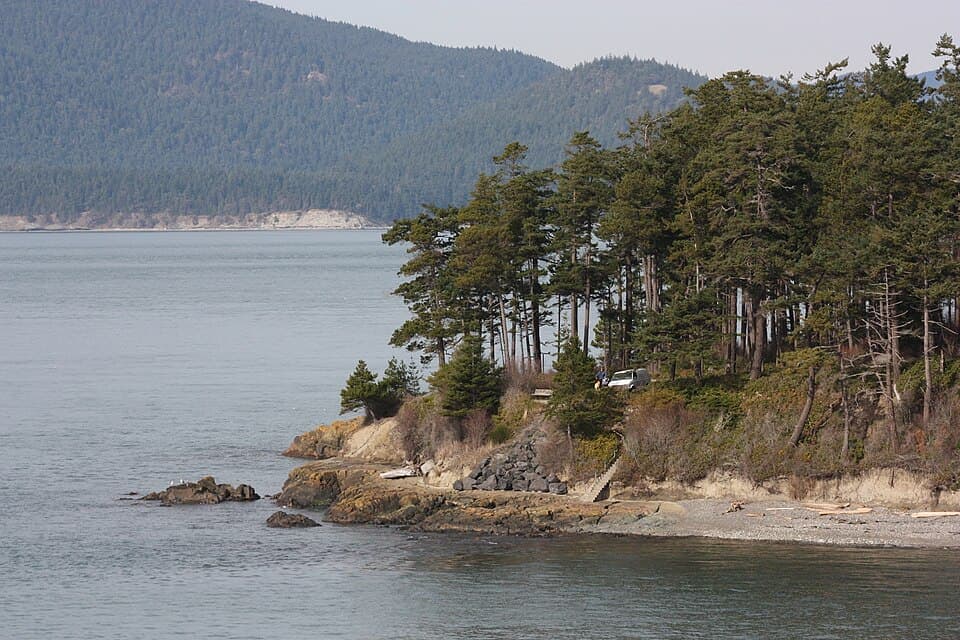
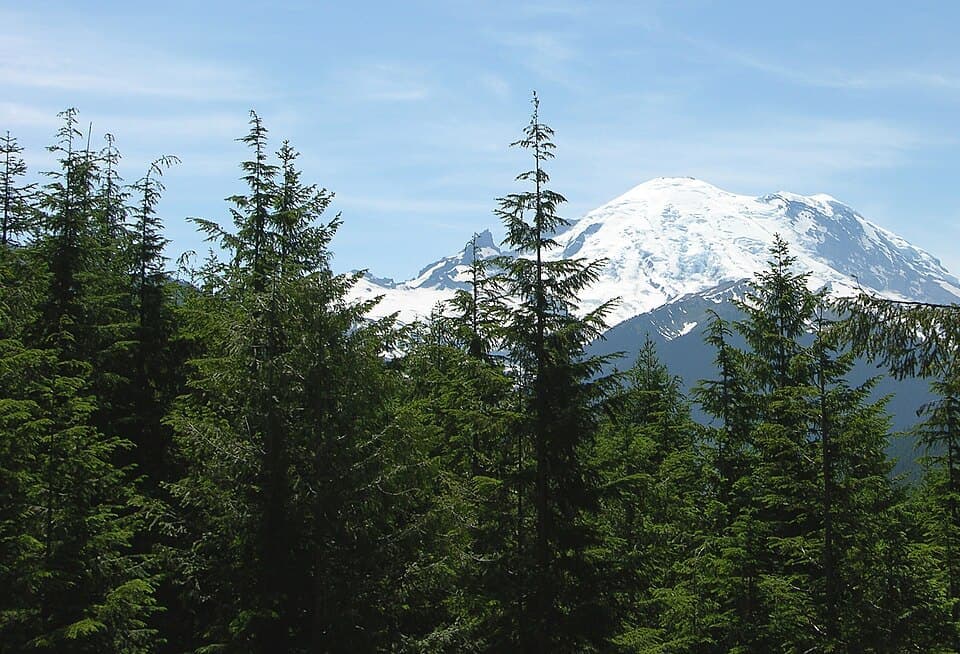
Washington's wet westside forests are among the most productive conifer forests on Earth, while the drier eastside supports pine and open woodland. Learning a handful of conifers and broadleaf trees unlocks most of what you will see.
This guide covers common and iconic Washington trees — how to tell them apart by foliage, bark, and habit. Pair it with a photo of the needles or leaves and the app to confirm any tree you find.
Key species to know
FG-0033.01
Douglas-fir
Pseudotsuga menziesii
A dominant Pacific Northwest conifer with soft, flat needles set all around the twig and cones bearing distinctive three-pronged "mouse-tail" bracts. Thick, deeply furrowed bark on old trees.
Habitat: Lowland and montane forests throughout the state.
FG-0033.02
Western Red Cedar
Thuja plicata
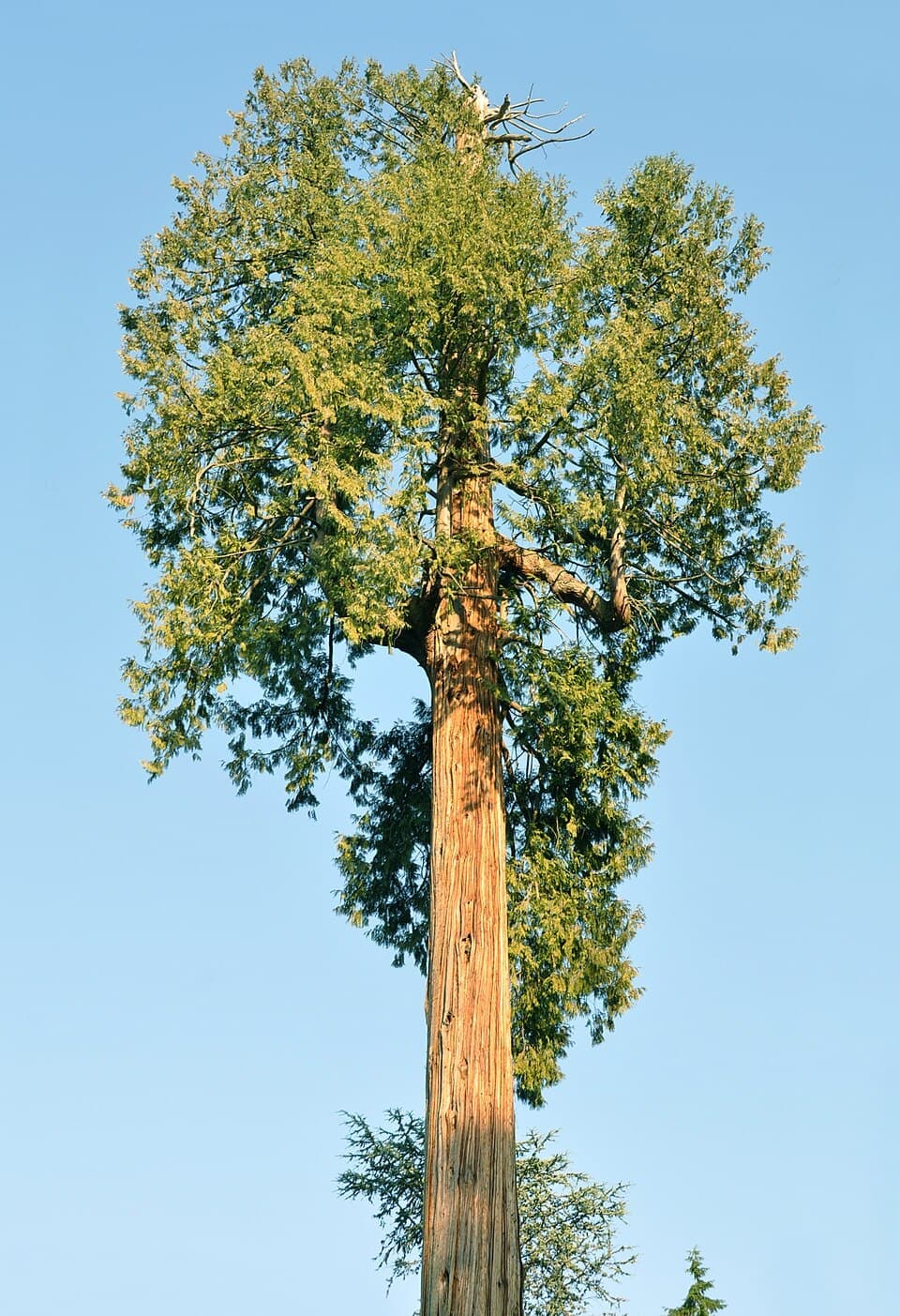
A large evergreen with flat, scale-like sprays of aromatic foliage and stringy, reddish-brown bark. Culturally vital to Northwest peoples; thrives in wet forests.
Habitat: Moist lowland and streamside forests west of the Cascades.
FG-0033.03
Western Hemlock
Tsuga heterophylla
Washington's state tree — a graceful conifer with short, uneven flat needles and a characteristically drooping leader at its top. Shade-tolerant and abundant in old-growth.
Habitat: Moist coastal and montane forests, especially on the westside.
FG-0033.04
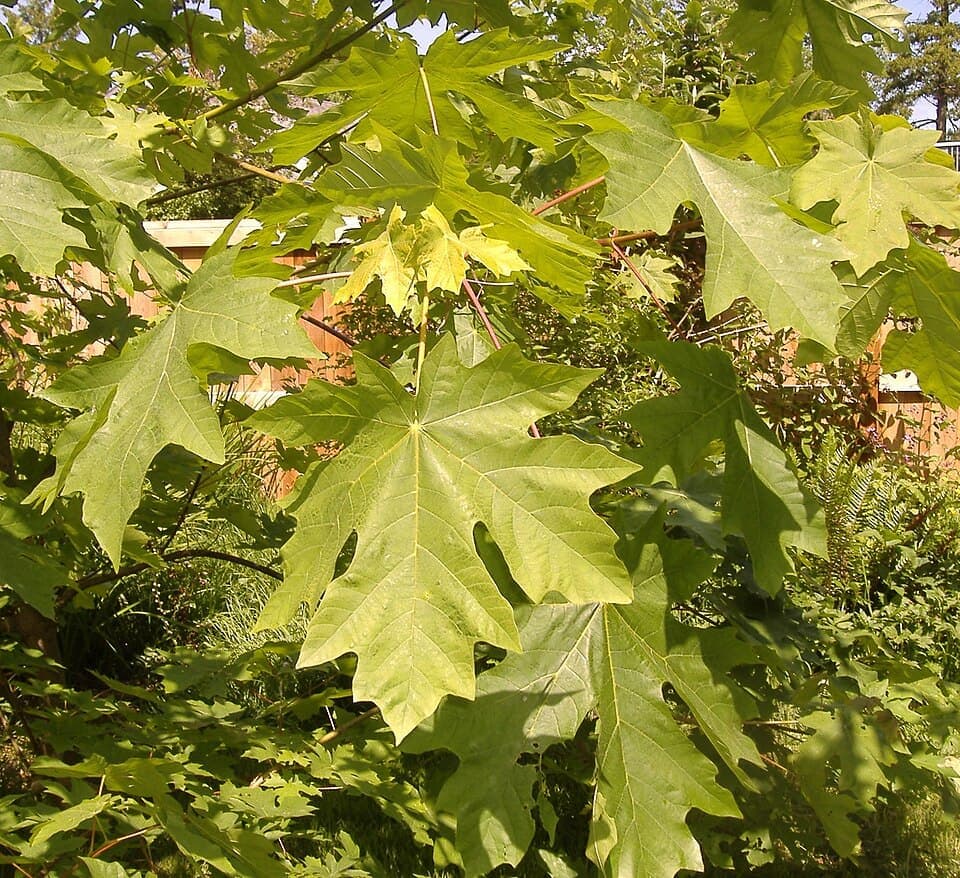
Bigleaf Maple
Acer macrophyllum
A broadleaf tree with enormous five-lobed leaves (up to a foot wide), often cloaked in mosses and ferns in wet forests. Gives golden fall color along westside rivers.
Habitat: Moist forests, stream banks, and valley bottoms west of the Cascades.
FG-0033.05
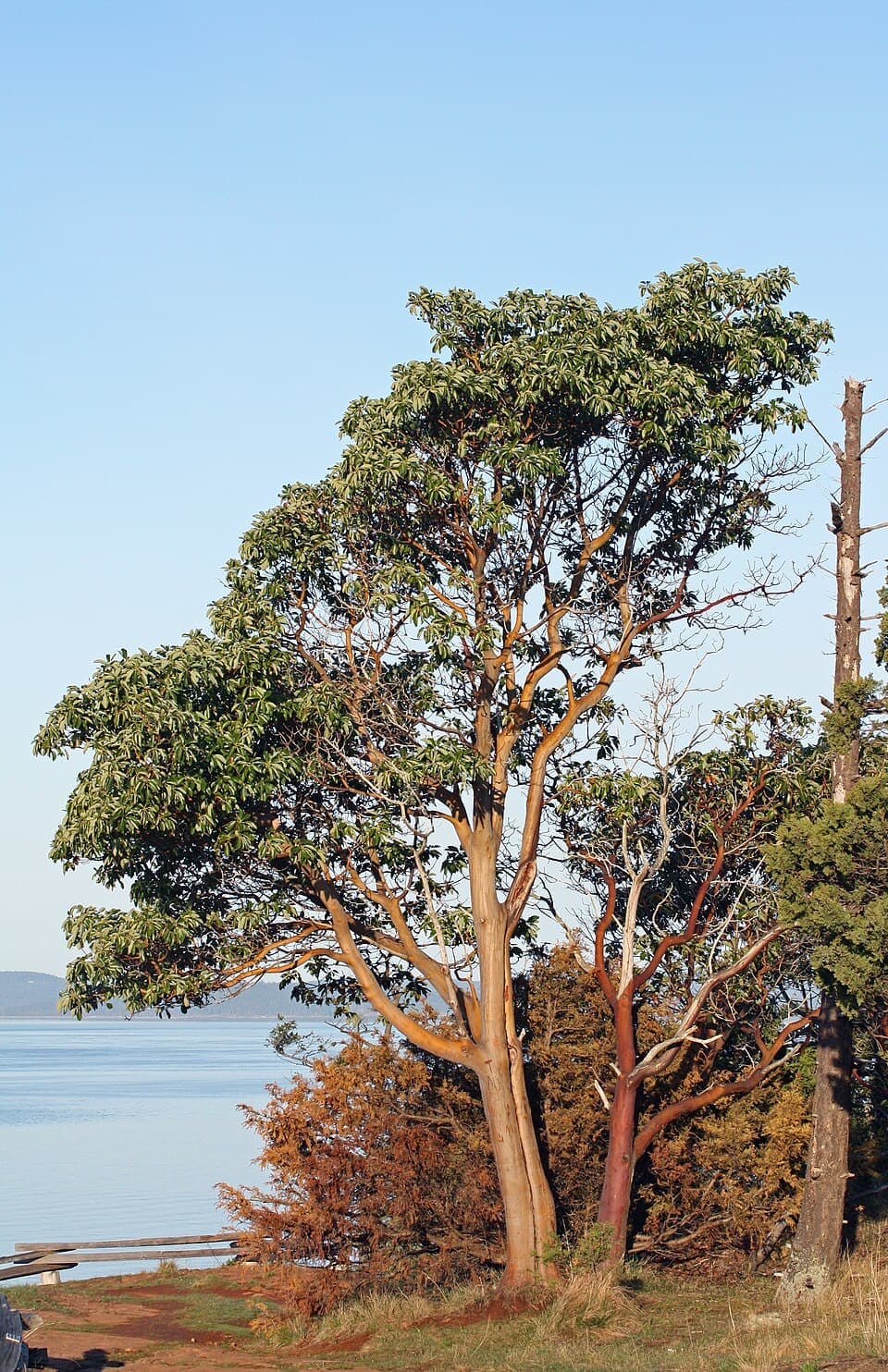
Pacific Madrone
Arbutus menziesii
A broadleaf evergreen with glossy oval leaves and smooth, orange-red bark that peels in thin curls to reveal green beneath. Bears white spring flowers and red-orange berries.
Habitat: Dry, rocky slopes and bluffs near Puget Sound and the coast.
FG-0033.06
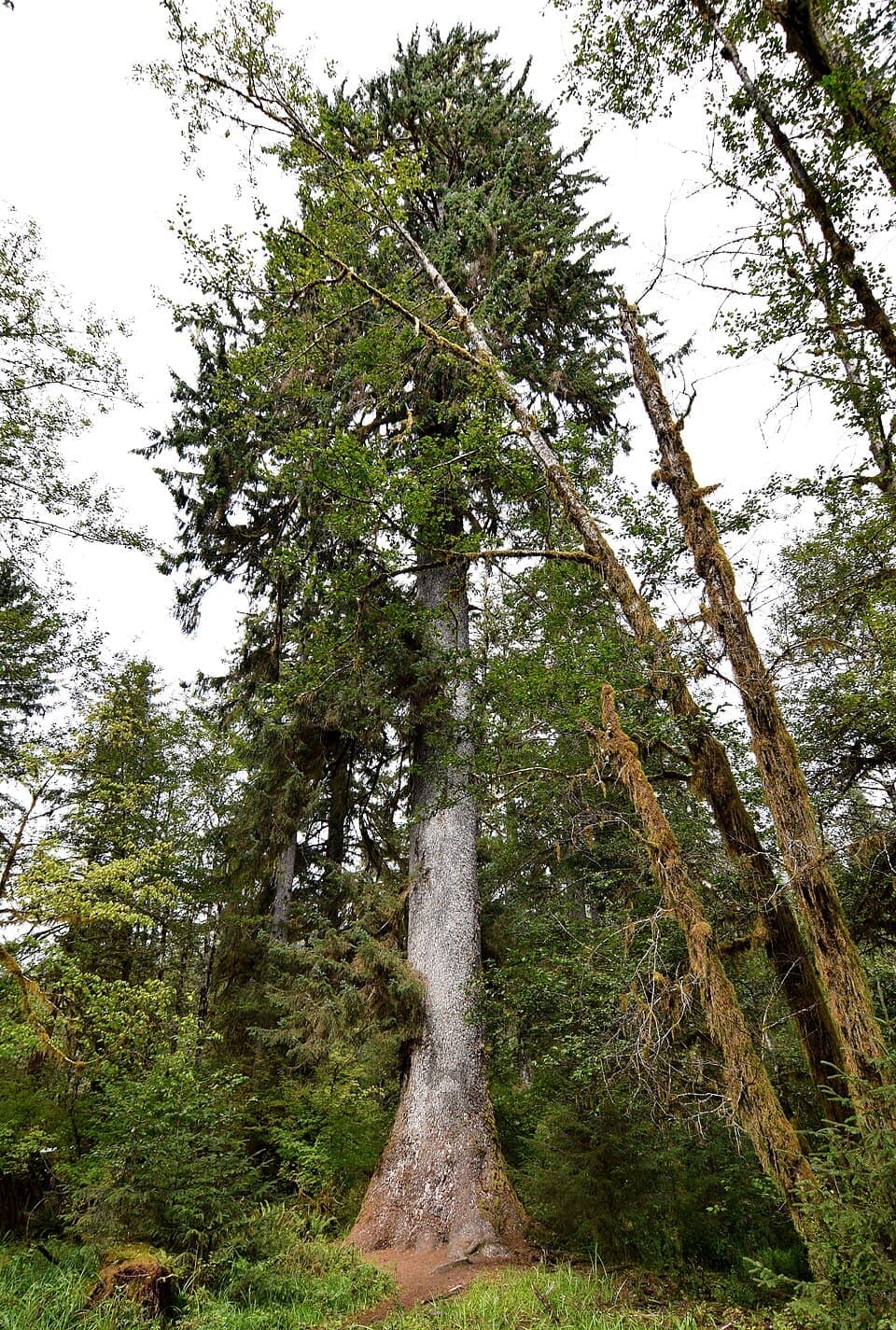
Sitka Spruce
Picea sitchensis
A large coastal conifer with stiff, sharp, four-sided needles and thin, scaly gray-purple bark. Grows to great size in the fog-drenched outer coast forests.
Habitat: Coastal fog-belt forests along the Pacific and Olympic Peninsula.
Through the seasons
- Year-round: Douglas-fir, cedar, hemlock, spruce, and madrone are evergreen and identifiable in any season.
- Fall: bigleaf maple turns golden along westside rivers among the dark conifers.
- Winter: the smooth orange bark of madrone glows against wet green slopes.
Questions
- What is the state tree of Washington?
- The western hemlock is the state tree of Washington — a graceful conifer recognized by its short, uneven needles and drooping top leader.
- How do I tell a Douglas-fir from a true fir or spruce?
- Douglas-fir cones have unique three-pronged bracts sticking out between the scales, and its needles are soft and flat. Spruce needles are sharp and four-sided, while true firs have upright cones that shatter on the tree.
From Field Notes
Not sure what you found?
Take a photo with Spotter for the name, field marks, look-alikes and safety notes in seconds.


In this guide
- Species
- 6
- Region
- Washington