FG-0027 · Wildflowers · 6 species
Wildflowers of California
By Derek Gauger · Updated
Overview
California's wildflower season begins in the deserts as early as February and moves up in elevation into the mountains through summer. In years with well-timed winter rain, the deserts and grasslands erupt into "superblooms" that draw visitors from around the world.
Antelope Valley, Carrizo Plain, Anza-Borrego, and the Sierra foothills are among the most celebrated destinations. The state flower, the California poppy, blankets hillsides in brilliant orange each spring and is protected from picking on public land.
Key species to know
FG-0027.01
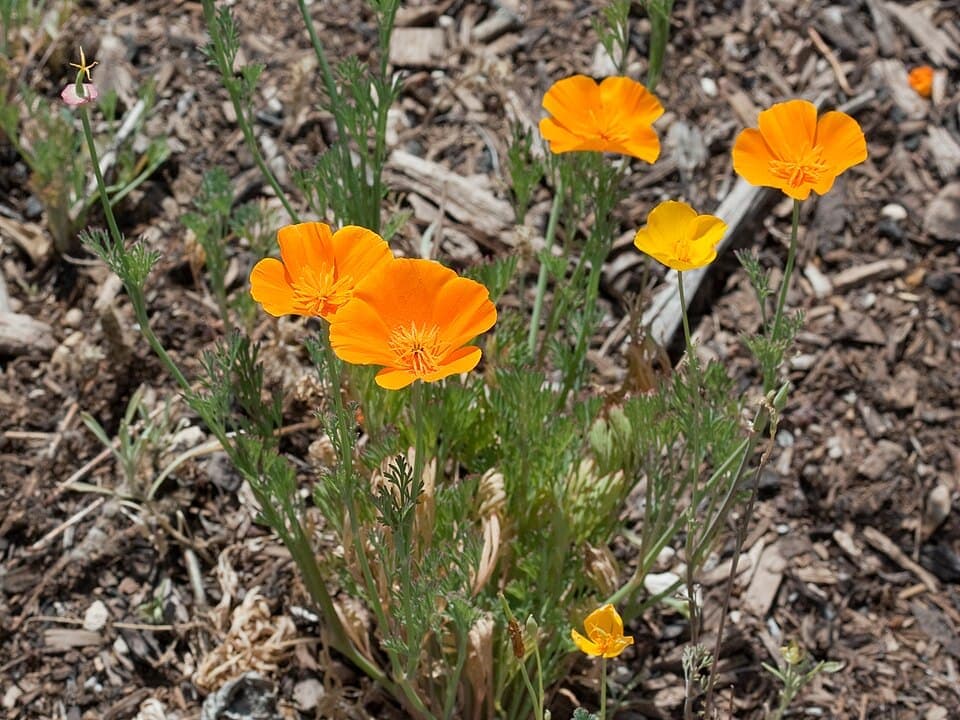
California Poppy
Eschscholzia californica
CautionFebruary–May
California's state flower — silky, cup-shaped blooms in vivid orange (sometimes yellow) that close at night and on cloudy days. Carpets hillsides and roadsides across the state each spring.
Habitat: Grassy slopes, open fields, and roadsides below about 6,500 ft.
Protected on public land in California — do not pick or dig poppies. Not considered edible.
FG-0027.02
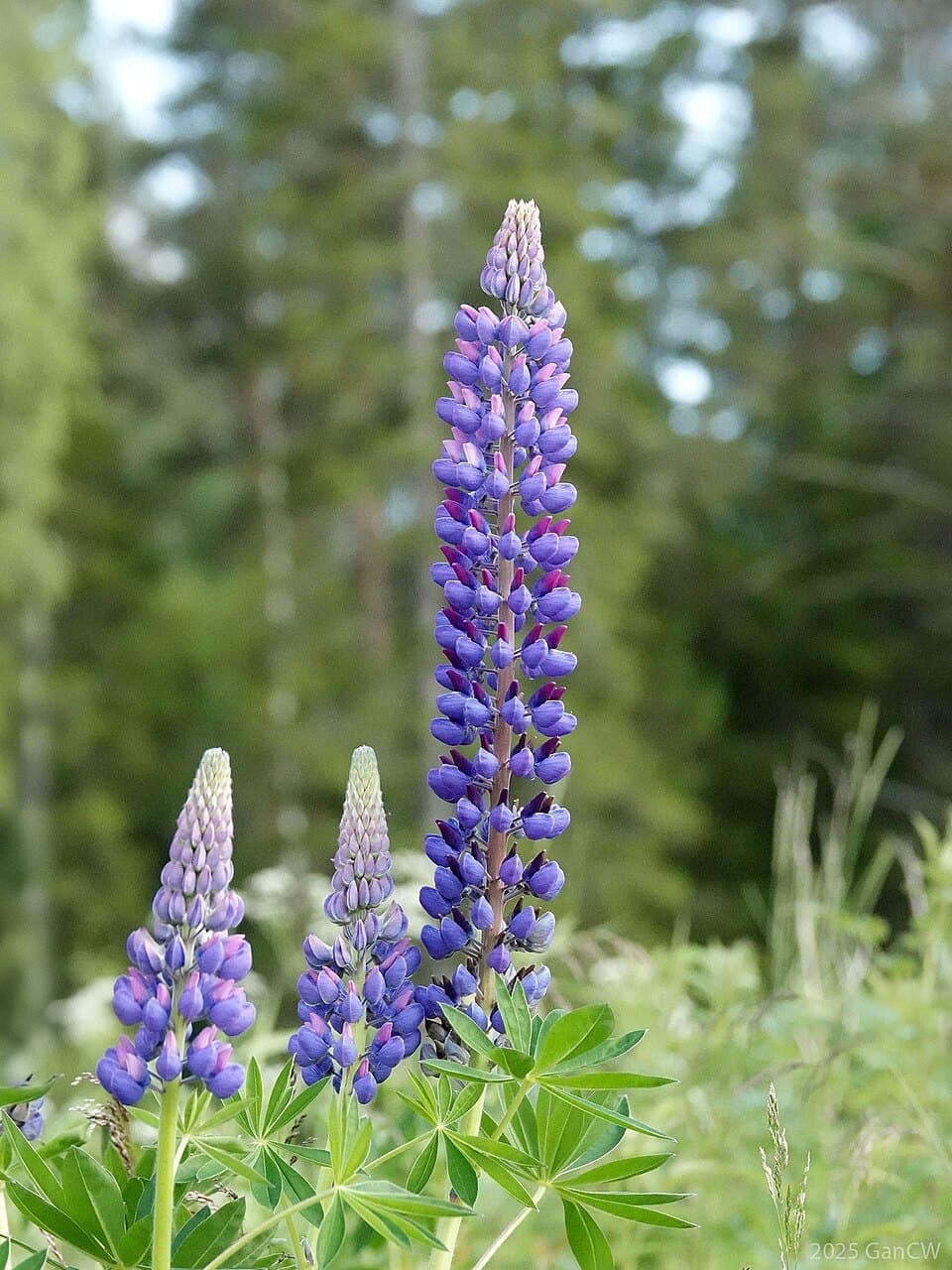
Lupine
Lupinus spp.
ToxicMarch–June
Spikes of pea-like blue-purple flowers above palm-shaped leaves; several species often bloom alongside poppies for a blue-and-orange display. A classic superbloom companion.
Habitat: Grassland, coastal bluffs, foothills, and disturbed ground statewide.
Many lupines contain toxic alkaloids and seeds. Do not eat any part of wild lupine.
FG-0027.03
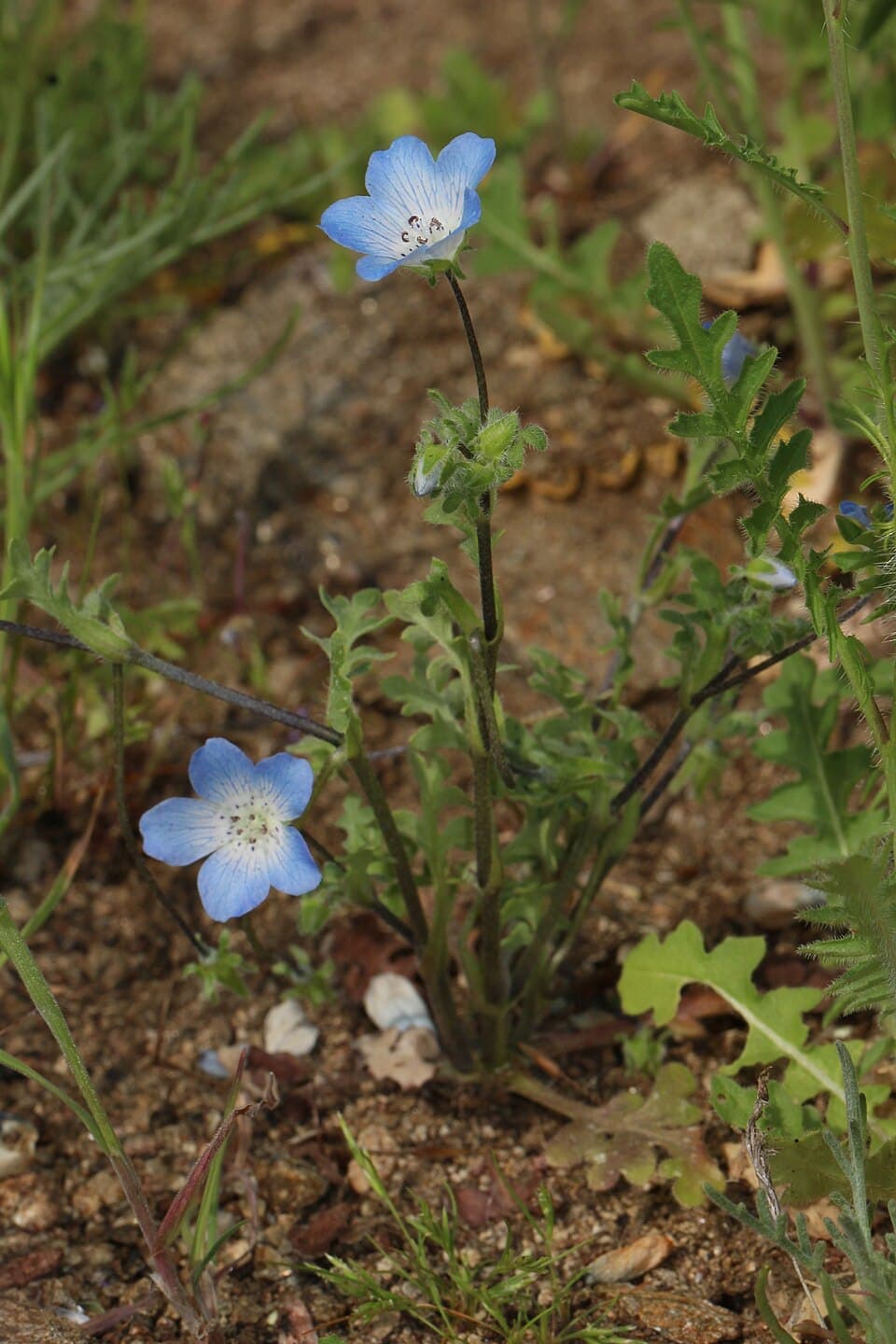
Baby Blue Eyes
Nemophila menziesii
February–May
A low, delicate annual with sky-blue, bowl-shaped flowers with pale centers. Forms soft blue drifts in grassland and along shaded slopes in spring.
Habitat: Grassy slopes, woodland edges, and moist open ground.
FG-0027.04
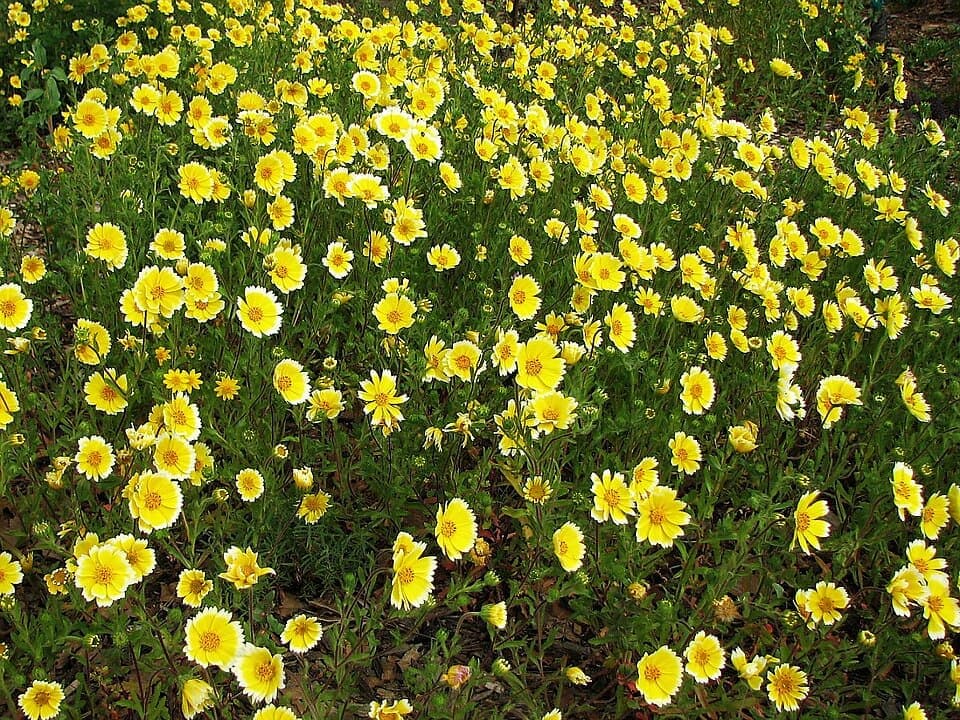
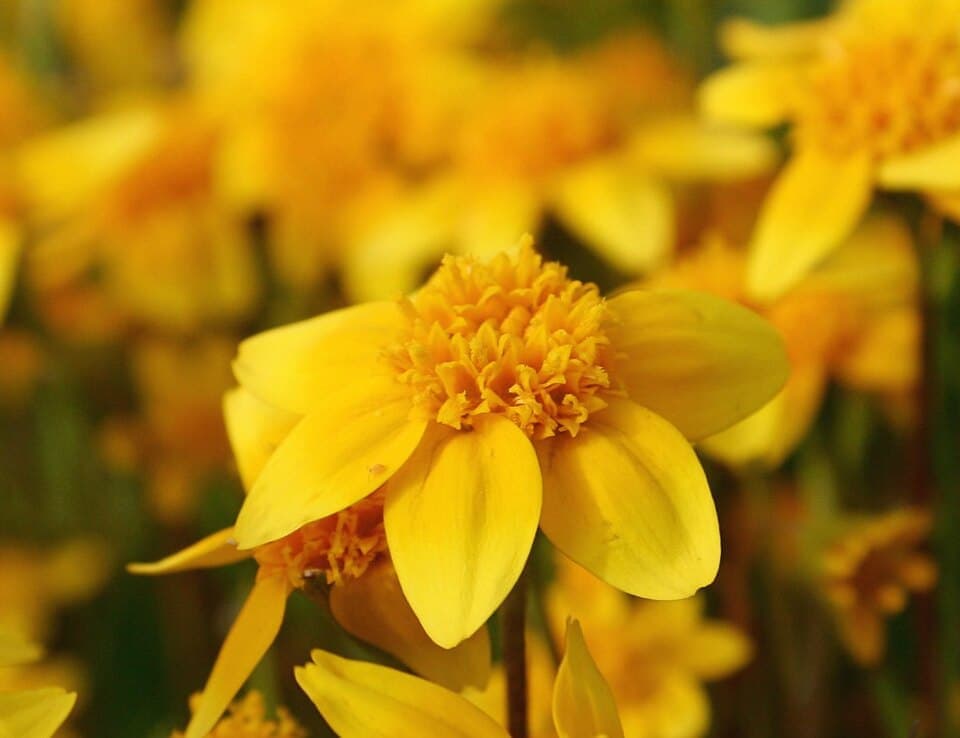
Tidy Tips
Layia platyglossa
March–May
A cheerful daisy-like annual with yellow rays neatly tipped in white, giving a "tidy" edge. Often mixes with goldfields and poppies in valley grasslands.
Habitat: Open grassland, coastal bluffs, and valley floors.
FG-0027.05
California Goldfields
Lasthenia californica
March–May
A tiny annual that blooms en masse to turn whole fields solid gold. Individually small, but a defining component of the state's great grassland superblooms.
Habitat: Grassland, vernal pool edges, and open valley floors.
FG-0027.06
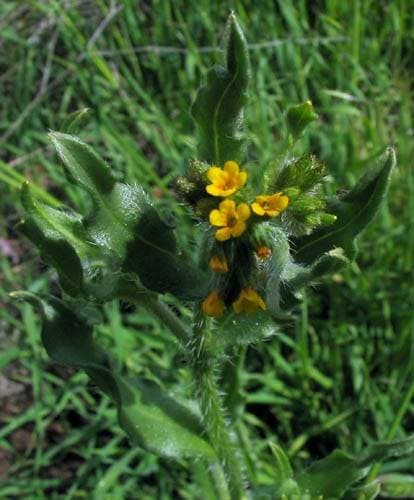
Common Fiddleneck
Amsinckia menziesii
ToxicMarch–June
Coiled, fiddle-head sprays of small yellow-orange tubular flowers on bristly stems. Abundant in disturbed ground and grassland, uncoiling as it blooms.
Habitat: Fields, roadsides, and disturbed open ground statewide.
Contains toxic alkaloids and bristly, irritating foliage. Not edible.
Through the seasons
- February–April: Desert blooms at Anza-Borrego and along the low southern deserts.
- March–May: Antelope Valley poppies and Carrizo Plain grassland superblooms peak.
- May–July: Sierra foothills and higher meadows take over as lower elevations fade.
- Superblooms depend on well-timed winter rain and vary greatly year to year.
Questions
- Where are the best California wildflower spots?
- Top destinations include Antelope Valley California Poppy Reserve (March–April), Carrizo Plain National Monument (superbloom years), Anza-Borrego Desert (February–March), and the Sierra foothills (April–May).
- Can I pick California poppies?
- Picking is prohibited in state and national parks and reserves, and the California poppy is protected on public land. Enjoy and photograph the flowers, but leave them for others and for next year's seed.
From Field Notes
Not sure what you found?
Take a photo with Spotter for the name, field marks, look-alikes and safety notes in seconds.


In this guide
- Species
- 6
- Edible
- 0
- Toxic
- 2
- Region
- California