FG-0013 · Wildflowers · 4 species
Wildflowers of Colorado
By Derek Gauger · Updated
Overview
Colorado's wildflower season runs from February at lower desert elevations to September in the alpine tundra. The state's dramatic elevation gradient — from 3,350 ft in the eastern plains to 14,440 ft summits — creates zones of wildflowers that bloom in succession through summer.
The Rocky Mountain National Park, San Juan Mountains, and Maroon Bells-Snowmass Wilderness are among the most photographed wildflower destinations in the world. The state flower, the Colorado blue columbine, is legally protected from picking on all public lands.
Key species to know
FG-0013.01
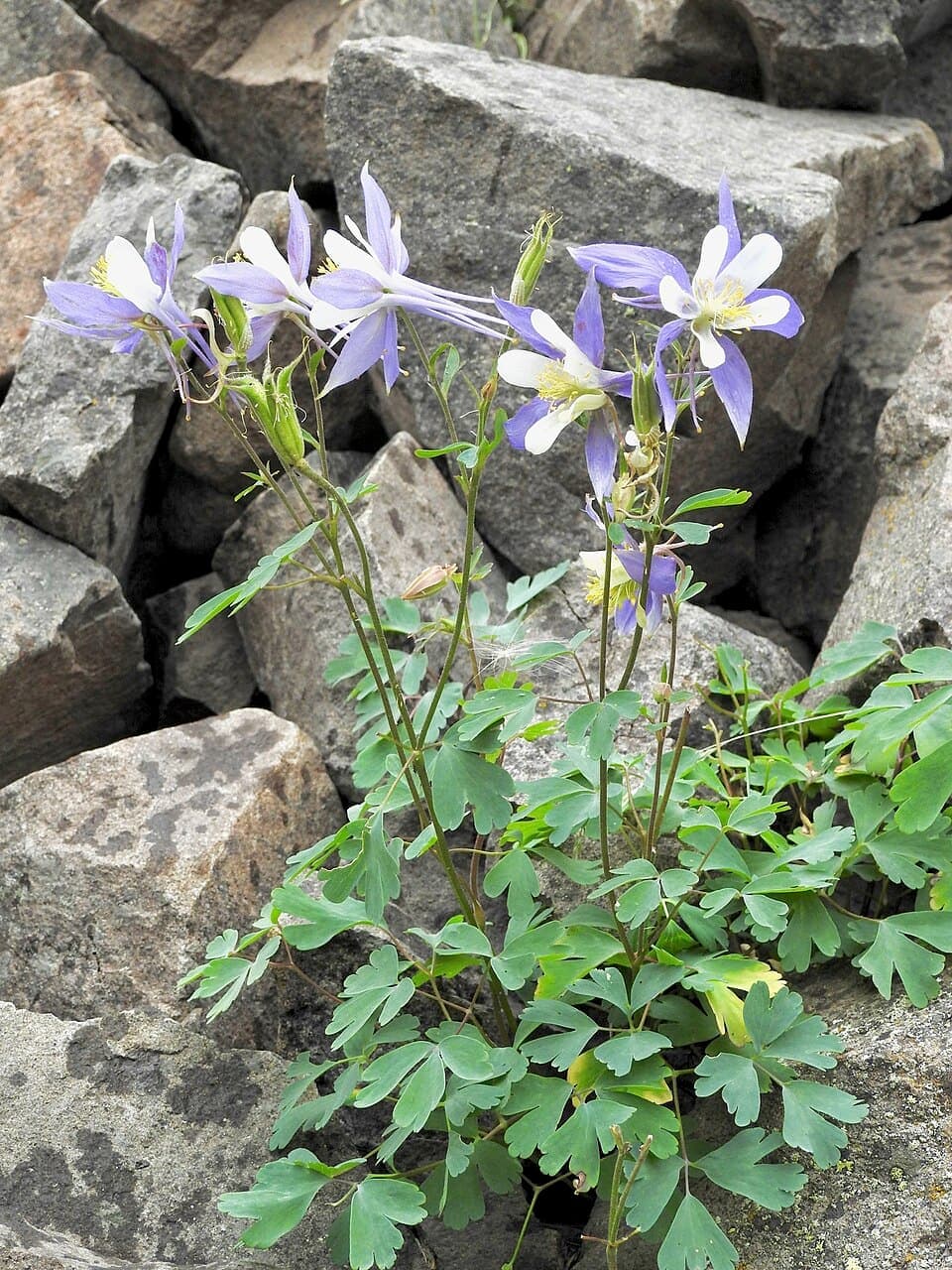
Colorado Blue Columbine
Aquilegia caerulea
ToxicJune–August
Colorado's state flower — blue and white blooms with distinctive backward-pointing spurs, adapted for pollination by hummingbirds. Delicate and elegant, found in aspen groves and mountain meadows.
Habitat: Aspen groves, subalpine meadows, and rocky slopes from 6,000–12,000 ft.
Protected by Colorado law — it is illegal to pick or dig columbines on public land. Seeds are toxic if ingested.
FG-0013.02
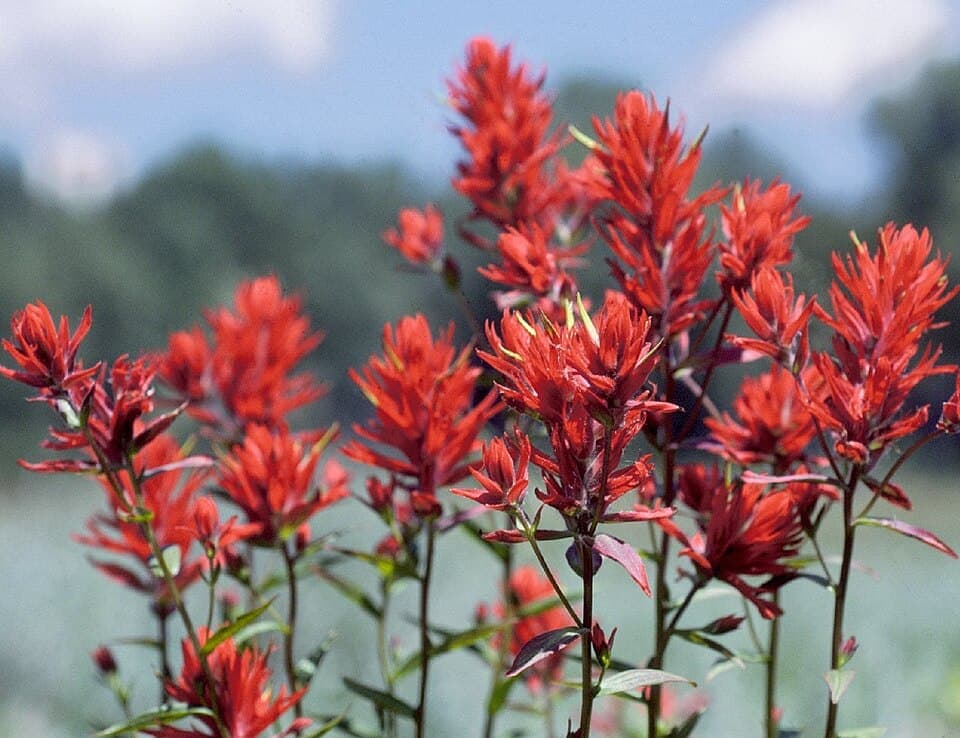
Indian Paintbrush
Castilleja linariifolia
May–September
Scarlet to orange bracts surround inconspicuous flowers — one of the West's most recognizable wildflowers. Wyoming's state flower; extremely common in Colorado's mountain meadows.
Habitat: Dry meadows, sagebrush slopes, and open forests at all mountain elevations.
FG-0013.03
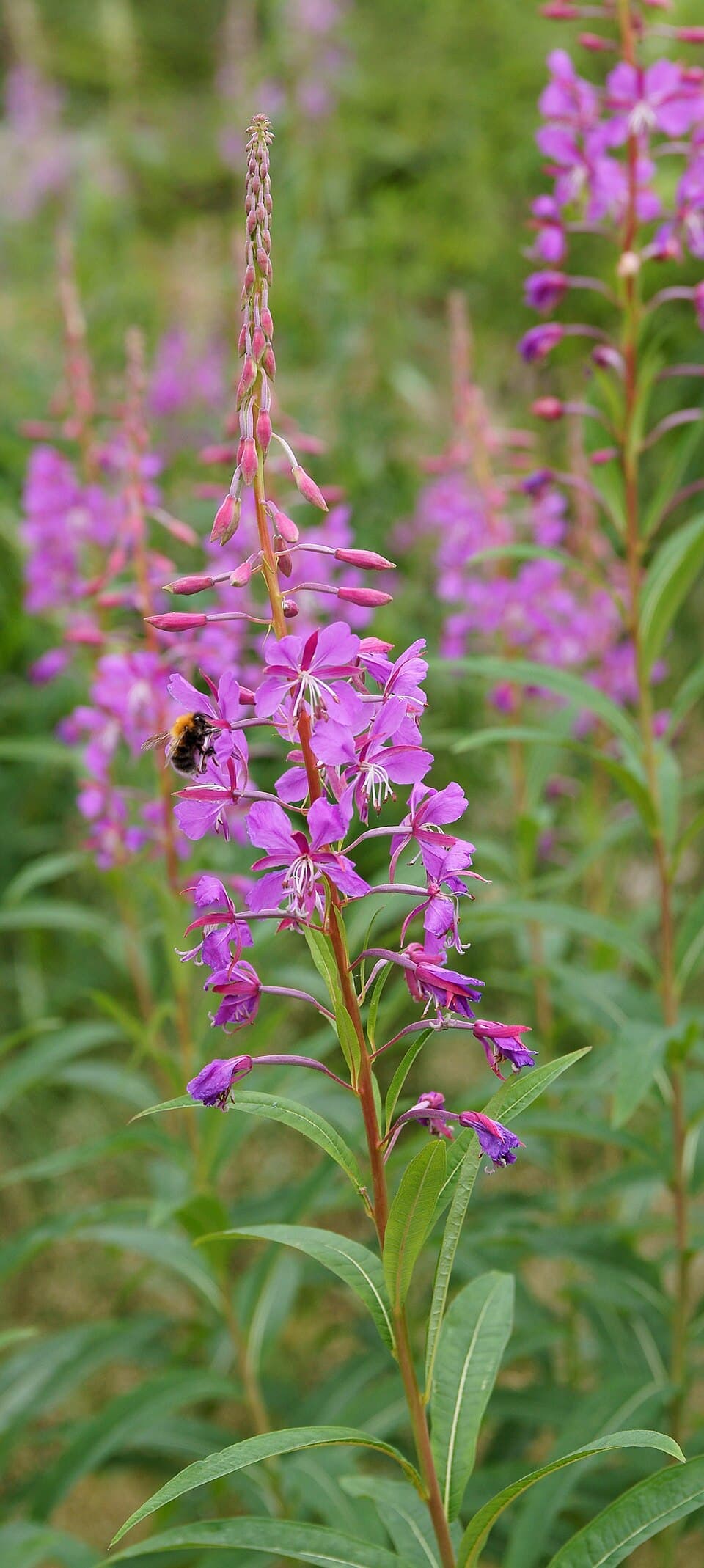
Fireweed
Chamaenerion angustifolium
EdibleJuly–September
Tall spikes of magenta-pink flowers that colonize burned areas and disturbed slopes. A pioneer species after fire, quickly covering devastated landscapes in brilliant pink.
Habitat: Burned areas, avalanche chutes, roadsides, and forest openings throughout the Rockies.
Young shoots, leaves, and flowers are edible. Used in tea, salads, and jelly across Alaska and the North.
FG-0013.04
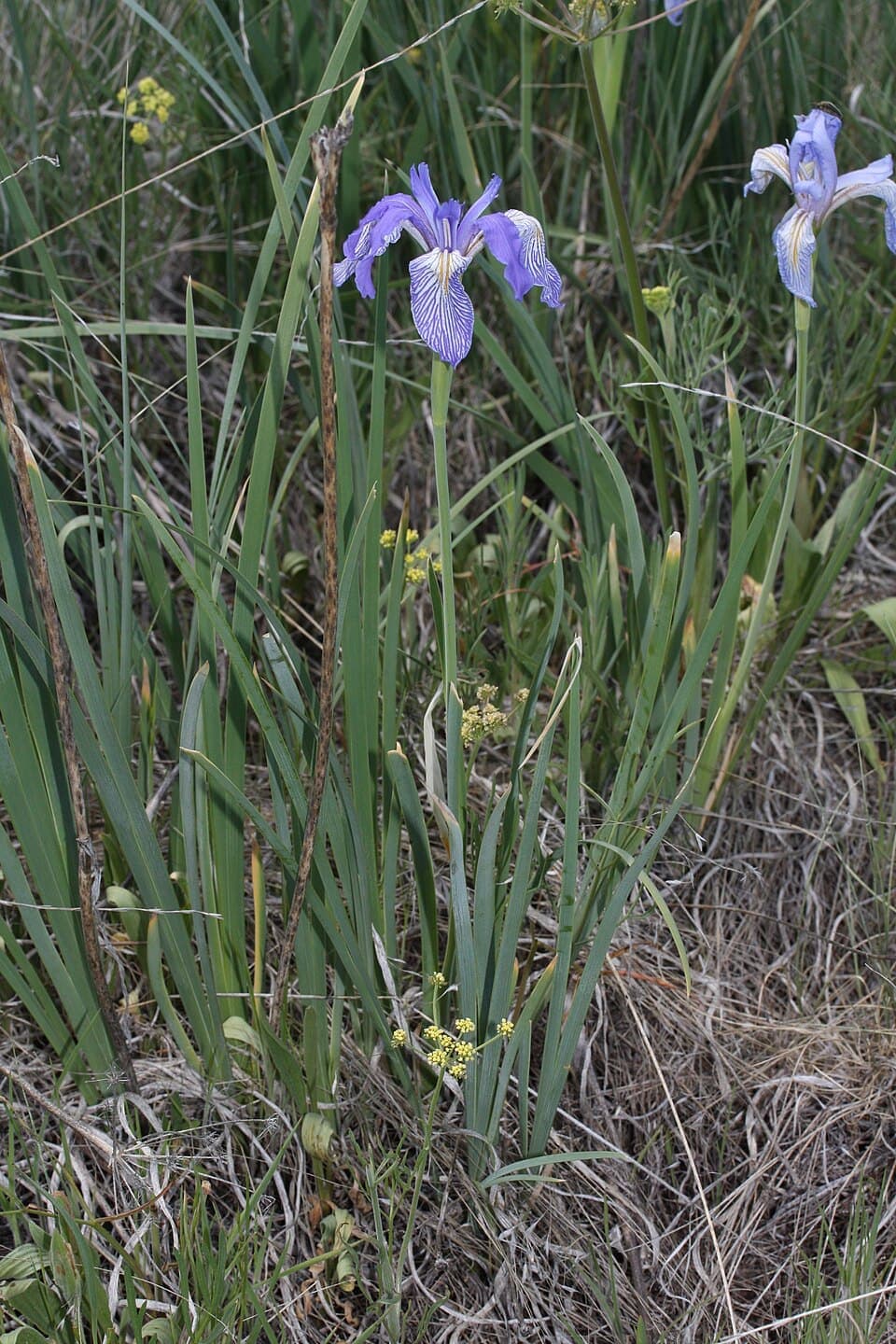
Rocky Mountain Iris
Iris missouriensis
ToxicMay–July
Blue-violet iris flowers on tall stems, often carpeting moist mountain meadows in early summer. Colorado's most dramatic meadow wildflower when blooming en masse.
Habitat: Moist mountain meadows, streamside areas, and wet slopes at 5,000–10,500 ft.
The rhizomes and leaves are toxic. Do not eat any part of wild iris.
Through the seasons
- May–June: Lower valleys and foothills — wild plum, pasqueflower, and prairie coneflower.
- June–July: Montane zone (8,000–10,000 ft) — aspen clearings bright with larkspur and iris.
- July–August: Subalpine and alpine peak — columbine, paintbrush, and sky pilot.
- August: Maroon Bells and Yankee Boy Basin at peak wildflower season.
Questions
- Where is the best wildflower viewing in Colorado?
- Top destinations include Maroon Bells near Aspen (August), Yankee Boy Basin near Ouray (July–August), Crested Butte (self-proclaimed wildflower capital; July), and Rocky Mountain National Park's Trail Ridge Road (July–August).
- Can I pick wildflowers in Colorado national parks?
- Picking wildflowers is prohibited in all national parks, including Rocky Mountain NP and Mesa Verde NP. The Colorado blue columbine is protected by state law from picking on all public land.
From Field Notes
Not sure what you found?
Take a photo with Spotter for the name, field marks, look-alikes and safety notes in seconds.


In this guide
- Species
- 4
- Edible
- 1
- Toxic
- 2
- Region
- Colorado