FG-0038 · Wildlife · 6 species
Identifying Snakes in Oklahoma
By Derek Gauger · Updated
Overview
Oklahoma sits where eastern forest meets western prairie, giving it around 46 snake species — one of the highest counts in the country. Seven are venomous, but most snakes you meet are harmless and helpful.
Identify from a distance — a photo from several feet away is all you need. This guide covers the snakes you are most likely to encounter in Oklahoma.
Key species to know
FG-0038.01
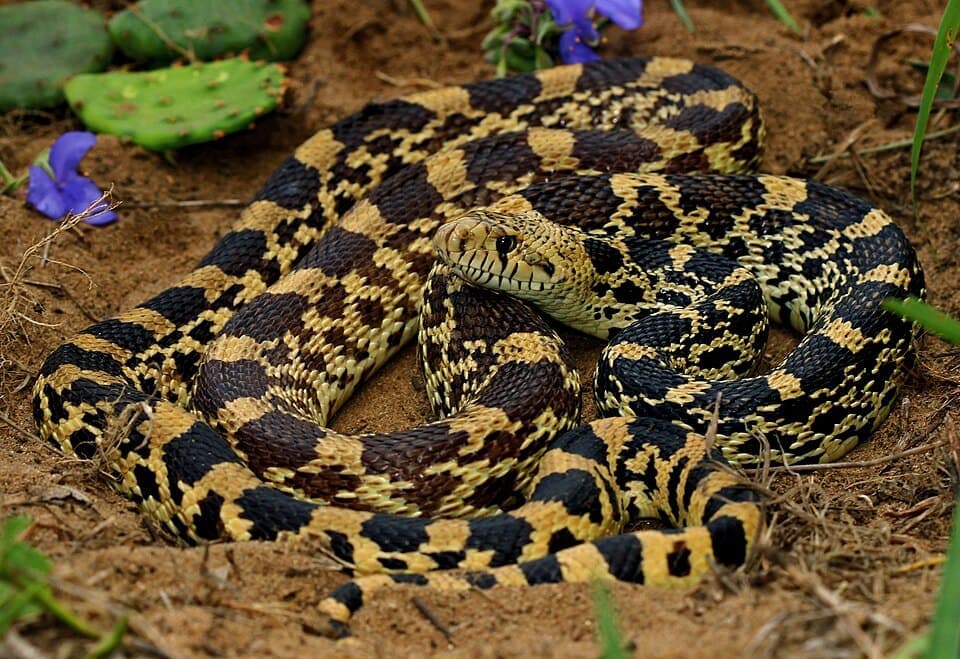
Bullsnake
Pituophis catenifer sayi
A large, powerful non-venomous constrictor, tan with dark blotches, that hisses loudly and vibrates its tail to mimic a rattlesnake. All bluff — harmless and a superb rodent-hunter.
Habitat: Prairies, farmland, and open country in the west.
FG-0038.02
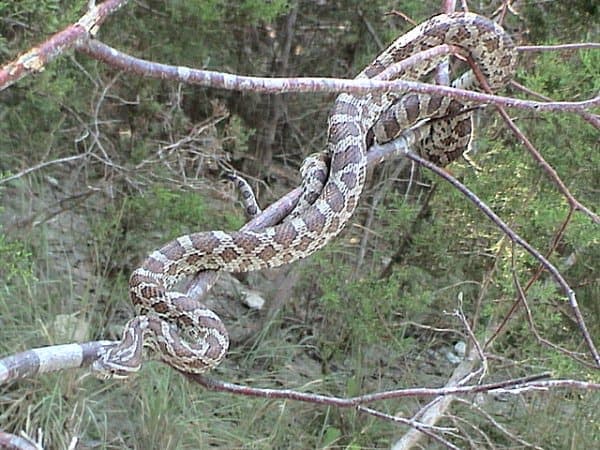
Great Plains Rat Snake
Pantherophis emoryi
A slender gray non-venomous snake with brown, dark-edged blotches, sometimes mistaken for a young rattlesnake but with no rattle and a gentle nature.
Habitat: Rocky hillsides, canyons, and around buildings.
FG-0038.03
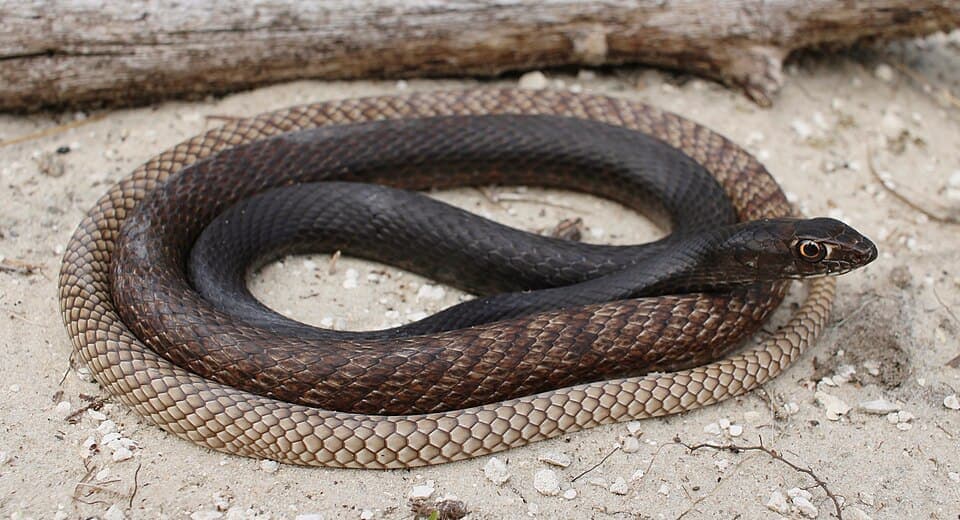
Coachwhip
Masticophis flagellum
A long, slender, fast-moving non-venomous snake, often two-toned with a braided-whip look to its tail. Curious and quick to flee rather than fight.
Habitat: Open grassland, brush, and sandy country.
FG-0038.04
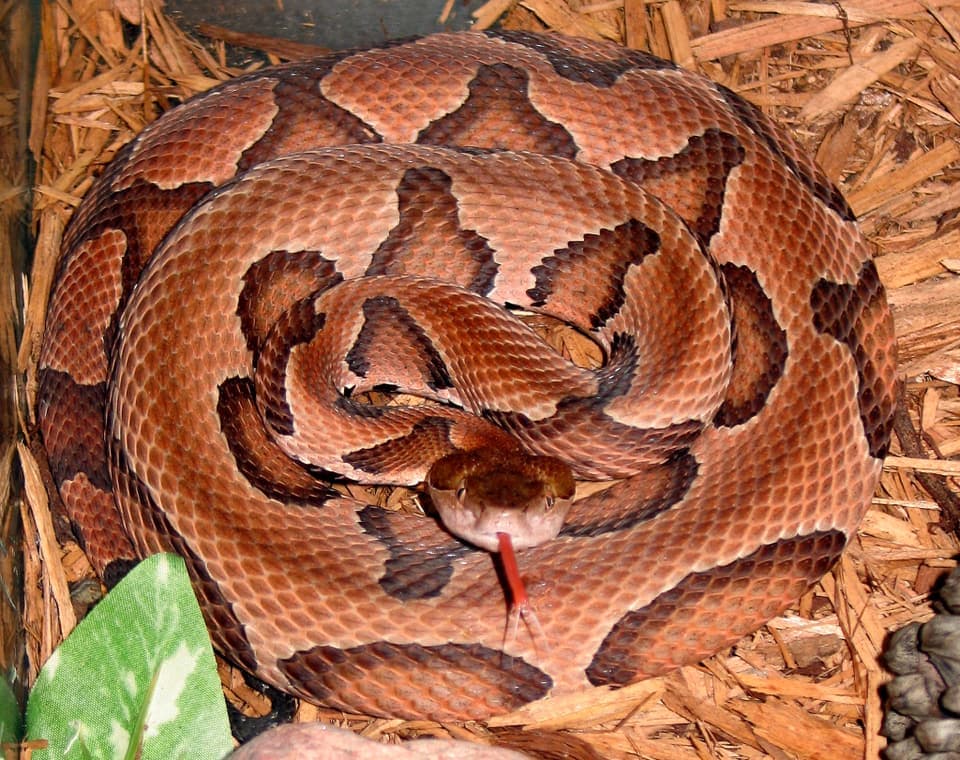
Copperhead
Agkistrodon contortrix
A pit viper with hourglass-shaped chestnut bands over a tan body, camouflaged in leaf litter. Venomous but generally mild.
Habitat: Wooded creek bottoms and rocky slopes in the east.
Venomous. Watch where you step and reach in leaf litter and woodpiles.
FG-0038.05
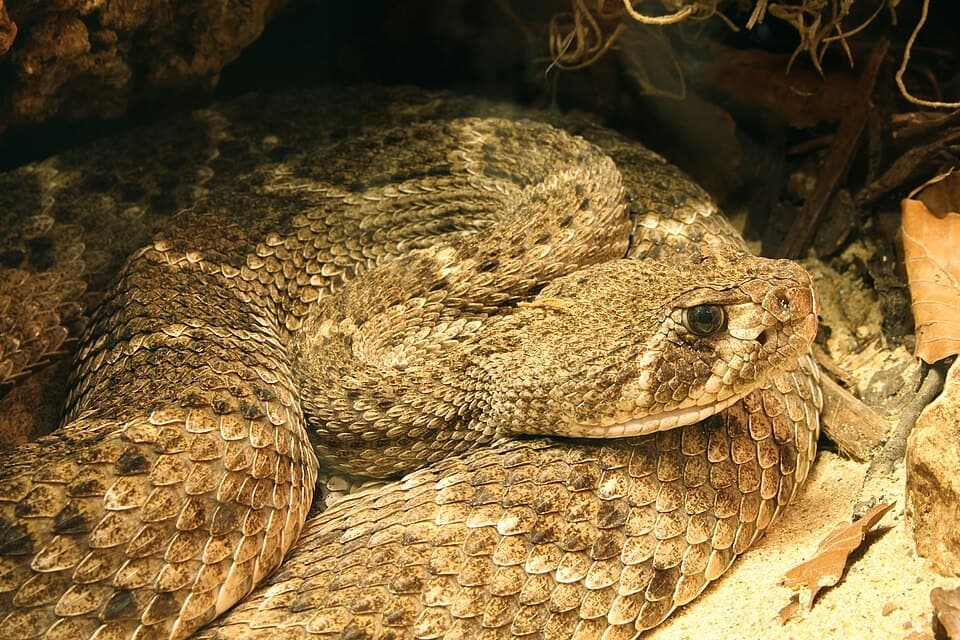
Western Diamondback Rattlesnake
Crotalus atrox
A heavy-bodied rattlesnake with diamond blotches and a black-and-white "coon tail" before the rattle. Venomous; gives a clear buzzing warning when threatened.
Habitat: Dry brush, rocky slopes, and grassland in central and western Oklahoma.
Venomous. Keep well back and never attempt to handle or kill it.
FG-0038.06
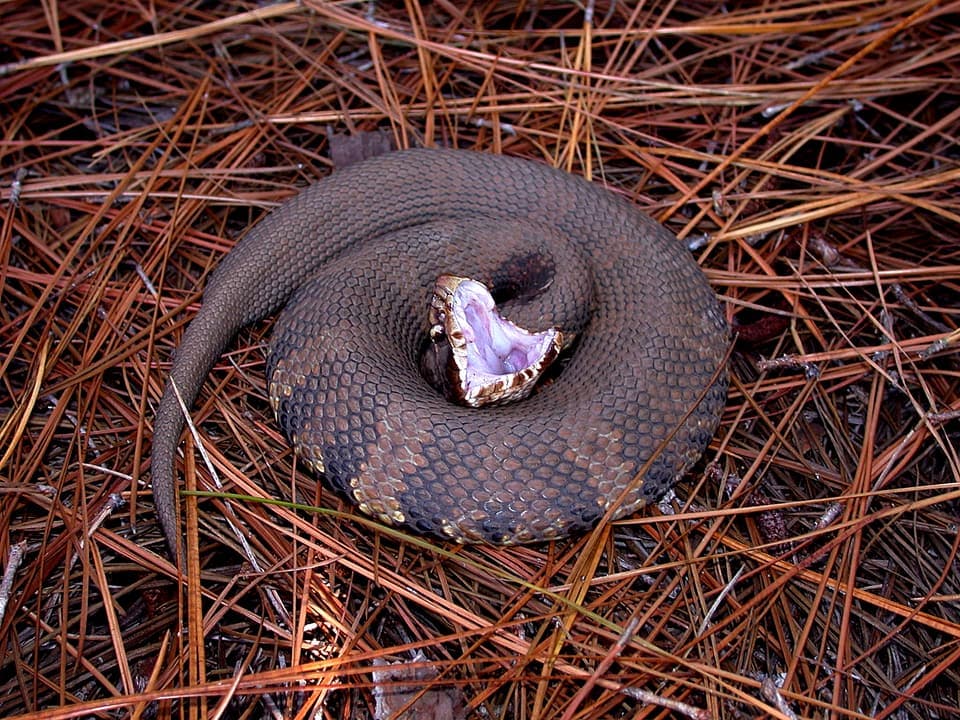
Cottonmouth
Agkistrodon piscivorus
A thick-bodied semi-aquatic pit viper, dark with a pale facial stripe, that gapes to show a white mouth when threatened. Venomous and often confused with water snakes.
Habitat: Swamps, sloughs, and slow streams in the east.
Venomous. Give a wide berth to any thick-bodied snake near water and never handle it.
Through the seasons
- Snakes are most active in spring and fall, and on warm summer evenings.
- Watch your footing around rock piles, brush, and river banks.
- Most bites occur when people try to handle or kill a snake — give it room and it will leave.
Questions
- How many venomous snakes are in Oklahoma?
- Seven: the copperhead, cottonmouth, western diamondback, timber rattlesnake, prairie rattlesnake, western massasauga, and western pygmy rattlesnake.
- Is that hissing, tail-rattling snake a rattlesnake?
- It may be a harmless bullsnake, which mimics a rattlesnake by hissing and vibrating its tail but has no rattle. Photograph it from a safe distance and use an app like Spotter to confirm before assuming the worst.
From Field Notes
Not sure what you found?
Take a photo with Spotter for the name, field marks, look-alikes and safety notes in seconds.


In this guide
- Species
- 6
- Region
- Oklahoma