FG-0056 · Wild Plants · 6 species
Identifying Trees in New York
By Derek Gauger · Updated
Overview
New York's northern hardwood and mixed forests give the state its famous fall color, plus the great white pines and hemlocks of the Adirondacks and Catskills. A few leaf and bark clues name most of what you see.
This guide covers common and iconic New York trees — how to tell them apart by leaf, bark, and habit. Pair it with a photo of the leaf or bark and the app to confirm any tree you find.
Key species to know
FG-0056.01
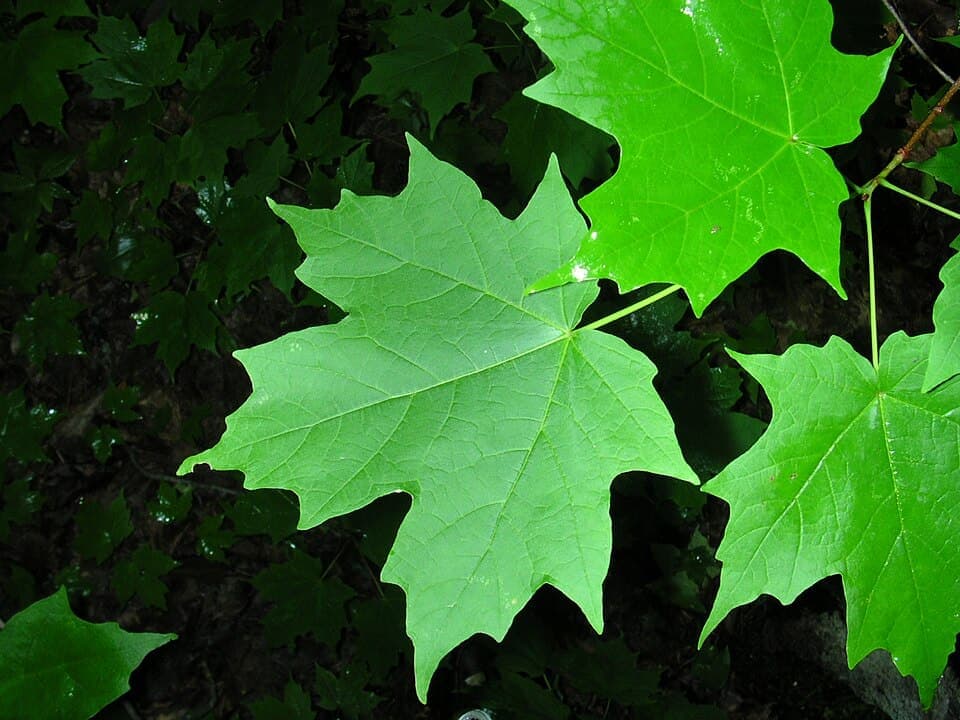
Sugar Maple
Acer saccharum
The New York state tree — a hardwood with five-lobed leaves that blaze orange and red in fall, and the source of maple syrup. Smooth gray bark furrows with age.
Habitat: Rich upland forests, woodlots, and streets statewide.
FG-0056.02
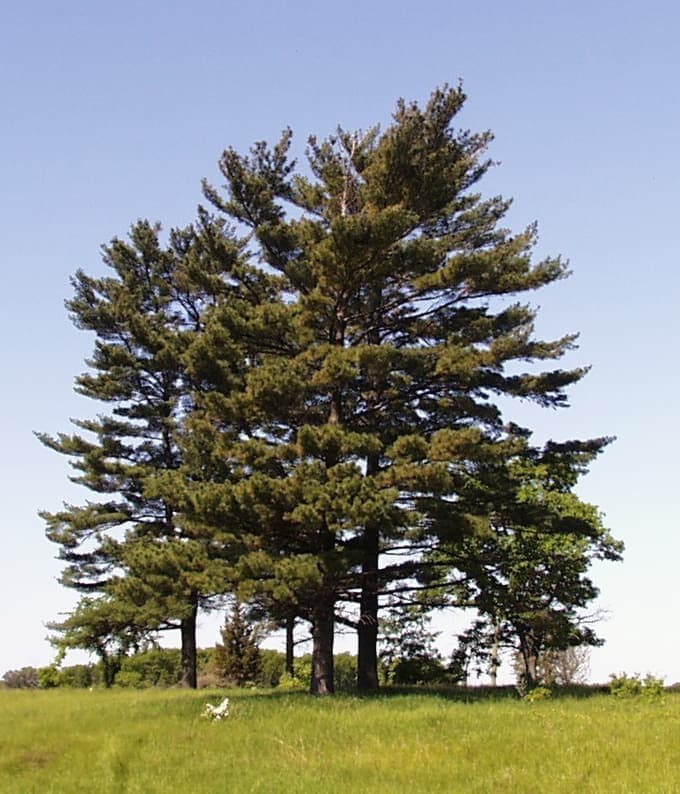
Eastern White Pine
Pinus strobus
A tall, soft-needled pine with needles in bundles of five and long, slender cones. The largest conifer of the northeastern forest.
Habitat: Mixed forests, old fields, and lakeshores.
FG-0056.03
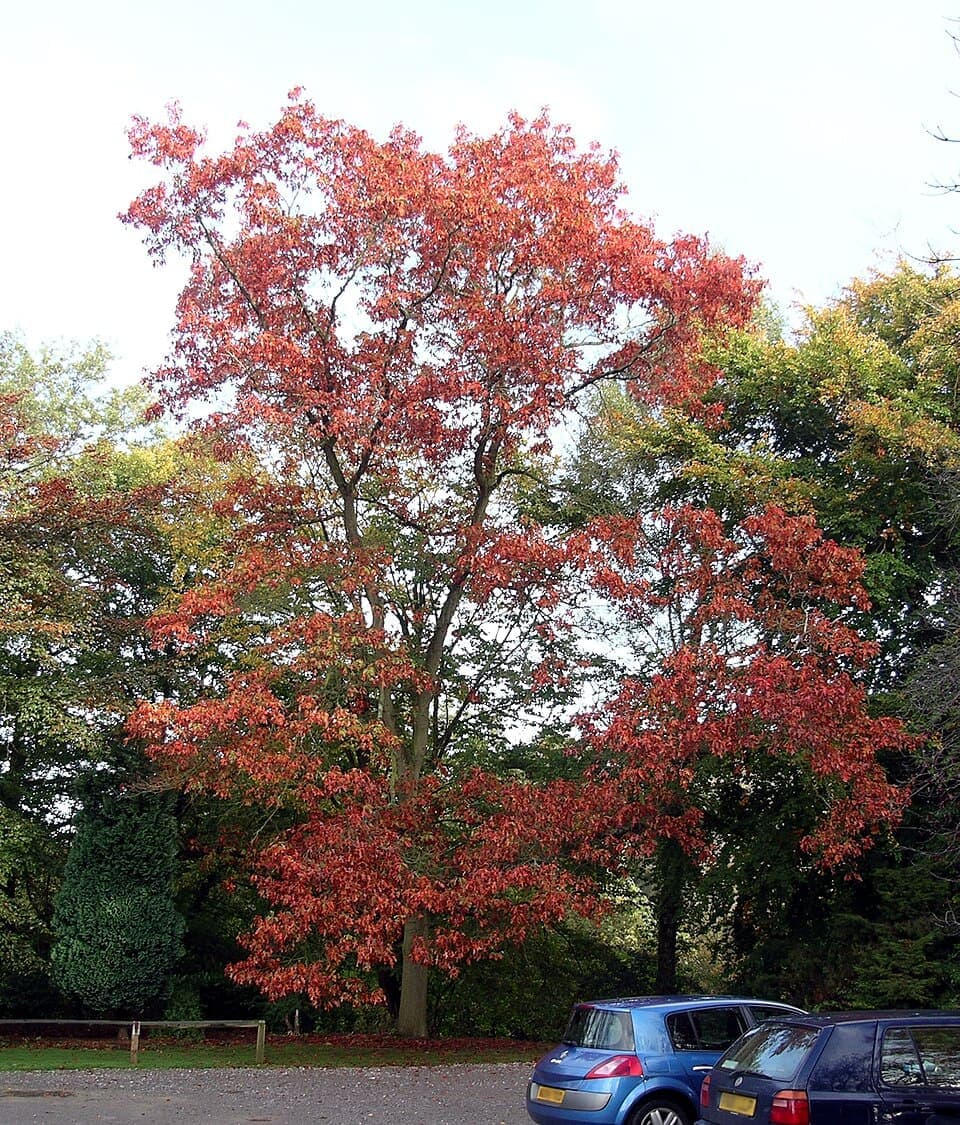
Northern Red Oak
Quercus rubra
A large oak with glossy, bristle-tipped lobed leaves that turn russet-red in fall and dark bark with pale "ski-trail" ridges. A common forest and street tree.
Habitat: Upland forests, parks, and suburbs.
FG-0056.04
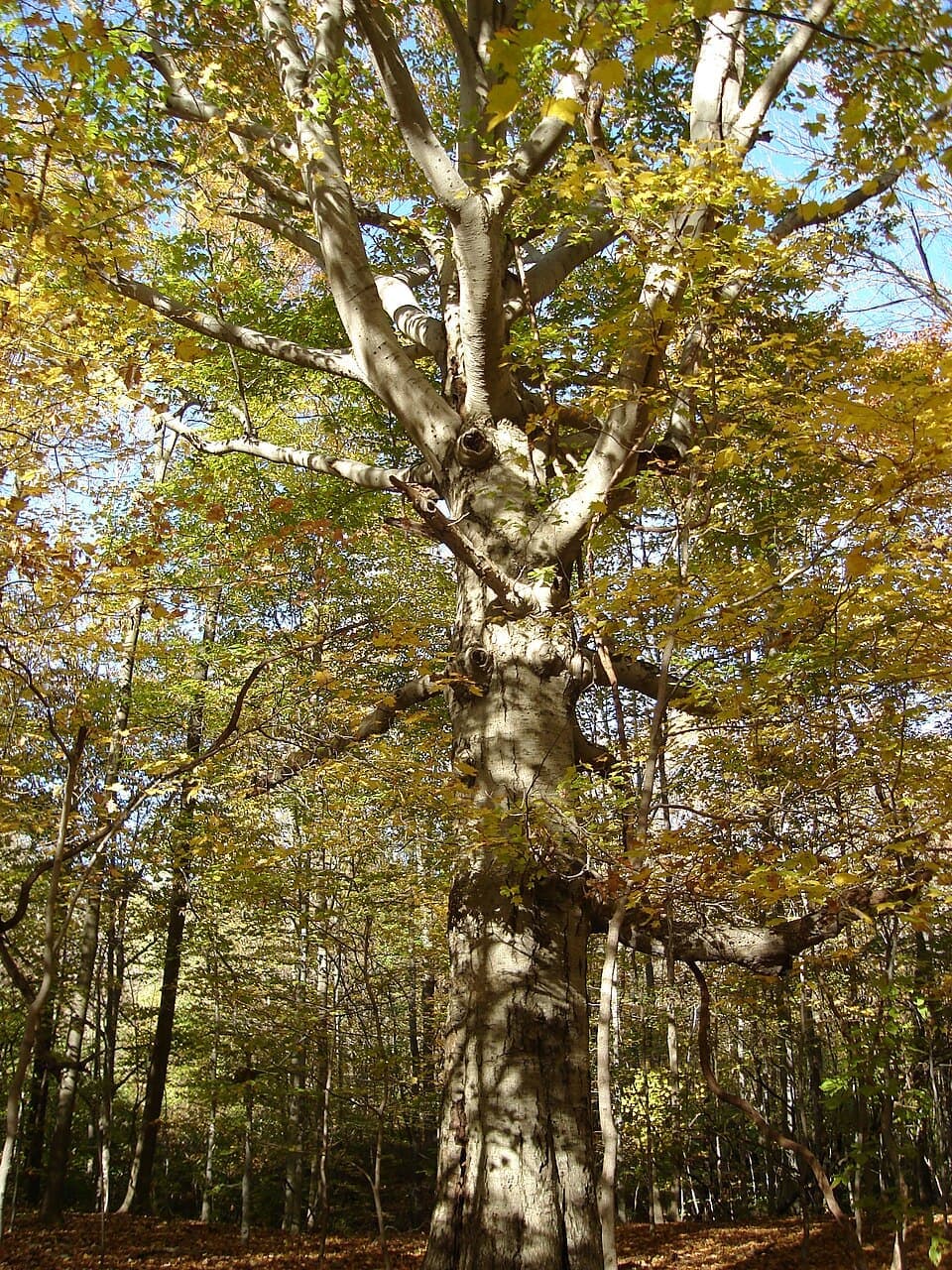
American Beech
Fagus grandifolia
A hardwood with smooth, gray "elephant-skin" bark and oval, toothed leaves that fade to pale tan and often hang on through winter.
Habitat: Mature hardwood forests and shaded slopes.
FG-0056.05
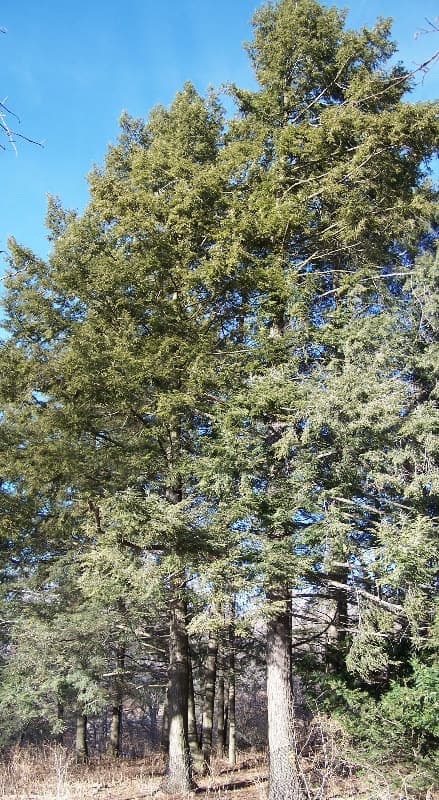
Eastern Hemlock
Tsuga canadensis
A graceful evergreen with short, flat needles (white-striped beneath) and tiny cones, casting deep shade in cool ravines and north slopes.
Habitat: Cool ravines, streamsides, and north-facing slopes.
FG-0056.06
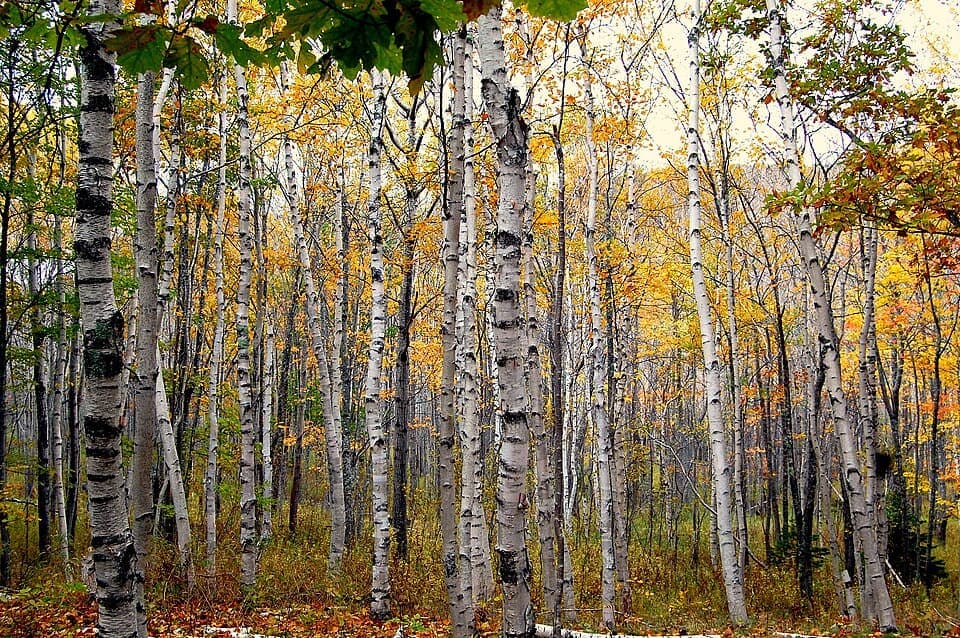
Paper Birch
Betula papyrifera
A slender tree with peeling, chalky-white bark and small toothed leaves that turn yellow in fall. A signature tree of the north woods.
Habitat: Cool forests, clearings, and lakeshores upstate.
Through the seasons
- Fall: sugar maple and red oak drive New York's famous foliage — peak runs north to south from late September.
- Winter: smooth gray beech bark and white birch bark stand out in the bare woods.
- Summer: white pine and hemlock give the forest its dark evergreen backdrop.
Questions
- What is the state tree of New York?
- The sugar maple — the source of maple syrup and a mainstay of New York's brilliant fall color.
- How do I tell a sugar maple from a red maple?
- Sugar maple leaves have smooth-edged margins between five main lobes and U-shaped notches; red maple leaves are smaller with toothed margins and V-shaped notches. Photograph a leaf and use an app like Spotter to confirm.
From Field Notes
Not sure what you found?
Take a photo with Spotter for the name, field marks, look-alikes and safety notes in seconds.


In this guide
- Species
- 6
- Region
- New York