FG-0060 · Wild Plants · 6 species
Identifying Trees in Oregon
By Derek Gauger · Updated
Overview
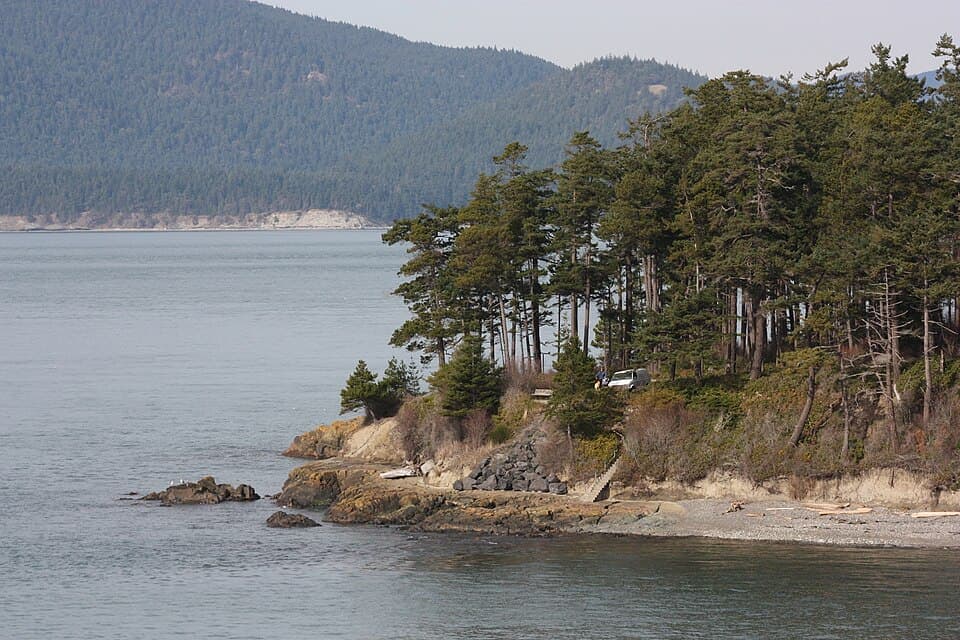
Oregon's trees split sharply at the Cascades: lush conifer rainforest to the west, drier ponderosa pine and juniper country to the east. A few needle and bark clues tell the big conifers apart.
This guide covers common and iconic Oregon trees — how to tell them apart by foliage, bark, and habit. Pair it with a photo of the needles or bark and the app to confirm any tree you find.
Key species to know
FG-0060.01
Douglas-fir
Pseudotsuga menziesii
The Oregon state tree — a giant conifer with soft, flat needles and cones bearing distinctive three-pronged bracts between the scales. The backbone of the timber industry.
Habitat: Coast Range and west-slope Cascade forests.
FG-0060.02
Western Redcedar
Thuja plicata
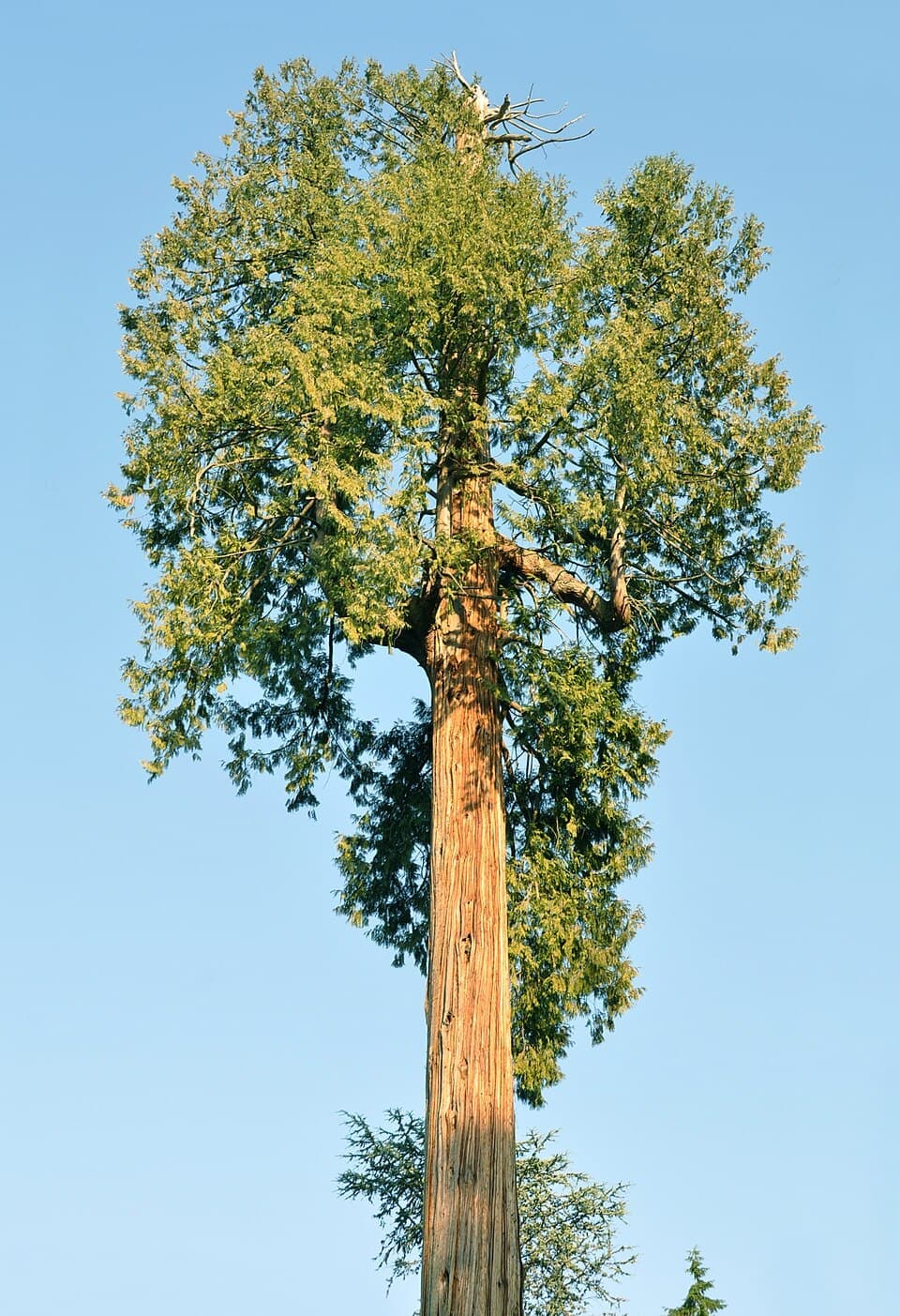
A large conifer with flat, scale-like foliage in fern-like sprays, drooping branch tips, and stringy reddish bark. Fragrant and rot-resistant.
Habitat: Moist forests, streamsides, and coastal lowlands.
FG-0060.03
Bigleaf Maple
Acer macrophyllum
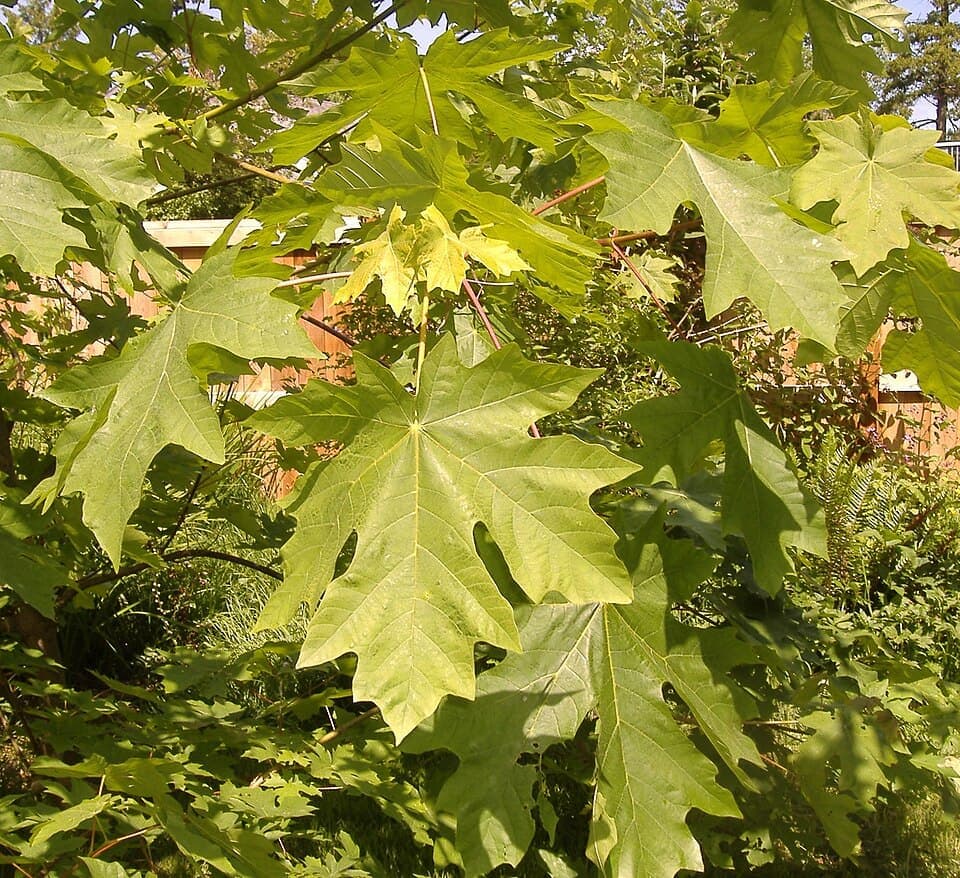
A broadleaf tree with enormous five-lobed leaves — the largest of any maple — and mossy limbs in the wet coastal forest. Turns gold in fall.
Habitat: Moist western forests, canyons, and streamsides.
FG-0060.04
Ponderosa Pine
Pinus ponderosa
A tall pine with long needles in bundles of three and orange, jigsaw-plated bark that smells of vanilla. Dominant in the dry country east of the Cascades.
Habitat: Dry east-side forests and foothills.
FG-0060.05
Western Hemlock
Tsuga heterophylla
A graceful conifer with short, uneven flat needles and a drooping leader at the treetop. Regenerates thickly in the shade of the coastal forest.
Habitat: Moist coastal and west-slope forests.
FG-0060.06
Oregon White Oak
Quercus garryana
The main native oak of the Pacific Northwest — a rugged tree with rounded-lobed leaves and gnarled limbs, anchoring the Willamette Valley's oak savannas.
Habitat: Valley savannas, foothills, and dry slopes.
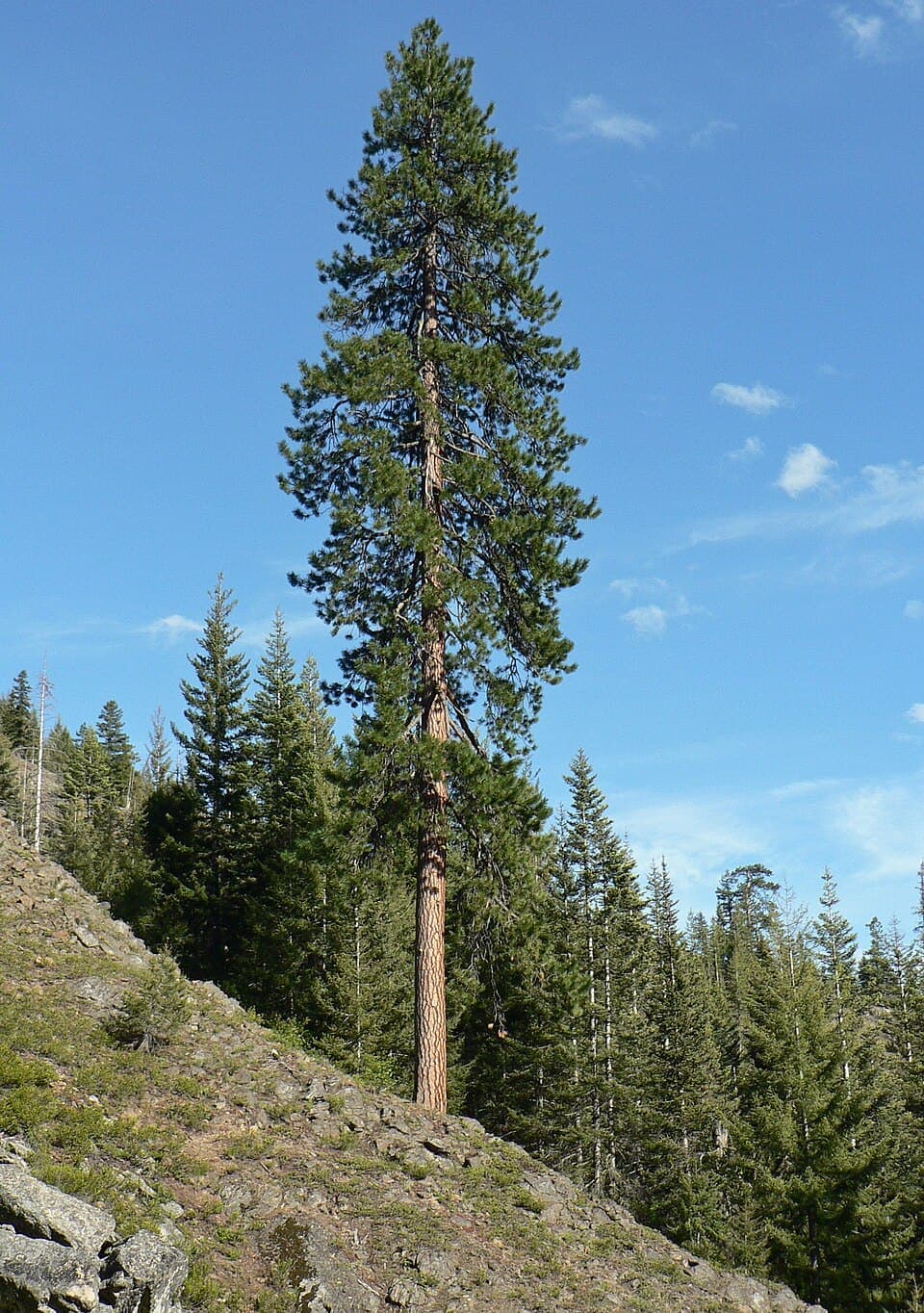
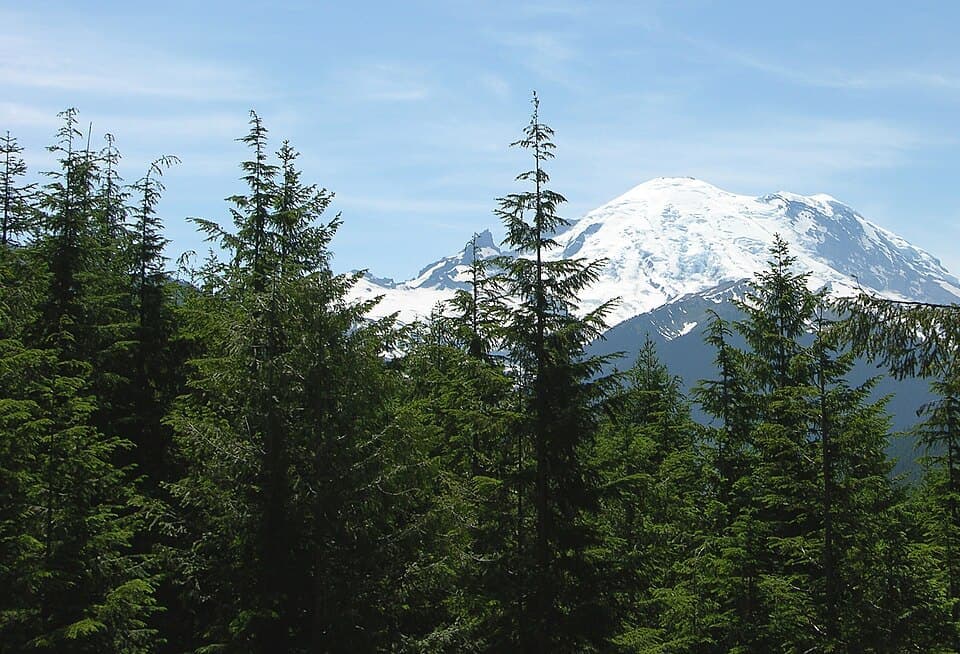
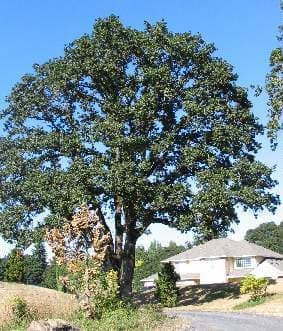
Through the seasons
- Fall: bigleaf maple and Oregon white oak add gold to the mostly evergreen landscape.
- Year-round: the big conifers — Douglas-fir, redcedar, hemlock — keep the west side green.
- Look for orange, vanilla-scented plated bark to pick out ponderosa pine on the east side.
Questions
- What is the state tree of Oregon?
- The Douglas-fir — a massive conifer whose cones carry unique three-pronged bracts, and the mainstay of Oregon's forest industry.
- How do I tell Douglas-fir from a true fir or spruce?
- Douglas-fir cones have three-pronged bracts sticking out between the scales, and its needles are soft and flat. Spruce needles are sharp and four-sided; true firs have upright cones that shatter on the tree. Photograph the cone and needles and use an app like Spotter to confirm.
From Field Notes
Not sure what you found?
Take a photo with Spotter for the name, field marks, look-alikes and safety notes in seconds.


In this guide
- Species
- 6
- Region
- Oregon