FG-0070 · Wildflowers · 6 species
Wildflowers of Ohio
By Derek Gauger · Updated
Overview
Ohio's wildflower year begins with spring ephemerals blanketing the hardwood forests, then moves into prairie and wetland flowers through summer and fall. The large-flowered trillium is the state's official wildflower.
This guide covers common and iconic Ohio wildflowers — how to recognize them and when they bloom. Photograph the flower and leaves and use the app to confirm any bloom you find.
Key species to know
FG-0070.01
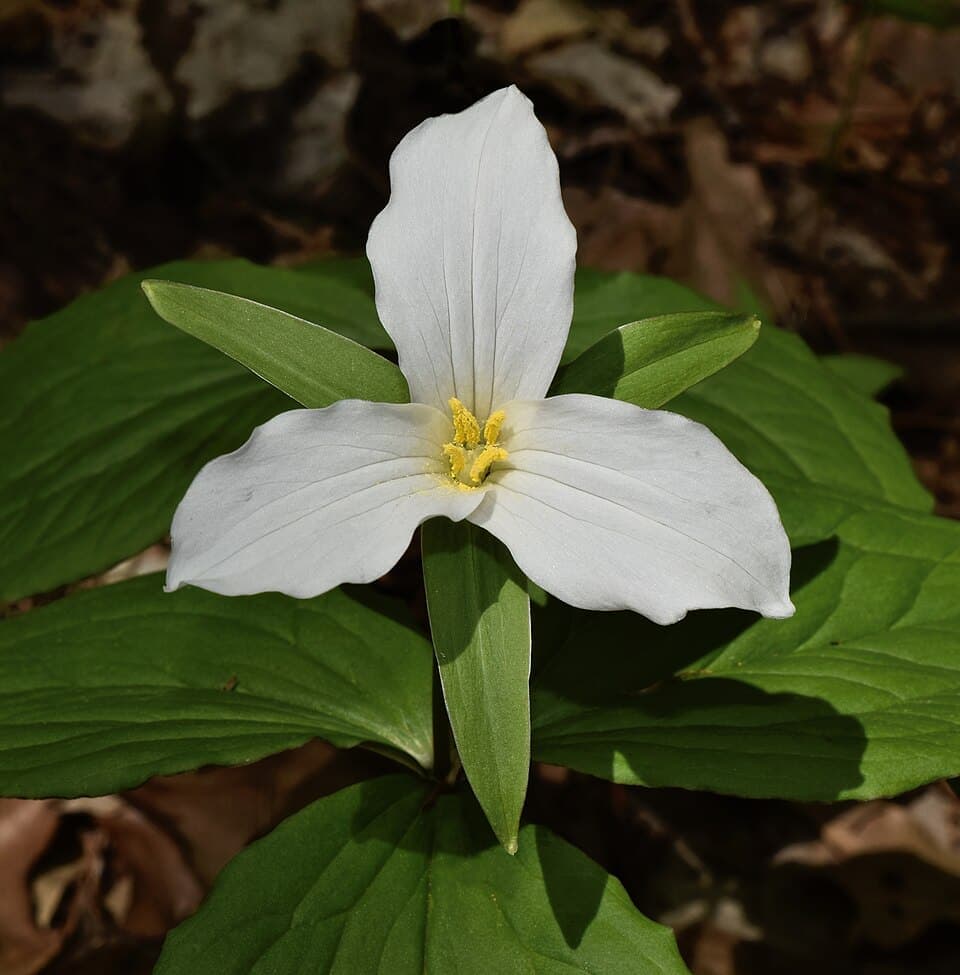
Large-flowered Trillium
Trillium grandiflorum
April–May
Ohio's state wildflower — three broad white petals above a whorl of three leaves, fading to pink with age. Forms sweeping colonies on the spring forest floor.
Habitat: Rich deciduous woods and shaded slopes.
Trilliums are slow-growing and easily killed by picking — enjoy them in place and do not pick or dig.
FG-0070.02
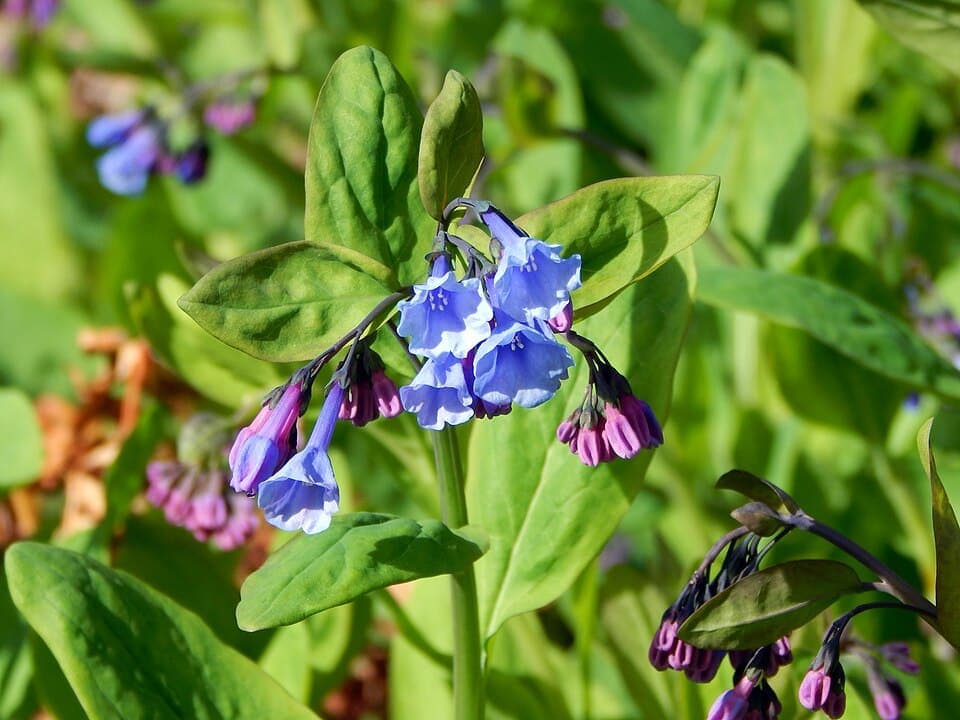
Virginia Bluebells
Mertensia virginica
April–May
Nodding clusters of sky-blue, trumpet-shaped flowers (pink in bud) over smooth gray-green leaves, forming blue drifts on damp spring floodplains.
Habitat: Moist woods, floodplains, and river bottoms.
FG-0070.03
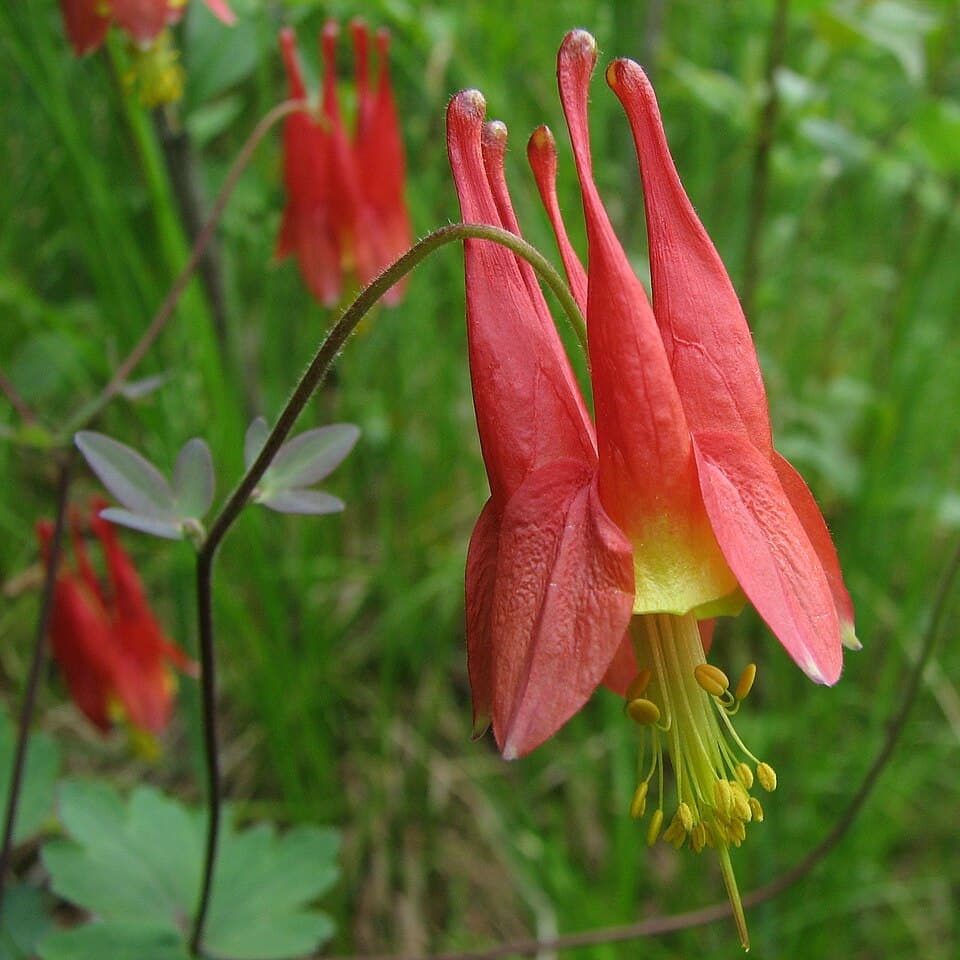
Wild Columbine
Aquilegia canadensis
April–June
Nodding red-and-yellow flowers with backward-pointing spurs, dancing on thin stems over lacy leaves. A hummingbird favorite of rocky woods.
Habitat: Rocky woods, ledges, and shaded slopes.
FG-0070.04
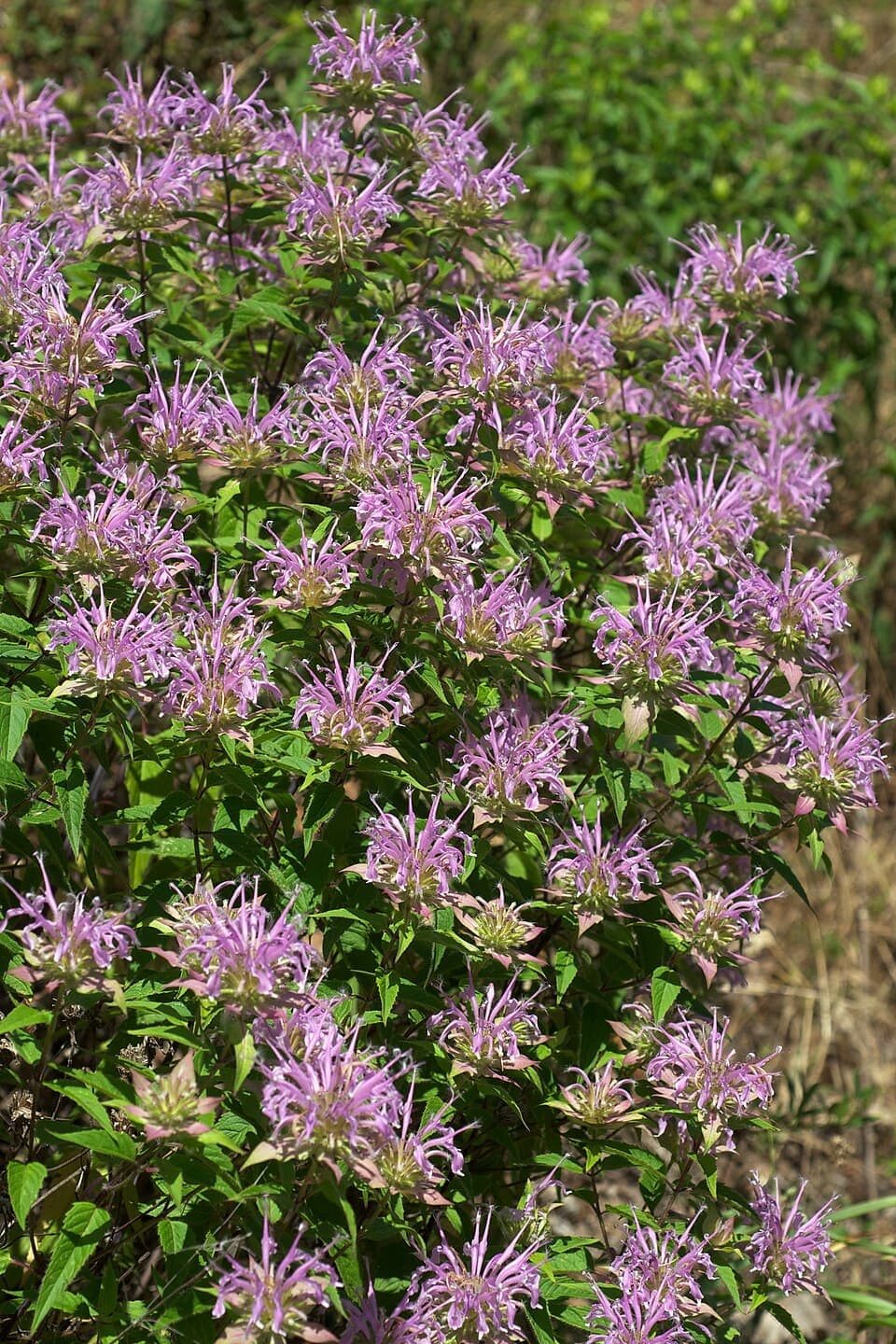
Wild Bergamot
Monarda fistulosa
July–September
A mint-family wildflower with ragged, lavender pom-pom flower heads and a minty scent, humming with bees and hummingbirds in summer prairies.
Habitat: Prairies, meadows, and open woodland edges.
FG-0070.05
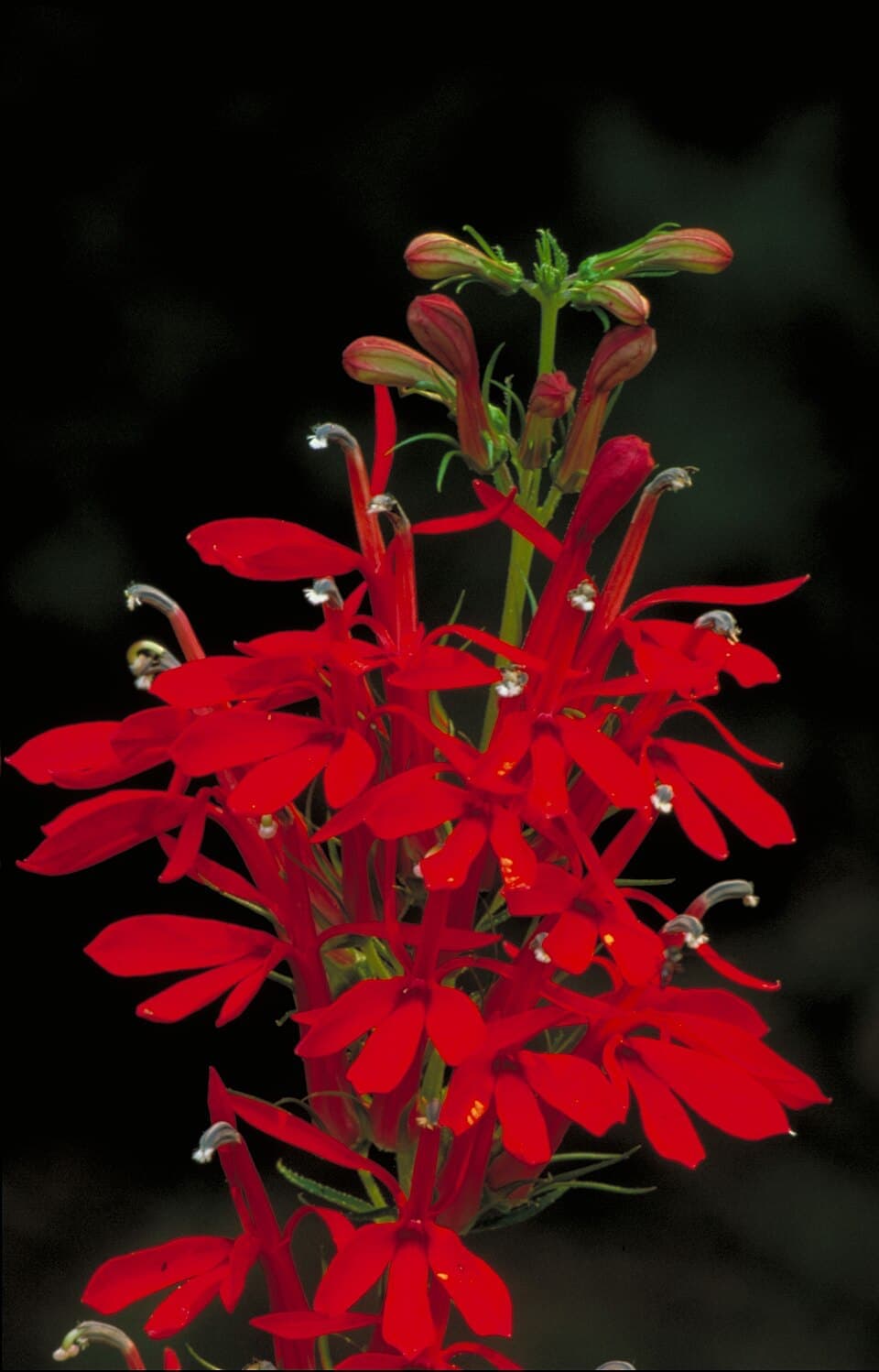
Cardinal Flower
Lobelia cardinalis
ToxicJuly–September
Tall spikes of intense scarlet, tubular flowers along late-summer streambanks — one of the most vivid reds in the eastern flora. Pollinated by hummingbirds.
Habitat: Streambanks, wet meadows, and seeps.
Lobelias are toxic if eaten. Enjoy in place and do not consume.
FG-0070.06
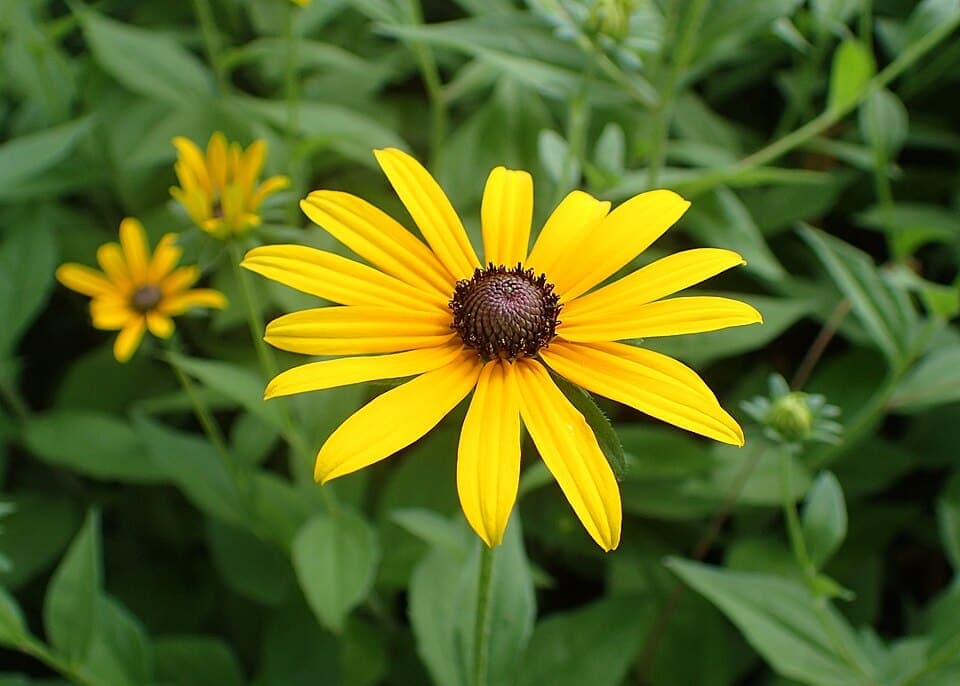
Black-eyed Susan
Rudbeckia hirta
June–September
A familiar daisy with golden-yellow rays around a dark brown dome, common in meadows and prairies. Bristly stems and leaves.
Habitat: Fields, prairies, and roadsides.
Through the seasons
- April–May: spring ephemerals — trillium and bluebells — carpet the woods before the canopy closes.
- June–August: prairie and meadow flowers such as bergamot and black-eyed Susan peak.
- Fall: cardinal flower, asters, and goldenrods close out the season.
Questions
- What is the state wildflower of Ohio?
- The large-flowered (white) trillium — a spring-woodland flower that forms sweeping white colonies across Ohio's hardwood forests.
- How can I identify an Ohio wildflower?
- Note the flower color and shape, leaves, and habitat, then take a photo and use an app like Spotter to identify the species and its bloom season.
From Field Notes
Not sure what you found?
Take a photo with Spotter for the name, field marks, look-alikes and safety notes in seconds.


In this guide
- Species
- 6
- Edible
- 0
- Toxic
- 1
- Region
- Ohio