FG-0069 · Wildflowers · 6 species
Wildflowers of Pennsylvania
By Derek Gauger · Updated
Overview
Pennsylvania's forests, ridges, and river bottoms produce a long wildflower season, from spring ephemerals through the state flower's early-summer bloom to fall asters. The Alleghenies and river valleys are especially rich.
This guide covers common and iconic Pennsylvania wildflowers — how to recognize them and when they bloom. Photograph the flower and leaves and use the app to confirm any bloom you find.
Key species to know
FG-0069.01
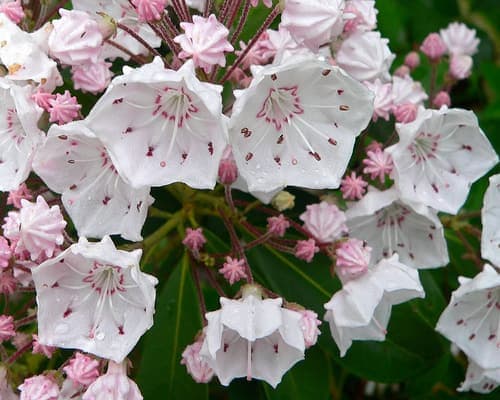
Mountain Laurel
Kalmia latifolia
ToxicMay–June
Pennsylvania's state flower — an evergreen shrub that covers itself in clusters of pink-and-white, cup-shaped blooms in early summer, carpeting mountain slopes.
Habitat: Wooded slopes, ridges, and acidic forests.
All parts of mountain laurel are toxic if eaten. Enjoy in place and do not consume.
FG-0069.02
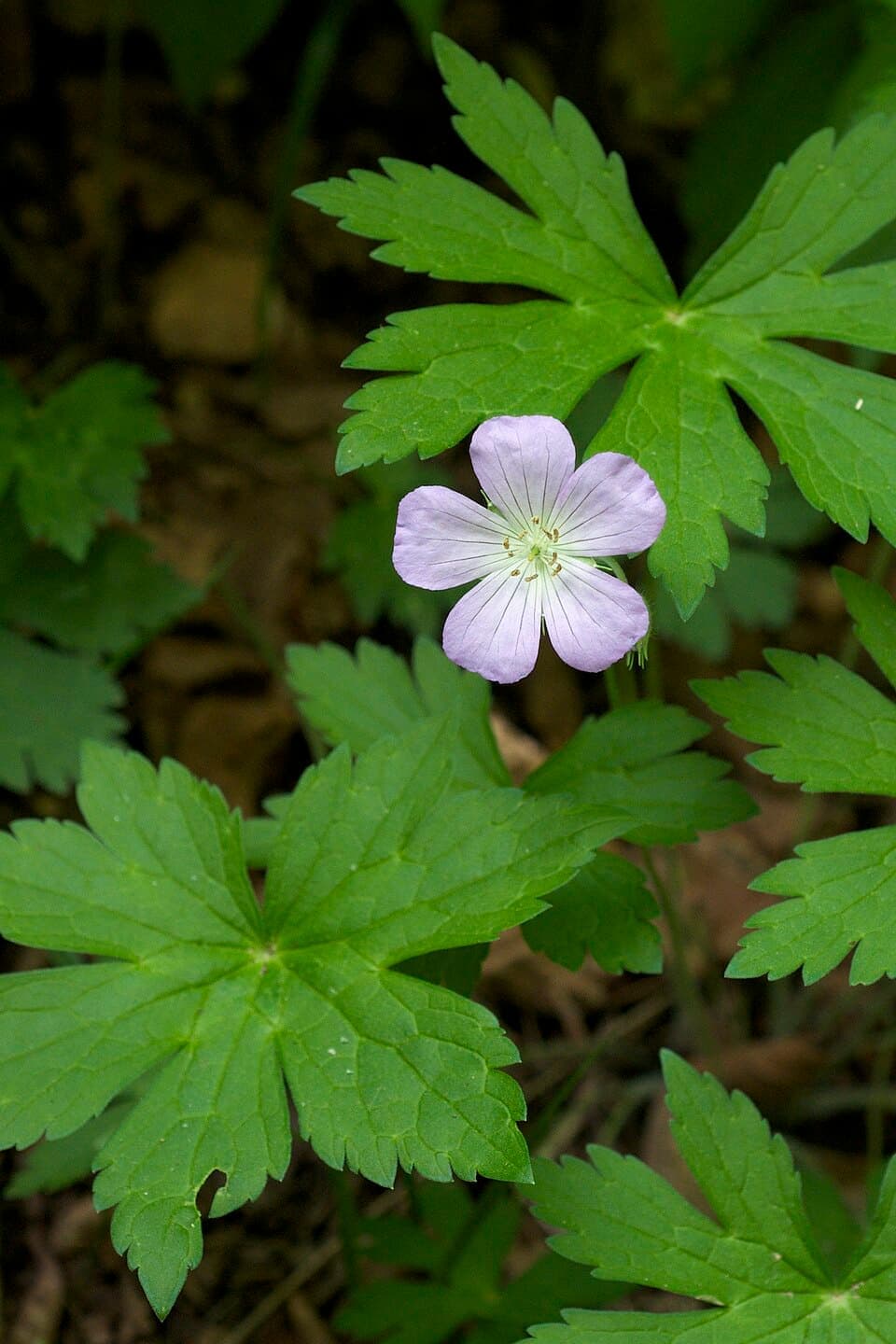
Wild Geranium
Geranium maculatum
April–June
Loose clusters of pink-lavender, five-petaled flowers over deeply cut leaves, brightening open woods and edges in late spring.
Habitat: Open woods, edges, and shaded meadows.
FG-0069.03
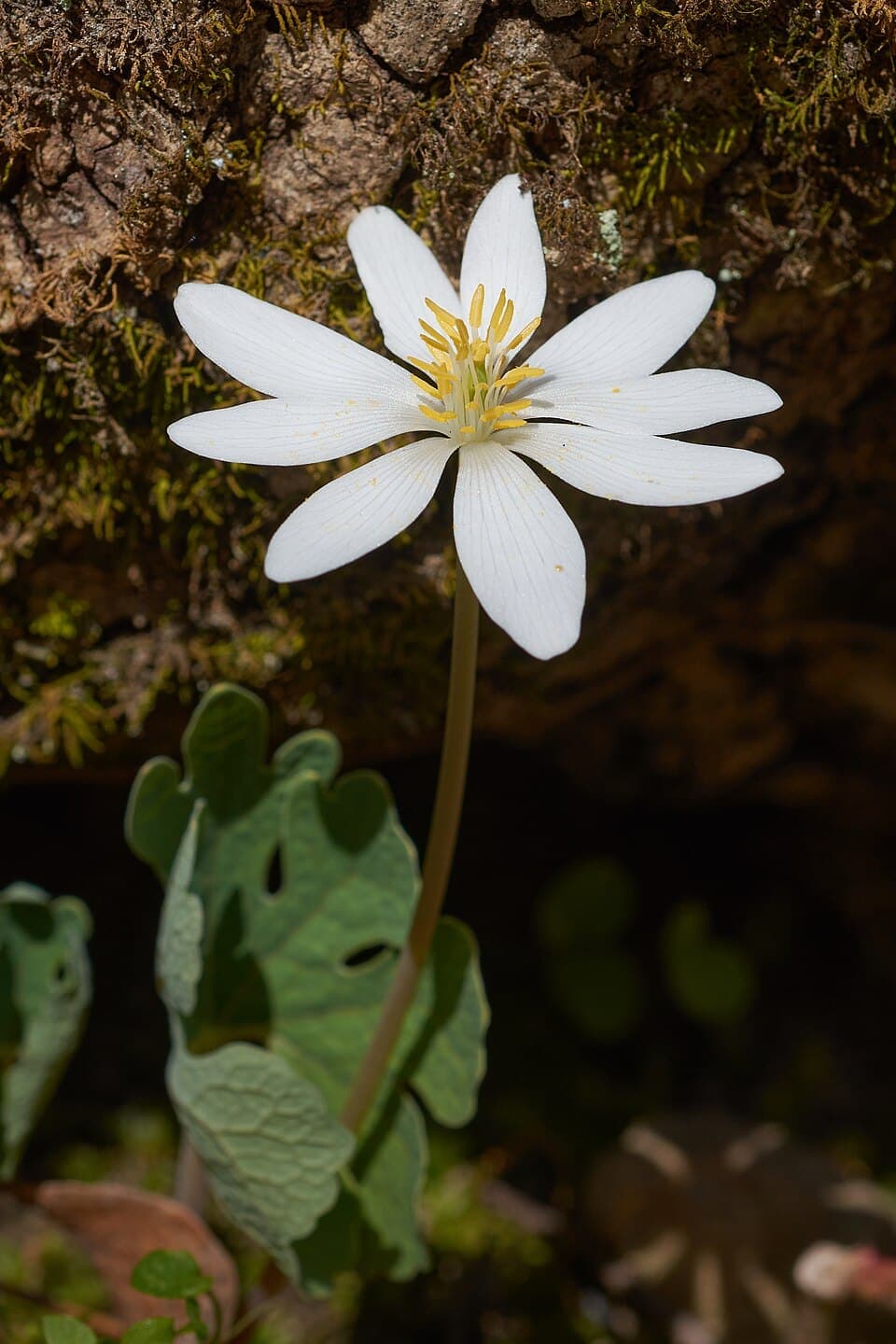
Bloodroot
Sanguinaria canadensis
ToxicMarch–April
A pure-white, many-petaled spring flower that opens briefly above a single lobed leaf. Named for the red-orange sap in its root.
Habitat: Rich, moist woods and shaded slopes.
The sap and root are toxic and irritating. Do not eat any part.
FG-0069.04
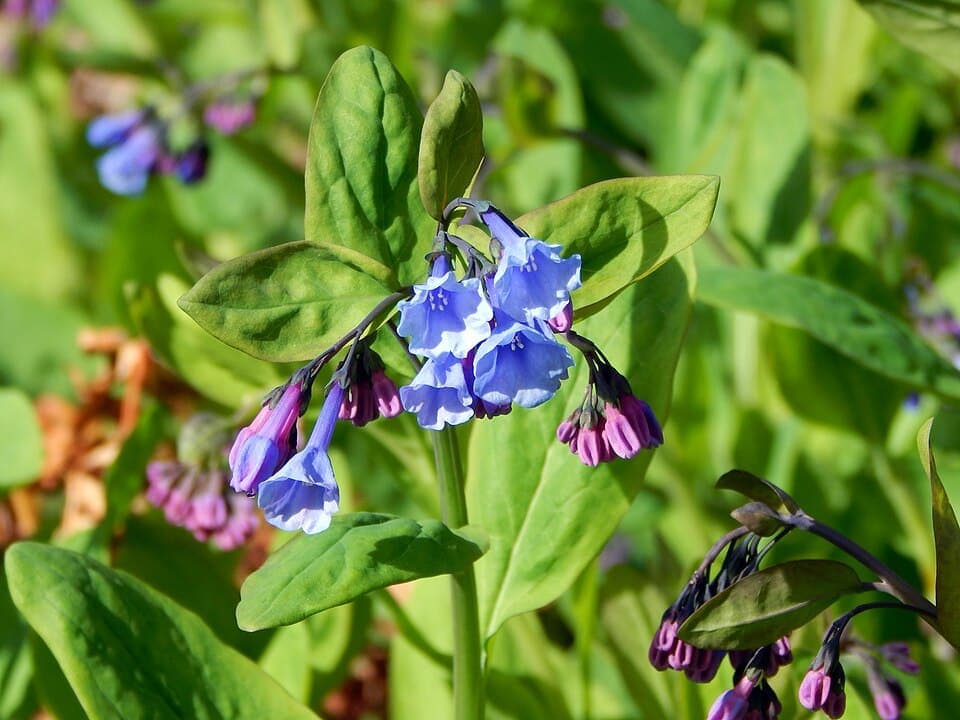
Virginia Bluebells
Mertensia virginica
April–May
Nodding clusters of sky-blue, trumpet-shaped flowers (pink in bud) over smooth gray-green leaves, forming blue drifts on damp spring floodplains.
Habitat: Moist woods, floodplains, and river bottoms.
FG-0069.05
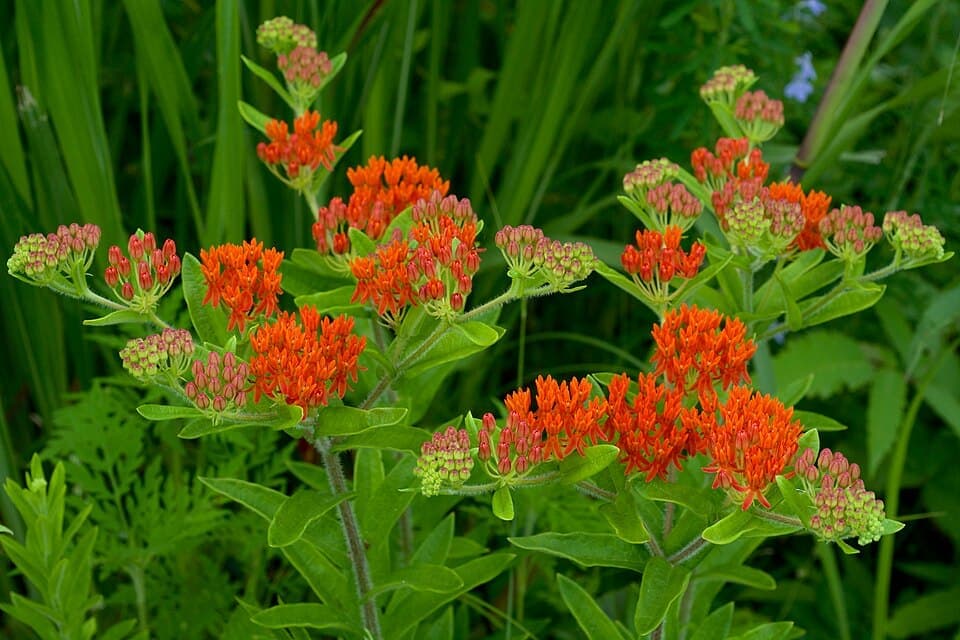
Butterfly Weed
Asclepias tuberosa
ToxicJune–August
A milkweed topped with flat clusters of brilliant orange flowers, swarming with butterflies in summer. Its sap is not milky like other milkweeds.
Habitat: Dry fields, roadsides, and open ground.
Milkweeds are toxic if eaten. Enjoy in place and do not consume.
FG-0069.06
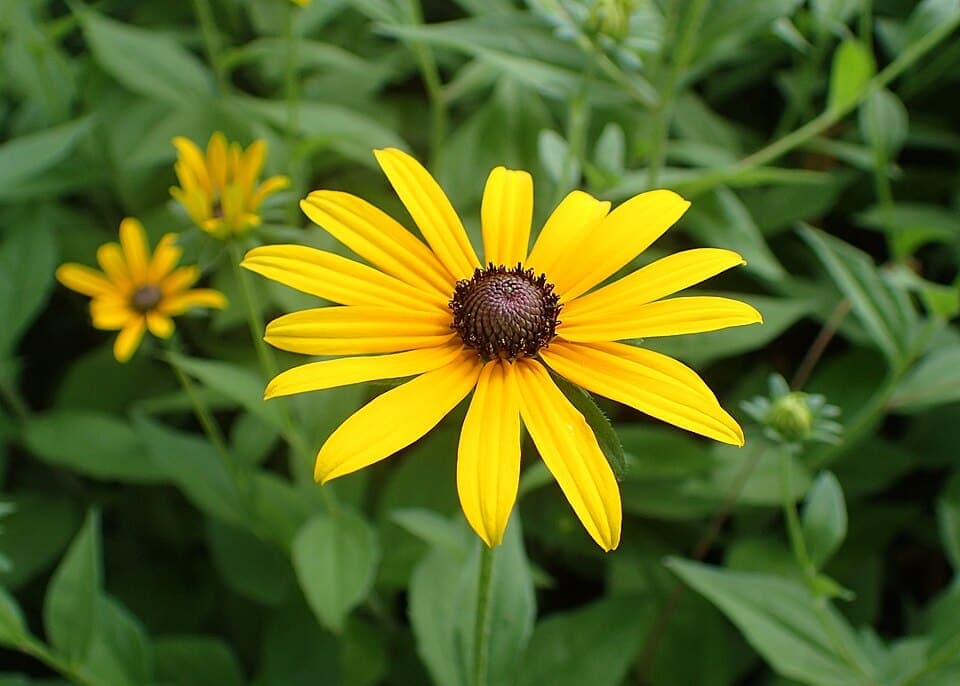
Black-eyed Susan
Rudbeckia hirta
June–September
A familiar daisy with golden-yellow rays around a dark brown dome, common in meadows and along roads. Bristly stems and leaves.
Habitat: Fields, roadsides, and open ground.
Through the seasons
- April–May: spring ephemerals like bluebells and bloodroot carpet the river bottoms.
- May–June: mountain laurel blooms across the wooded ridges.
- Summer–fall: meadow flowers and asters carry color into October.
Questions
- What is the state flower of Pennsylvania?
- Mountain laurel — an evergreen shrub whose pink-and-white cup-shaped flowers cover wooded mountain slopes in June. Note that all parts are toxic if eaten.
- How can I identify a Pennsylvania wildflower?
- Note the flower color and shape, leaves, and habitat, then take a photo and use an app like Spotter to identify the species and its bloom season.
From Field Notes
- How to Identify Wildflowers on the Trail: A Practical Guide
- What Is the Tall Pink-Purple Wildflower Buzzing With Butterflies in Late Summer? Identifying Joe-Pye Weed
- What Is the Purple Daisy-Like Wildflower Blooming in Fall? Identifying Asters
- What Is the Weed With Big White Trumpet Flowers and Spiky Seed Pods? Identifying Jimsonweed
Not sure what you found?
Take a photo with Spotter for the name, field marks, look-alikes and safety notes in seconds.


In this guide
- Species
- 6
- Edible
- 0
- Toxic
- 3
- Region
- Pennsylvania