FG-0064 · Wildflowers · 6 species
Wildflowers of Arizona
By Derek Gauger · Updated
Overview
Arizona's wildflower season starts low and early, with desert annuals blooming from February into April, then climbs into the mountains through summer. In years with well-timed winter rain, the desert floor around Phoenix, Tucson, and the Superstition Mountains fills with color.
This guide covers common and iconic Arizona wildflowers — how to recognize them and when they bloom. Photograph the flower and leaves and use the app to confirm any bloom you find.
Key species to know
FG-0064.01
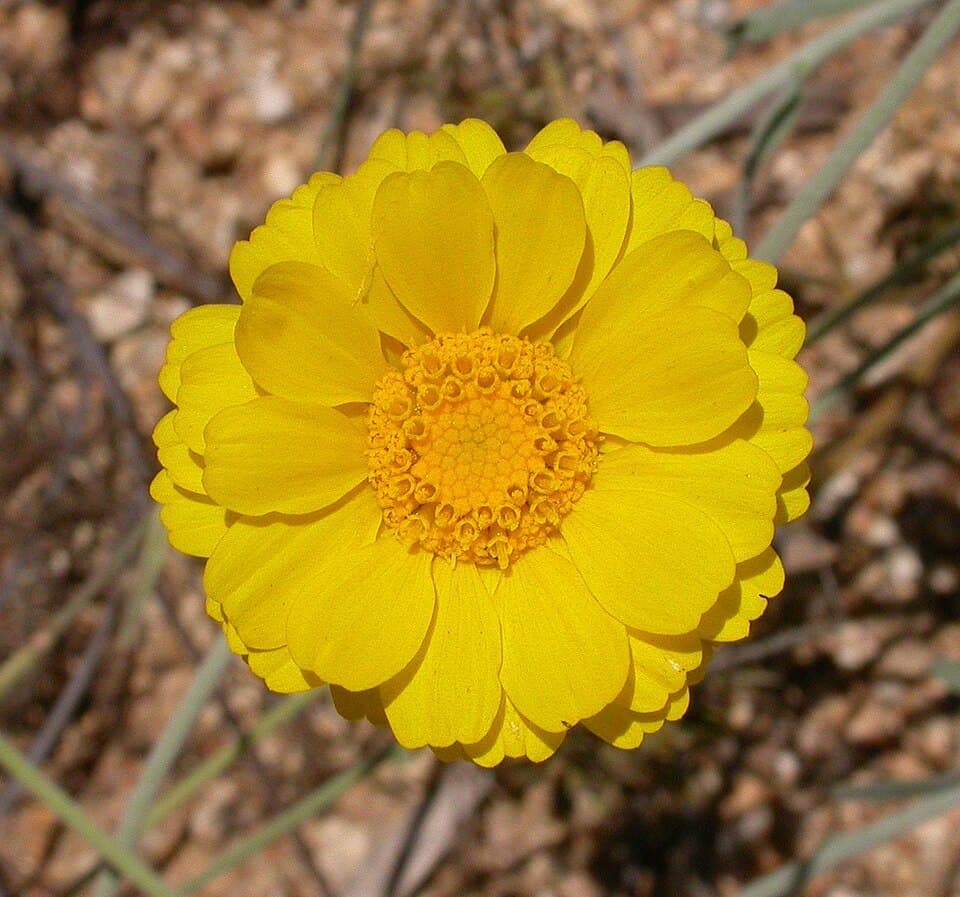
Desert Marigold
Baileya multiradiata
March–October
A tidy mound of woolly gray leaves topped by bright yellow daisy flowers on long stalks, blooming much of the year after rain. A roadside staple across the desert.
Habitat: Desert flats, roadsides, and gravelly slopes.
FG-0064.02
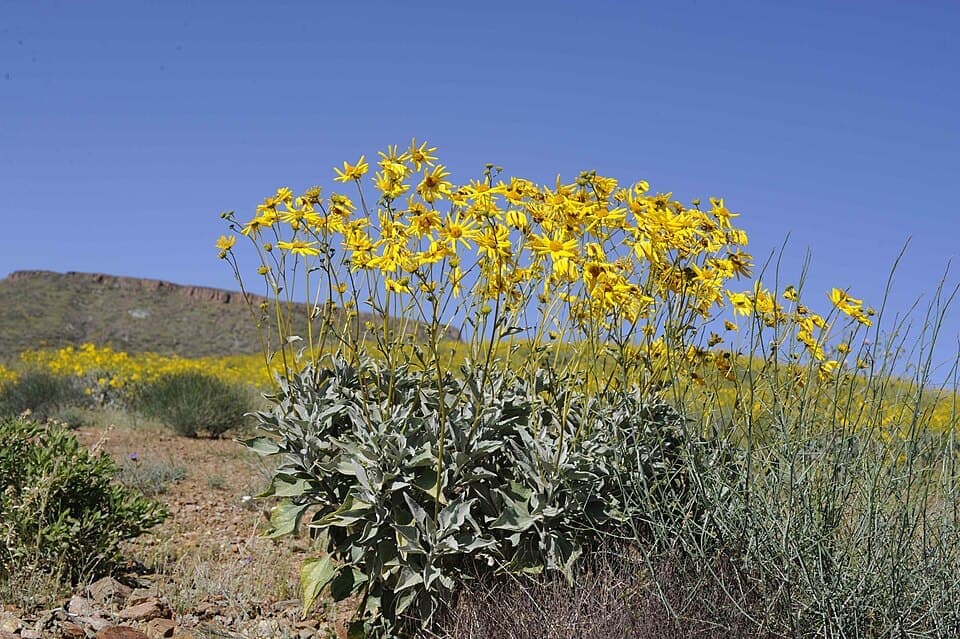
Brittlebush
Encelia farinosa
March–May
A rounded shrub with silvery leaves that covers itself in yellow daisy flowers on tall stems each spring, painting whole hillsides gold.
Habitat: Rocky desert slopes and washes.
FG-0064.03
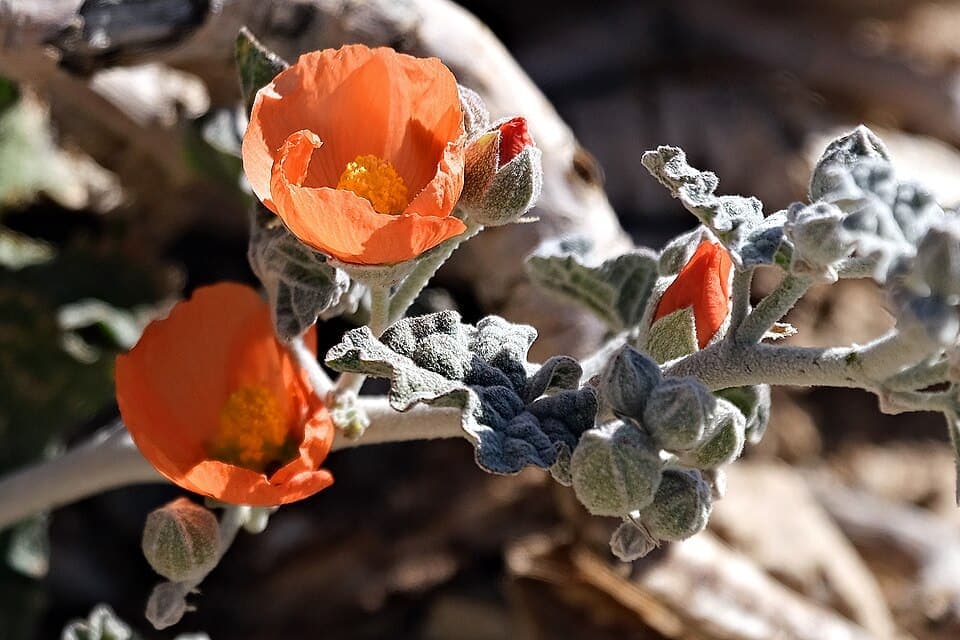
Desert Globemallow
Sphaeralcea ambigua
March–June
A gray-green subshrub with cup-shaped apricot-orange flowers lining its stems. Common along desert roads and washes after wet winters.
Habitat: Desert flats, washes, and disturbed ground.
FG-0064.04
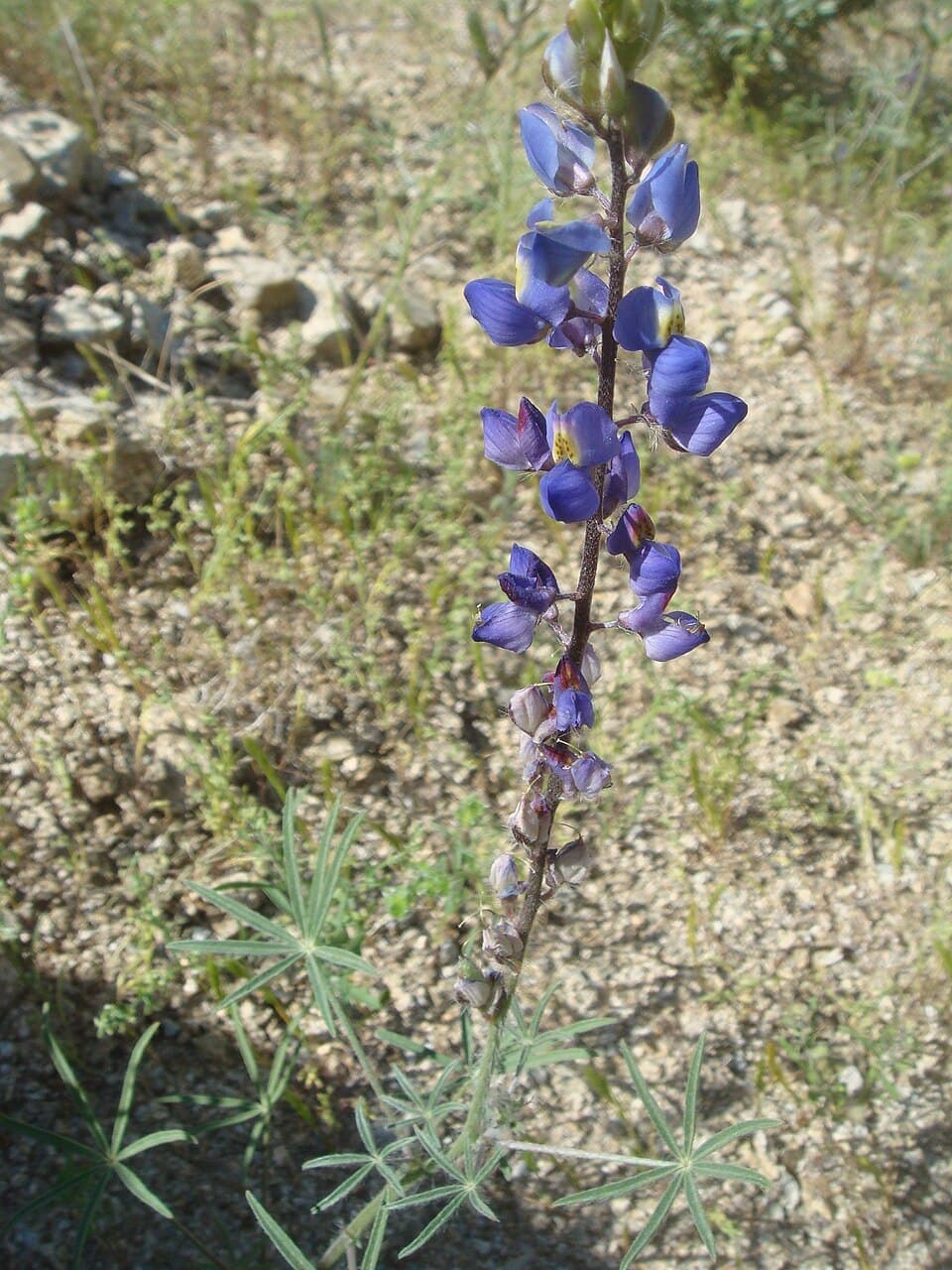
Desert Lupine
Lupinus sparsiflorus
ToxicFebruary–May
Spikes of pea-like blue-purple flowers above palm-shaped leaves, often mixing with poppies and brittlebush for a blue-and-gold display.
Habitat: Desert flats, slopes, and roadsides.
Lupines contain toxic alkaloids. Do not eat any part of wild lupine.
FG-0064.05
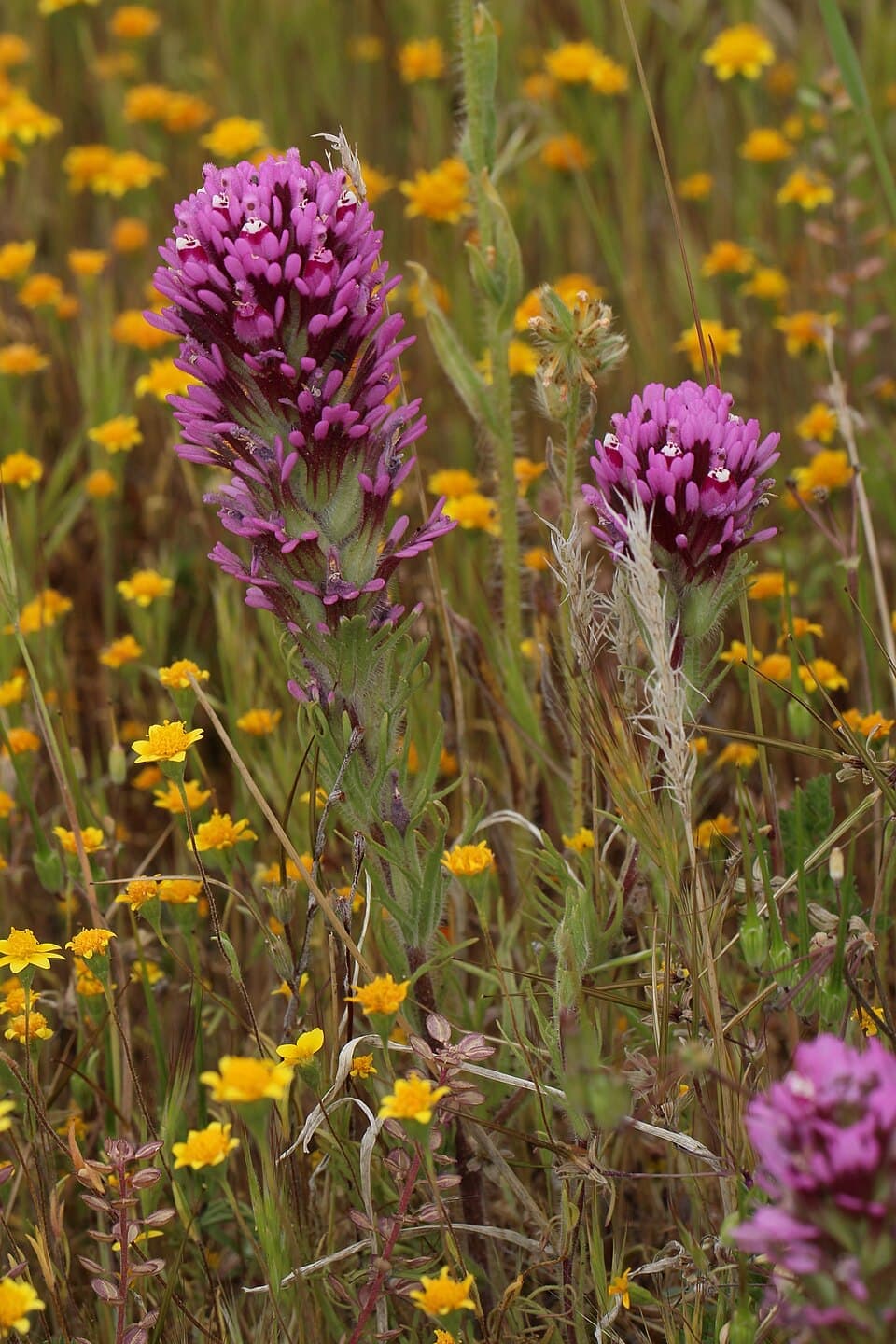
Owl's Clover
Castilleja exserta
March–May
A low annual with dense, feathery pink-purple flower spikes that can turn desert flats magenta. A close relative of the paintbrushes.
Habitat: Open desert flats and grassland.
FG-0064.06
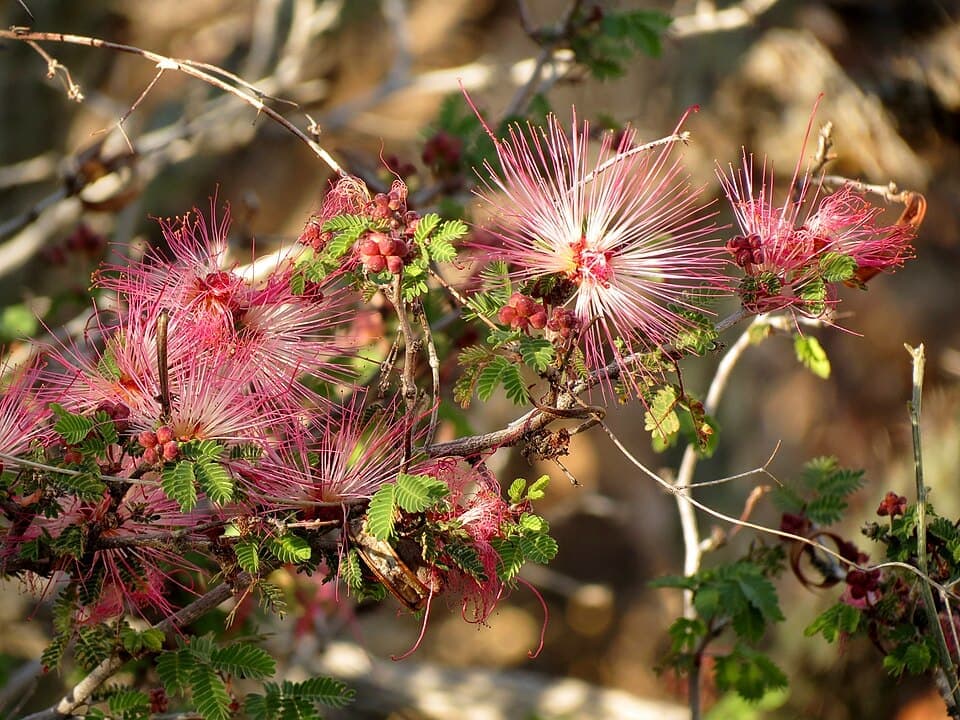
Fairy Duster
Calliandra eriophylla
February–May
A low, lacy-leaved shrub with pink powder-puff flowers of long stamens, giving a soft, feathery look. A favorite of hummingbirds.
Habitat: Rocky desert slopes, washes, and grassland.
Through the seasons
- February–April: peak desert-floor bloom around Phoenix, Tucson, and the low deserts after wet winters.
- April–June: blooming climbs into the foothills and higher desert.
- Summer monsoon (July–September) triggers a second, later flush of desert flowers.
Questions
- When do Arizona wildflowers bloom?
- Desert annuals peak from late February into April in the low deserts after a wet winter, with a second monsoon-driven flush in July through September and mountain blooms through summer.
- Where are the best Arizona wildflower spots?
- Popular areas include the Superstition Mountains and Lost Dutchman State Park, Picacho Peak, Catalina State Park near Tucson, and Organ Pipe Cactus National Monument in strong bloom years.
From Field Notes
- How to Identify Wildflowers on the Trail: A Practical Guide
- What Is the Purple Daisy-Like Wildflower Blooming in Fall? Identifying Asters
- What Is the Tall Pink-Purple Wildflower Buzzing With Butterflies in Late Summer? Identifying Joe-Pye Weed
- What Is Spotted Knapweed? Identifying the Invasive Purple Wildflower
Not sure what you found?
Take a photo with Spotter for the name, field marks, look-alikes and safety notes in seconds.


In this guide
- Species
- 6
- Edible
- 0
- Toxic
- 1
- Region
- Arizona